
Advanced dual, triple, and single-spectrum optical sensors engineered for rapid flame detection in Los Angeles industrial zones.
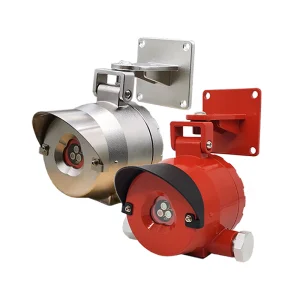
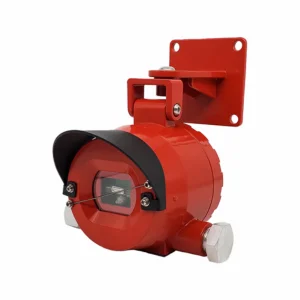
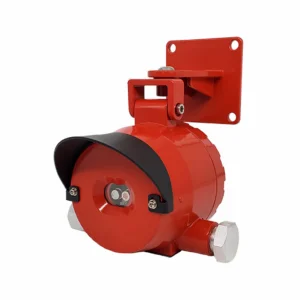
The Greater Los Angeles metropolitan area represents one of the most critical manufacturing, aerospace, and energy hubs in the United States. Spanning from the heavy petrochemical refineries of the South Bay (including El Segundo, Torrance, and Wilmington) to the cutting-edge aerospace facilities in Hawthorne and El Segundo, the demand for high-reliability industrial gas and flame safety infrastructure is unmatched.
Furthermore, facilities in Southern California operate under some of the most stringent environmental and occupational safety regulations in the world. The South Coast Air Quality Management District (SCAQMD) maintains rigorous regulations regarding fugitive emissions, VOC monitoring (Rule 1173), and emergency containment. At the same time, the Los Angeles Fire Department (LAFD) enforces strict compliance with NFPA standards (National Fire Protection Association), particularly NFPA 72 (National Fire Alarm and Signaling Code) and NFPA 33 (Spray Application Using Flammable or Combustible Materials).
For industrial operators, mechanical engineers, and compliance managers in Southern California, deploying high-performance Fixed-type Gas Detection Systems and fast-acting Optical Flame Detectors is not just a regulatory obligation; it is a vital pillar of business continuity, asset protection, and personnel safety.
How cutting-edge sensor technology reduces false alarms and drastically speeds up warning times.
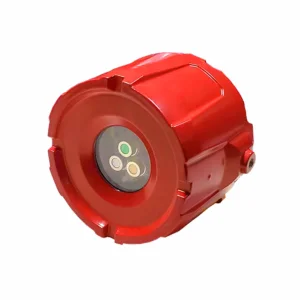
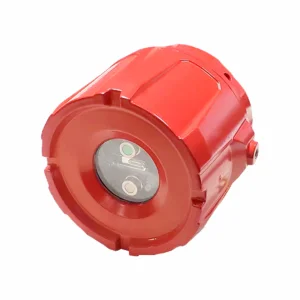
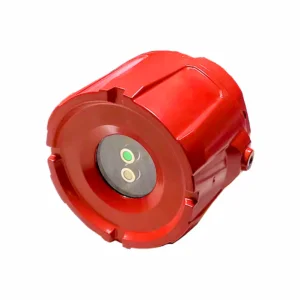
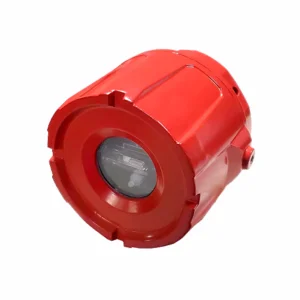
By analyzing three specific narrow band spectral bands within the infrared region, our IR3 detectors differentiate between actual hydrocarbon flames and common false alarm triggers such as hot exhaust, solar radiation, or arc welding.
Moving beyond simple 4-20mA loops. Modern fixed detectors leverage Modbus, HART, and wireless network topologies, sending real-time health updates, calibration drift warnings, and localized sensor temperature data.
Our cast aluminum and 316 stainless steel housings are certified for Class I, Division 1 hazardous areas, ensuring uninterrupted performance in volatile atmospheres such as offshore platforms or chemical storage rooms.
Explore our profile, smart manufacturing footprint, and core design principles.
Founded in 2003, Xinhaosi is one of the most influential and trusted brands in the global gas safety industry. Over the past two decades, we have steadily built a robust and comprehensive production and service system, which integrates cutting-edge R&D, intelligent manufacturing with advanced automation equipment, digital marketing across global channels, professional after-sales support with an experienced technician team, flexible OEM/ODM services, as well as CNAS-Accredited laboratory calibration services that meet international standards.
Our diversified product portfolio covers industrial & residential gas detection & alarm systems, industrial & household gas solenoid valves, and urban gas pipeline network monitoring systems—all engineered to adapt to complex working environments and strict safety requirements. We produce and sell tens of millions of units annually, catering to a wide range of industries that demand reliable gas detection solutions, including oil & gas exploration and production, petrochemicals, urban gas distribution, automotive manufacturing, pharmaceuticals, new energy, steel production, and beverage processing.
Guided by the core mission of "Making Gas Safety Accessible Everywhere," we consistently deliver high-performance, reliable products and customized solutions tailored to each client's unique needs. Every item we manufacture undergoes rigorous quality control tests, and every service we provide is backed by our professional technical team, fully embodying our unwavering commitment to safeguarding gas safety across both industrial workplaces and residential environments.

Global procurement teams face the continuous challenge of balancing strict safety compliance with budget optimization. Partnering with a leading Chinese safety manufacturer like Xinhaosi provides distinct strategic advantages:

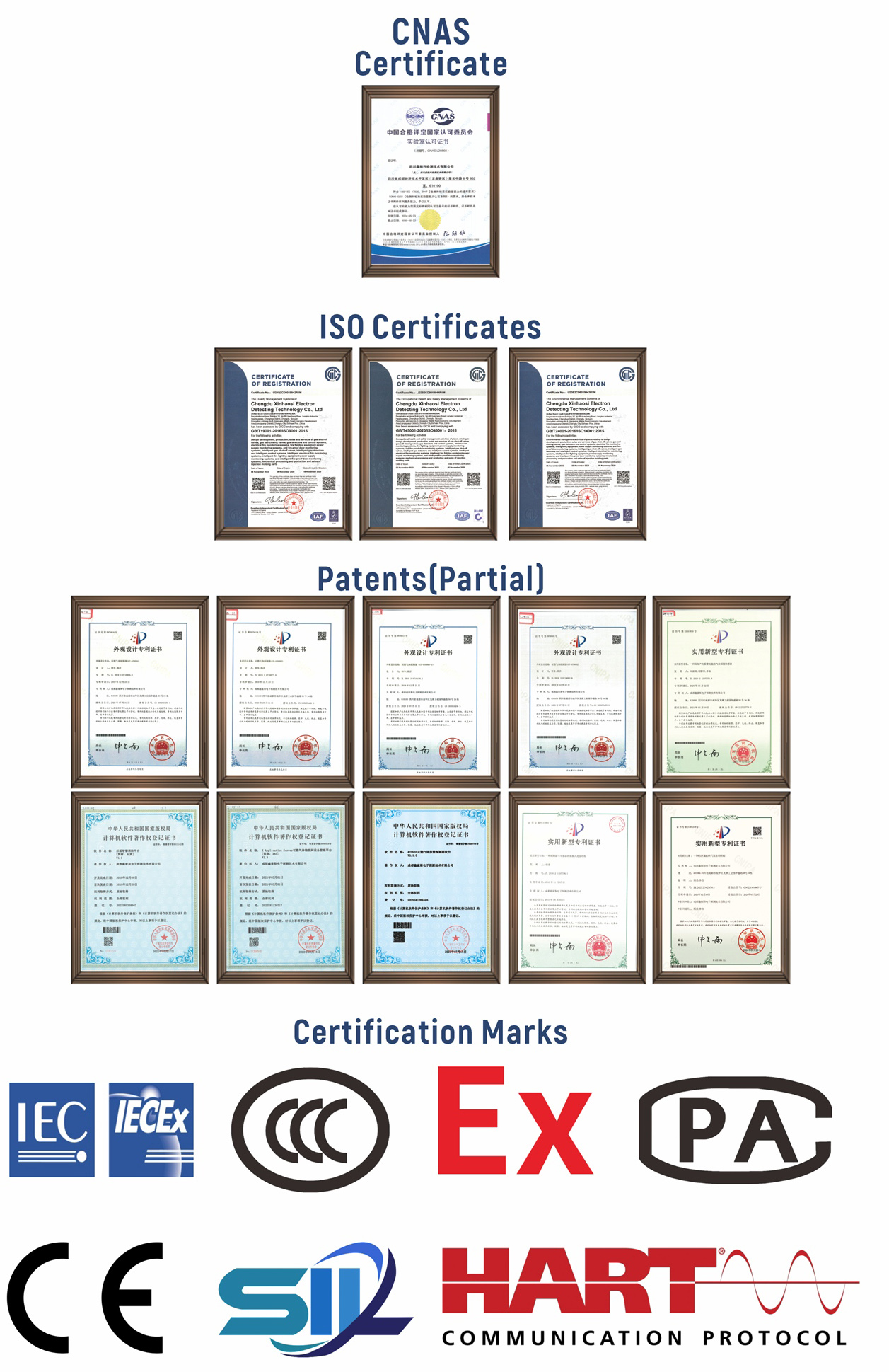
Adhering to ISO9001 quality management system standards, Xinhaosi's core products have obtained a full range of authoritative certifications, including national compulsory Products Certification, explosion-proof certification, fire product certification, CPA measurement instrument type approval certificate, and international approvals such as CE and SIL. Additionally, Xinhaosi holds honors such as "National Quality Integrity Benchmark Enterprise", "National Quality Leading Enterprise in the Gas Alarm Industry," membership in the China Fire Protection Association, and acts as the main drafting organization for the national standard of solenoid valves, further confirming its industry influence and reputation.
In the field of intellectual property, Xinhaosi has built a robust innovation system with over 50 patents and software copyrights. These patents cover core technological areas, including a graphical monitoring system for gas detection and alarm, which enables predictive maintenance based on historical data to reduce equipment failure rates by over 30%, and a solenoid valve with flow monitoring functionality that integrates flow detection and alarm capabilities. The company also pioneered networked bus-type gas leakage monitoring systems and maximum-point gas leakage monitoring systems certified by national authorities, demonstrating its leading position in cutting-edge technological research.
Year of Establishment
Patents & Copyrights
Gas Detectors Installed
Accredited Laboratory
Over two decades of continuous technological scaling and international integration.
Established on April 17th, 2003. Launched our first-generation gas leakage alarm and firefighting products, securing our position in the early safety electronics sector.
Started gas safety valve production and rapidly expanded our OEM/ODM footprint. Moved to our modern office building in the Longtan Industrial Park.
Achieved a landmark 10 million units sold in gas detection. Relocated to our primary Chengdu manufacturing facility and finalized our national sales & support network.
Developed and launched our in-house IoT Cloud safety platform. Became an officially qualified supplier for China's top 5 gas groups and launched smart emergency systems.
Broke ground on the Deyang manufacturing plant. Established the Petrochemical & International Business Division to customize products for global standards like CE, SIL, and UL.
Deyang smart factory started operations. Released wireless gas detection nodes and smart AI safety shutoff valves integrated with real-time pressure diagnostics.
Browse our field-proven gas detector modules, control panels, safety shutoff valves, and power distribution enclosures.
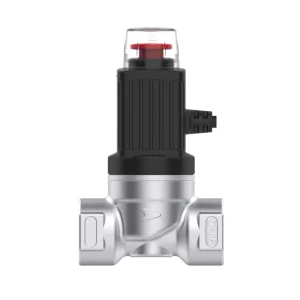
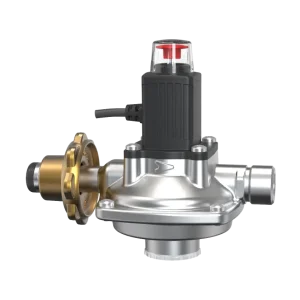
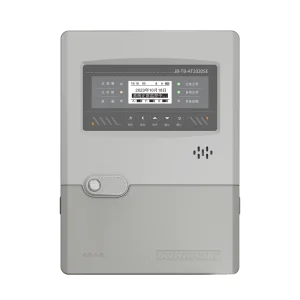
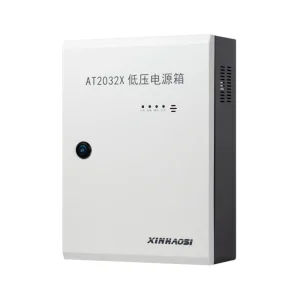
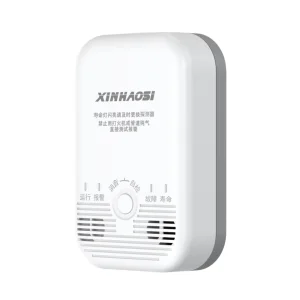
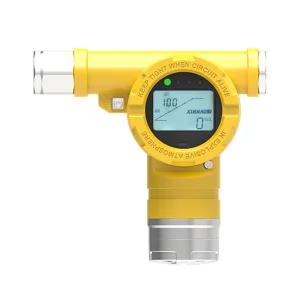
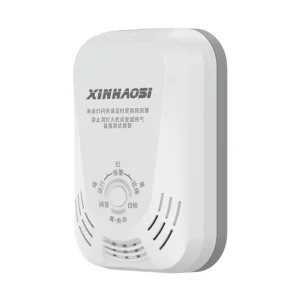
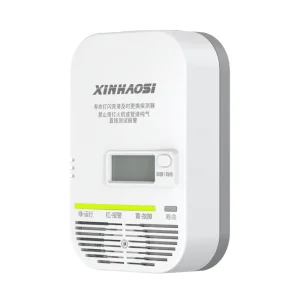
Comprehensive system architecture designed to keep modern chemical processing, aerospace, and energy operations safe.
A gas leak is a multi-stage hazard. True facility protection requires a layered approach, integrating detection, annunciation, and active mitigation.
Our solutions start at the edge with Fixed Gas Detectors (e.g. XP3000) monitoring ambient concentration levels. If a gas build-up is detected, the sensor alerts a centralized rack controller (such as the JB-TB-AT2020SE) via digital Modbus RTU or analog 4-20mA loops.
The controller then executes programmed safety actions:
For high-risk environments, optical flame detectors monitor for immediate ignition hazards, providing redundant, fail-safe layers of protection.
Critical knowledge for procurement officers, fire safety inspectors, and facility engineers.
Typically, fixed gas detectors should be bumped tested every 3-6 months and fully calibrated every 6 to 12 months, depending on exposure levels, sensor technology, and manufacturer guidelines. Electrochemical and catalytic bead sensors require more frequent calibration compared to optical infrared (NDIR) sensors, which exhibit lower baseline drift over time.
Single UV sensors are highly sensitive but can easily trigger false alarms from non-fire sources like lightning, arc welding, or x-rays. Triple Infrared (IR3) detectors monitor three distinct spectral bands (typically around 4.4 microns for CO2 emissions from burning hydrocarbons). This spectral analysis confirms the combustion signature, avoiding false alarms from hot surfaces or ambient sunlight.
Under the LAFD standards and California Building Code, electronic safety equipment used in hazardous areas must carry UL (Underwriters Laboratories) or FM (Factory Mutual) certifications confirming suitability for Class I, Division 1 or Division 2 environments. Safety systems must also conform to NFPA 72 requirements for integration with building-wide fire alarm control panels.
Yes. Our industrial fixed detectors and controller lines (including the XP3000 series and AT2020SE controller) utilize open protocols such as standard 4-20mA analog loops, Modbus RTU (RS485), and dry relay contacts. This allows easy integration into existing Honeywell, Emerson, or Yokogawa Distributed Control Systems (DCS) or PLC architectures.