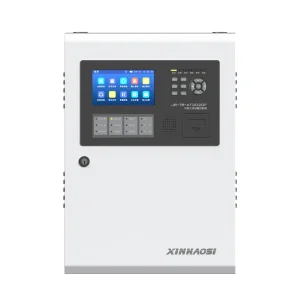
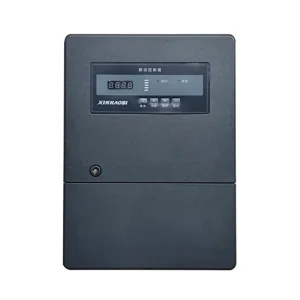
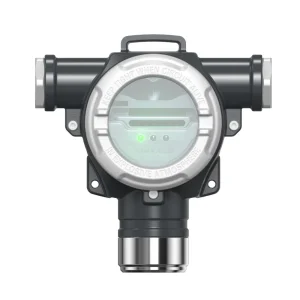
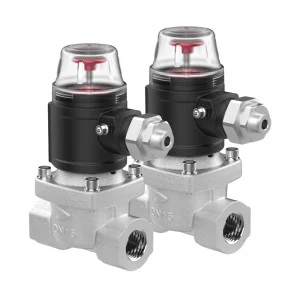
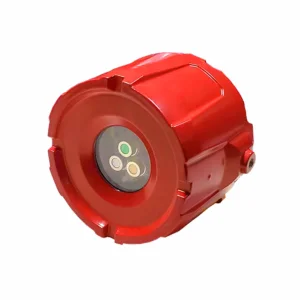
Explore our premium grade certified gas safety equipment, designed for immediate actuation and fail-safe system integration.
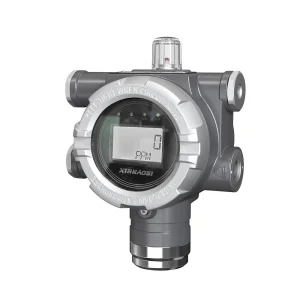
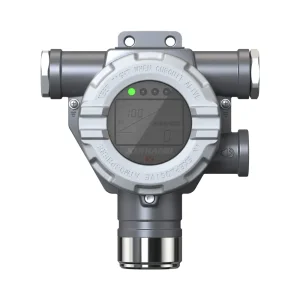
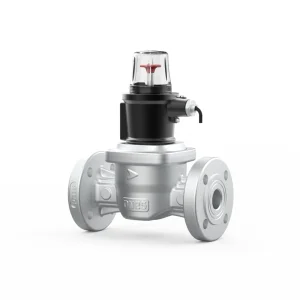
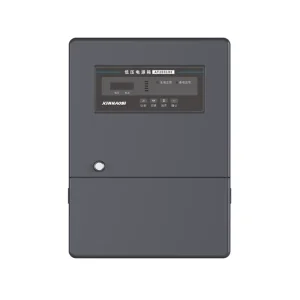
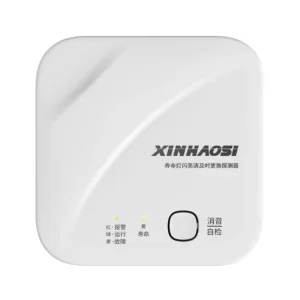
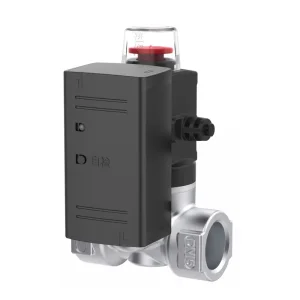
Analyzing industry pain points, engineering requirements, and logistics standards for international EPCs, utility operators, and industrial distributors.
For chemical complexes and refinery pipelines, valve failure is not an option. Global procurement heads prioritize Safety Integrity Level (SIL-2/SIL-3) compliance and fast shutoff thresholds (<1s) to assure secondary containment and immediate safety isolation.
Importing pressure equipment demands alignment with regional codes. We streamline global operations by supplying control valves certified under ATEX (Europe), UL/FM (North America), CPA measurement frameworks, and national mandatory GB safety pathways.
Valves are subjected to harsh processes, extreme temperatures (-40°C to +80°C), and corrosive hydrocarbon blends. Sourcing focuses on materials like high-grade anodized aluminum, carbon steel, and specialized sealants (Viton/NBR) to counter hydrogen embrittlement.
Founded in 2003, Xinhaosi is one of the most influential and trusted brands in the global gas safety industry. Over the past two decades, we have steadily built a robust and comprehensive production and service system, which integrates cutting-edge R&D, intelligent manufacturing with advanced automation equipment, digital marketing across global channels, and professional after-sales support with an experienced technician team.
We pride ourselves on offering flexible OEM/ODM services, as well as CNAS-Accredited laboratory calibration services that meet international standards. Our diversified product portfolio covers industrial & residential gas detection & alarm systems, industrial & household gas solenoid valves, and urban gas pipeline network monitoring systems—all engineered to adapt to complex working environments and strict safety requirements.
Guided by the core mission of "Making Gas Safety Accessible Everywhere," we deliver high-performance, reliable products tailored to each client's unique needs. Every item we manufacture undergoes rigorous quality control tests, fully embodying our commitment to safeguarding gas safety across both industrial workplaces and residential environments.

Chengdu Factory & Office Hub

Advanced Deyang Manufacturing Facility
Our infrastructure includes major production units in Chengdu and our newly commissioned advanced manufacturing base in Deyang. Operating under cleanroom environments and utilising automated assembly and calibration benches, we produce and sell tens of millions of units annually.
We cater to a wide range of industries that demand reliable gas detection and flow control systems, including:
Adhering to strict ISO9001 quality management standards, Xinhaosi's core products have obtained a full range of authoritative certifications, including China's compulsory Products Certification (CCC), explosion-proof certification, fire safety approvals, CPA measurement instrument type approval certificates, and international approvals such as CE and SIL (Safety Integrity Level).
Xinhaosi holds prestigious national honors, such as "National Quality Integrity Benchmark Enterprise" and "National Quality Leading Enterprise in the Gas Alarm Industry," and is a recognized member of the China Fire Protection Association. Crucially, we act as the main drafting organization for national standards of solenoid valves, solidifying our authoritative industry influence.
In intellectual property, Xinhaosi maintains over 50 patents. A key patent covers a graphical monitoring system for gas detection and alarm, enabling predictive maintenance based on historical data to reduce equipment failure rates by over 30%. Furthermore, our proprietary solenoid valves with flow monitoring functionality integrate flow detection and alarm components into a single unit. We also pioneered China's first networked bus-type gas leakage monitoring system, providing maximum safety capabilities verified by national security agencies.
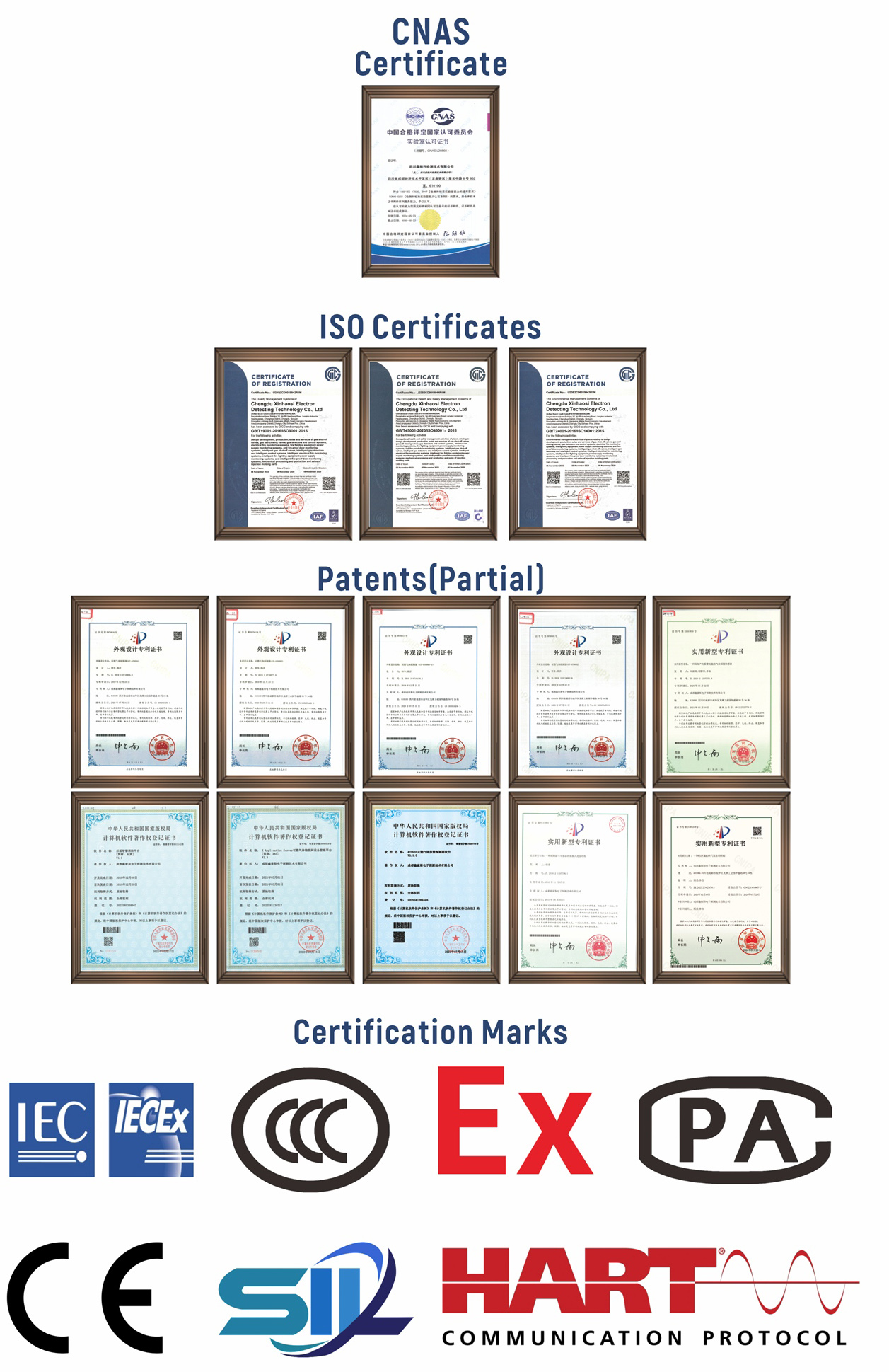
Our in-house calibration lab is CNAS-accredited in accordance with ISO/IEC 17025, operating under the ILAC-MRA international framework.
Standardized parameters and electrical configuration guidelines for engineers and project procurement coordinators.
| Valve Type & Series | Applicable Media | Actuation Time | Body Materials Available | Certifications | Ingress & Ex Protection |
|---|---|---|---|---|---|
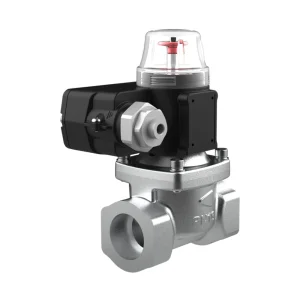
| XF5III Industrial Solenoid Valve | Natural Gas, LPG, Methane, Biogas | < 0.5 Seconds | Anodized Aluminum Alloy, Carbon Steel | CE, SIL 2, CCC, CPA | IP65 / Ex d II C T6 Gb |
| XF3 Series Utility Valve | Coal Gas, Non-corrosive Gases | < 1.0 Seconds | Forged Brass, Cast Aluminum | CCC, Fire Protection Approval | IP54 / Splash-proof Coil |
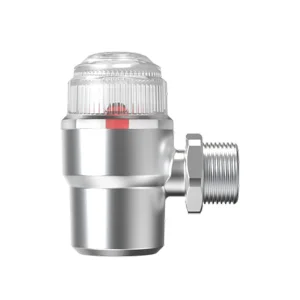
| Dry Battery Wireless Valve | Domestic Gas, Light LPG | < 1.5 Seconds | Reinforced Brass | CPA, Utilities Approved | IP52 / Low-Power Design |
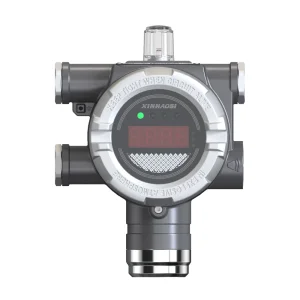
| GTYQ-AT0601 Detection Unit | Combustible & Toxic Vapors | T90 < 15 Seconds | Die-cast Aluminum | Ex, CCC, CPA, CE | IP66 / Ex d II C T6 Gb |
Ensures zero leakage across extreme thermal cycles and chemical exposure to aggressive gas compositions.
Automatic spring-return mechanical shutoff triggers instantaneously upon signal loss or power disruption.
Allows seamless integration into modern industrial DCS and SCADA systems for real-time safety monitoring.
Optimized solenoids reduce electrical heat generation, expanding service life in continuous operation.
How a dedicated technology startup became an international authority in gas safety systems and standard-setting manufacturer.
As the global energy mix transitions toward green gases and industrial automation adopts IoT principles, control gas valves must evolve. Xinhaosi is at the forefront of this shift, steering engineering developments along three core technological axes:
1. Hydrogen (H2) Blending Capabilities: Hydrogen presents unique challenges, notably molecular leakage and hydrogen embrittlement of standard alloys. Our R&D division is testing advanced austenitic stainless steels and customized elastomers to support up to 20% hydrogen-blended natural gas distribution safely.
2. Edge AI & Real-Time Diagnostics: Future valves will not simply open or close on demand. By embedding dynamic micro-sensors, our upcoming AI-safety valves will continuously monitor localized pressure differentials, ambient vibration, and structural load to predict diaphragm wear and schedule preventative maintenance before any mechanical failures occur.
3. Low-Energy Wireless Mesh Networks: Deploying safety infrastructure in remote pipeline sections is challenging due to cabling costs. Our low-power dry-battery wireless valves utilize secure LoraWAN and NB-IoT protocols to enable fully autonomous hazard mitigation, eliminating the need for external power drops.
We align our product developments with global carbon reduction initiatives and industrial safety mandates:
Find answers to critical technical questions asked by system integrators, plant safety managers, and procurement leads.
Complementary systems to complete your automated safety instrumentation loops (SIS) and plant-wide gas monitoring systems.