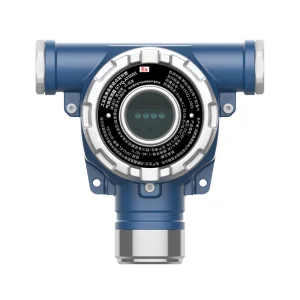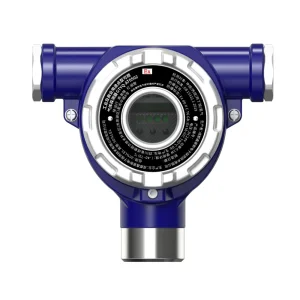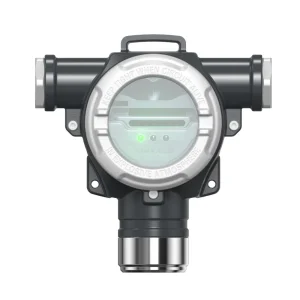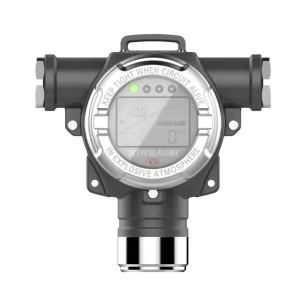
1 / 1

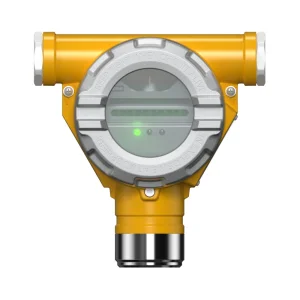
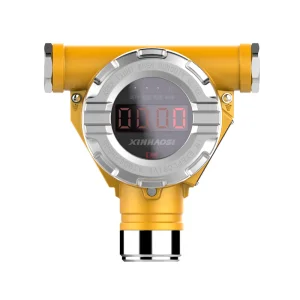
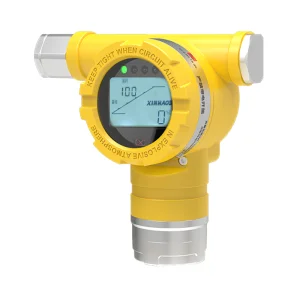
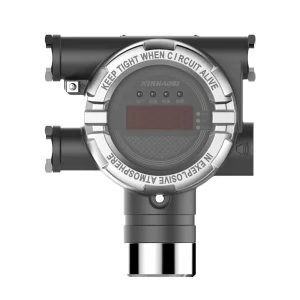
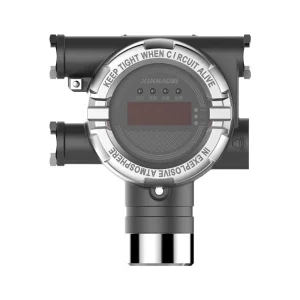
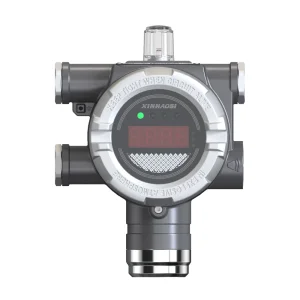
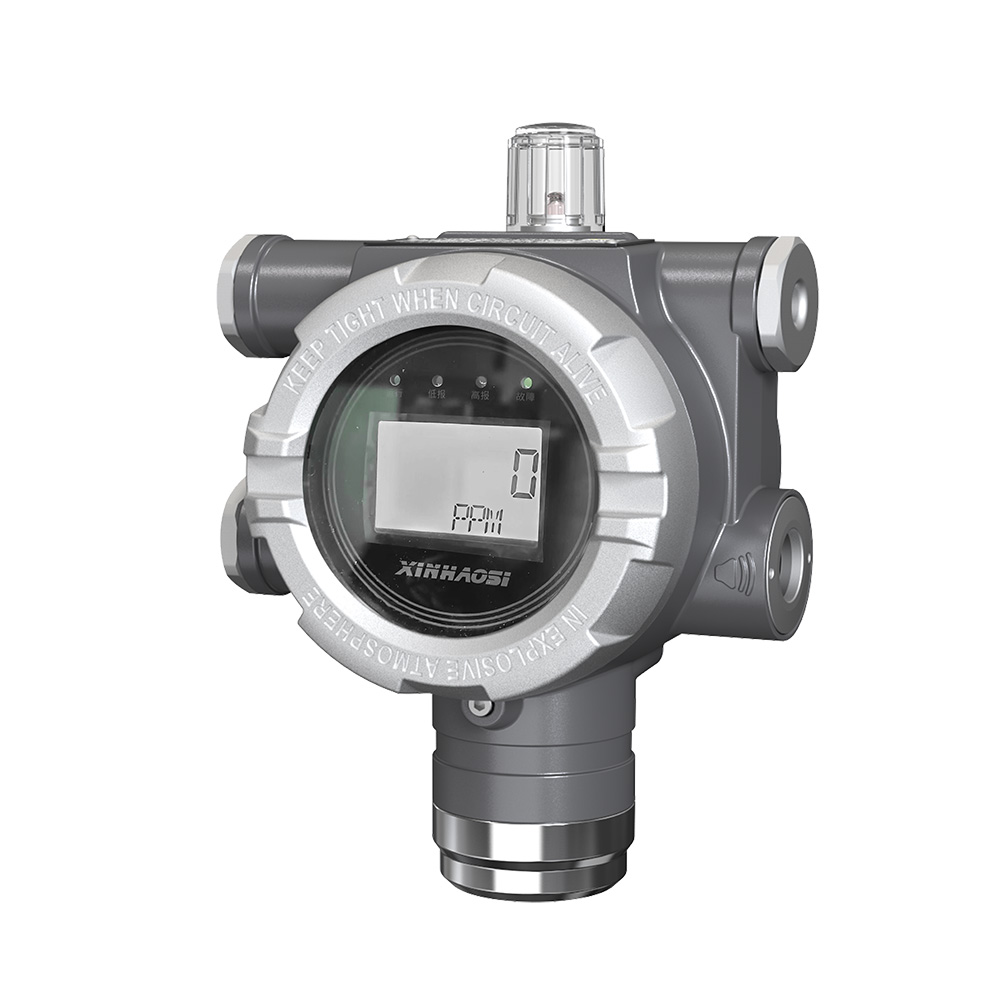
| Model | XP4000P |
| Measuring gas | Oxygen / Toxic / VOC gases |
| Measuring method | Electrochemical / Infrared / PID / Semiconductor |
| Measuring Range | Depend on sensor type |
| Response time | Depend on sensor type |
| Operation mode display | Normal / High Alarm / Low Alarm / Trouble LED |
| Measuring value display | LCD |
| Power | 24V DC |
| Alarm signal output | Light and sound alarm output, 50mA |
| Output signal | Analog 4-20mA 3-wire |
| Relay output | Three-channel programmable relay output |
| Conduit connection | Standard: 3xM26x1.5P Option: FPT3/4', NPT3/4'' |
| Mounting type | Wall/Pole/Ceiling mount |
| Operating temperature | Infrared: -40°C ~ +70°C Electrochemical: -20°C ~ +50°C PID: -20°C ~ +55°C |
| Operating humidity | 5 to 95% RH (Non-condensing) |
| Housing Material | Aluminum alloy |
| Dimensions | 172(W) x 161(H) x 79(D) mm |
| Explosion Proof | Ex db IIC T6 Gb |
| Certification | Refer to website |
| Sensor Type | Measuring Gas | Molecular Formula | Measuring Range | Operating Temperature | Typical Life | Response Time |
|---|---|---|---|---|---|---|
| Infrared Type | Combustible gases | / | 3-100%LEL | -40~+70℃ | 60 month | <30sec / 90% scale |
| Carbon dioxide | CO₂ | 0~2%vol | -40~+70℃ | 60 month | <45sec / 90% scale | |
| Nitrous oxide | N₂O | 0-1000ppm | -40~+70℃ | 60 month | <45sec / 90% scale | |
| Electrochemical Type | Carbon Monoxide | CO | 0-50 ppm | -20~+50℃ | 24 month | <10sec / 90% scale |
| Hydrogen Sulfide | H₂S | 0-20ppm | -20~+50℃ | 24 month | <12sec / 90% scale | |
| Sulfur dioxide | SO₂ | 0-20ppm | -20~+50℃ | 24 month | <10sec / 90% scale | |
| Ammonia | NH₃ | 0-100ppm | -20~+50℃ | 24 month | <50sec / 90% scale | |
| Oxygen | O₂ | 0~30%vol | -20~+50℃ | 24 month | <15sec / 90% scale | |
| Formaldehyde | CH₂O | 0-2ppm | -20~+50℃ | 24 month | <15sec / 90% scale | |
| Chlorine | Cl₂ | 0-5ppm | -20~+50℃ | 24 month | <25sec / 90% scale | |
| Bromine | Br₂ | 0-5ppm | -20~+50℃ | 24 month | <60sec / 90% scale | |
| Hydrogen chloride | HCl | 0-15ppm | -20~+50℃ | 24 month | <30sec / 90% scale | |
| Hydrogen Fluoride | HF | 0-7ppm | -20~+50℃ | 18 month | <30sec / 90% scale | |
| Hydrogen Bromide | HBr | 0-10ppm | -20~+50℃ | 24 month | <70sec / 90% scale | |
| Hydrogen Cyanide | HCN | 0-3ppm | -20~+50℃ | 24 month | <10sec / 90% scale | |
| Nitrogen Dioxide | NO₂ | 0-20ppm | -20~+50℃ | 24 month | <20sec / 90% scale | |
| Nitric oxide | NO | 0-20ppm | -20~+50℃ | 24 month | <30sec / 90% scale | |
| Silane | SiH₄ | 0-15ppm | -20~+50℃ | 24 month | <60sec / 90% scale | |
| Ethylene oxide | C₂H₄O | 0-20ppm | -20~+50℃ | 24 month | <25sec / 90% scale | |
| Vinyl chloride | C₂H₃Cl | 0-10ppm | -20~+50℃ | 24 month | <90sec / 90% scale | |
| Carbon disulfide | CS₂ | 0-5ppm | -20~+50℃ | 24 month | / | |
| Acrylonitrile | C₃H₃N | 0-2ppm | -20~+50℃ | 24 month | <30sec / 90% scale | |
| Carbonyl chloride (phosgene) | COCl₂ | 0-1ppm | -20~+50℃ | 24 month | <30sec / 90% scale | |
| *Photoionization (PID) Type | Volatile organic compounds | VOCs | 0-2000ppm | -40~+60℃ | 12 month | <5sec / 90% scale |
| Semiconductor Type | Organic combustible vapors | / | 0~2000ppm | -40~+60℃ | 36 month | / |
| Freon and halogenated compounds | / | 0~2000ppm | -40~+60℃ | 36 month | / |
*The specific range of the PID sensor for detecting different gases needs to be determined according to different situations.
| Semiconductor Type | High Sensitivity: Detects low-concentration gases with noticeable changes in electrical signals. |
| Fast Response: Rapid alteration of semiconductor electrical conductivity upon gas adsorption enables quick detection. | |
| Broad-Spectrum: Detects most volatile organic compound (VOC) vapors. | |
| Long Service Life & Cost-Effectiveness: Featuring a simple structure and low manufacturing cost, it delivers stable long-term performance, making it ideal for cost-sensitive applications. | |
| Infrared (IR) Type | Advanced Dual-Compensation Technology: Employs Non-Dispersive Infrared (NDIR) technology with dual detectors (measurement and reference channels) to compensate for environmental interference, significantly improving detection accuracy. |
| High Sensitivity & Strong Stability: Operates based on the characteristic absorption of specific infrared wavelengths by gases, unaffected by oxygen concentration levels. | |
| No Risk of Sensor Poisoning: No chemical reactions occur during detection, preventing sensor degradation due to gas exposure. | |
| Low Power Consumption: Suitable for long-term continuous monitoring. | |
| Operates in Oxygen-Free Environments: Functions effectively without the need for oxygen participation. | |
| Fast Response, Low Maintenance, Long Lifespan: Simple mechanical design ensures minimal performance degradation over time, maintaining reliable operation. | |
| Electrochemical Type | High Precision (ppm-Level Detection): Capable of detecting extremely low concentrations of toxic gases, typically with detection limits at the ppm level. |
| Linear Output: Exhibits a linear relationship between gas concentration and signal output, facilitating straightforward quantitative analysis. | |
| High Selectivity: Designed with gas-specific electrode reactions to resist cross-interference (e.g., CO-specific electrodes show minimal response to hydrogen). | |
| Stable Performance: Minimal long-term drift. | |
| Photoionization (PID) Type | Extremely High Precision (ppb~ppm-Level): Detects extremely low concentrations of VOCs. |
| Linear Output: Concentration and signal show a linear correlation, enabling precise measurements. | |
| Fast Response: Instantaneous detection of signal changes when UV light excites gas molecules to produce ions. | |
| Broad-Spectrum: Suitable for most volatile organic compounds (VOCs) (e.g., benzene series, halogenated hydrocarbons, alcohols, ketones, etc.). |