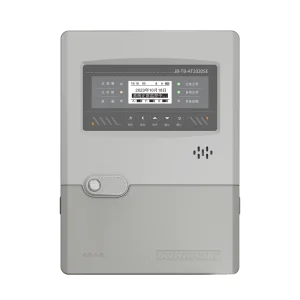
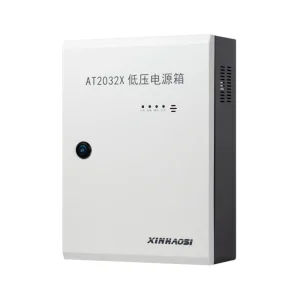
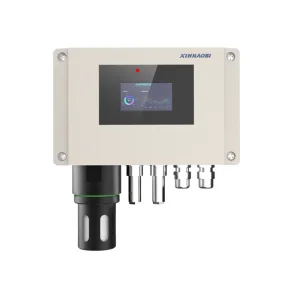
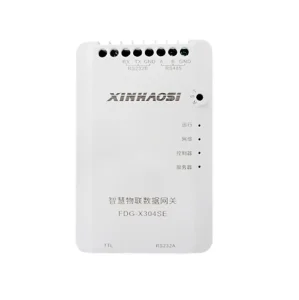
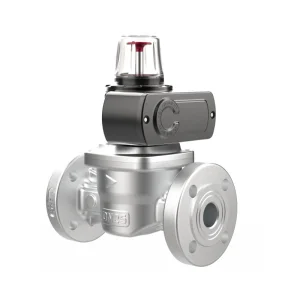
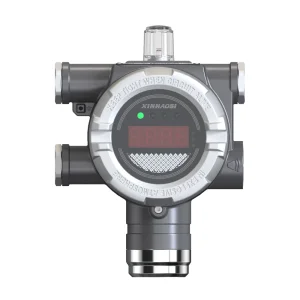
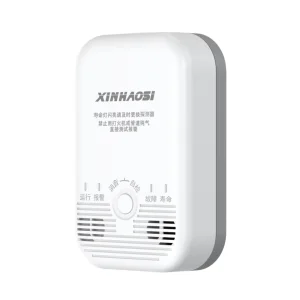
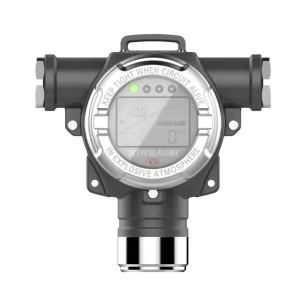
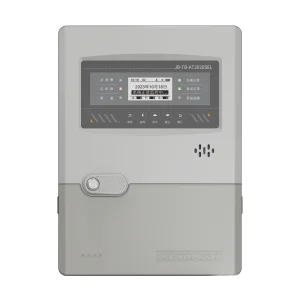
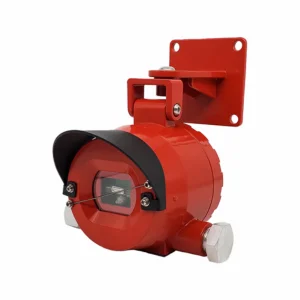
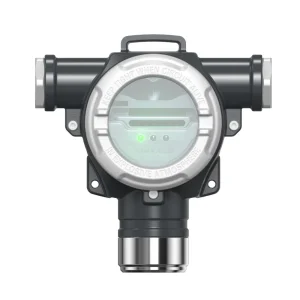
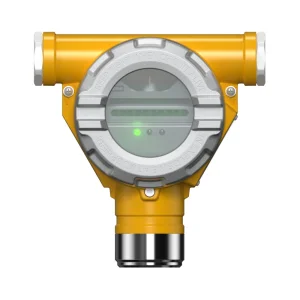
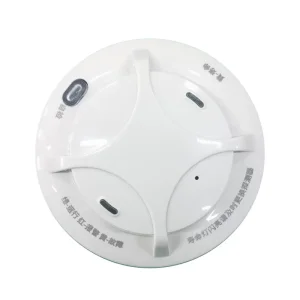
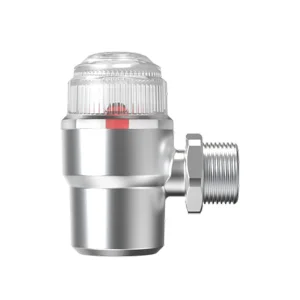
Integrate our highly stable, field-proven detection modules, industrial controllers, and safety valves into your smart building and facility networks.
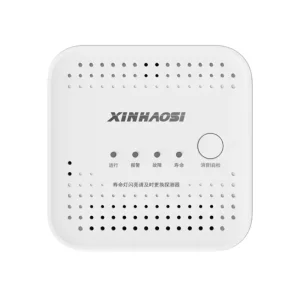
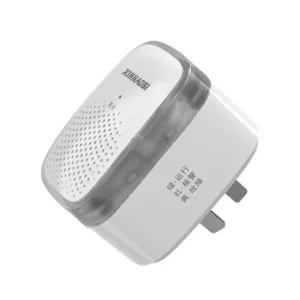
In B2B gas detection ecosystems, carbon monoxide (CO) sensor replacement is not simply a matter of scheduled maintenance; it is a critical safety and compliance mandate. Unlike many gas safety elements, the electrochemical cells deployed in carbon monoxide alarms experience inevitable chemical degradation over time. The primary catalyst in electrochemical CO sensors interacts continuously with atmospheric oxygen and trace gases, resulting in sensor sensitivity loss. As the electrolyte slowly loses its ionic capacity, the sensor's signal output decays, leading to false negatives that can have fatal consequences.
From an enterprise level, procuring robust OEM carbon monoxide detector replacement components demands an understanding of calibration drift, electrochemical shelf life, and housing specifications. Global regulatory frameworks, such as UL 2034 in North America and EN 50291 in Europe, mandate that residential and commercial detectors declare a clear End-of-Life (EOL) signal. This requires manufacturers to build intelligent micro-controllers that track time and sensor degradation, automatically alerting property managers and industrial operators when the unit requires a full hardware swap.
Electrochemical CO sensors suffer from continuous "zero drift" and "span drift." Zero drift occurs when the baseline sensor current fluctuates in the absence of CO, triggering false alarms. Span drift describes the sensor's drop in signal gain during actual CO exposure, which can delay reaction times during critical gas leaks.
5 to 10 years depending on cell quality and moisture
Strict alignment with UL 2034, EN 50291, and CE requirements
Xinhaosi is currently developing and integrating next-generation sensing topologies that will define the next decade of gas detection and environmental safety.
While electrochemical cells remain the industry benchmark for linearity and selectivity, Silicon-substrate MEMS (Micro-Electro-Mechanical Systems) technology is changing form factors. These sensors feature significantly lower power draws and structural lifespans extending beyond 15 years, reducing replacement frequency.
Integrating LPWAN protocols (like NB-IoT, LoRaWAN, and Zigbee) allows CO detectors to report active telemetry to municipal cloud servers. Rather than depending on a localized physical buzzer, modern safety networks send preemptive digital commands to gas solenoid valves, blocking lines instantly upon detection.
In industrial settings where green hydrogen storage and logistics are scaling rapidly, cross-sensitivity is a challenge. Traditional CO sensors mistake hydrogen for carbon monoxide. Xinhaosi is developing filter structures and custom catalysts to isolate pure CO readings.
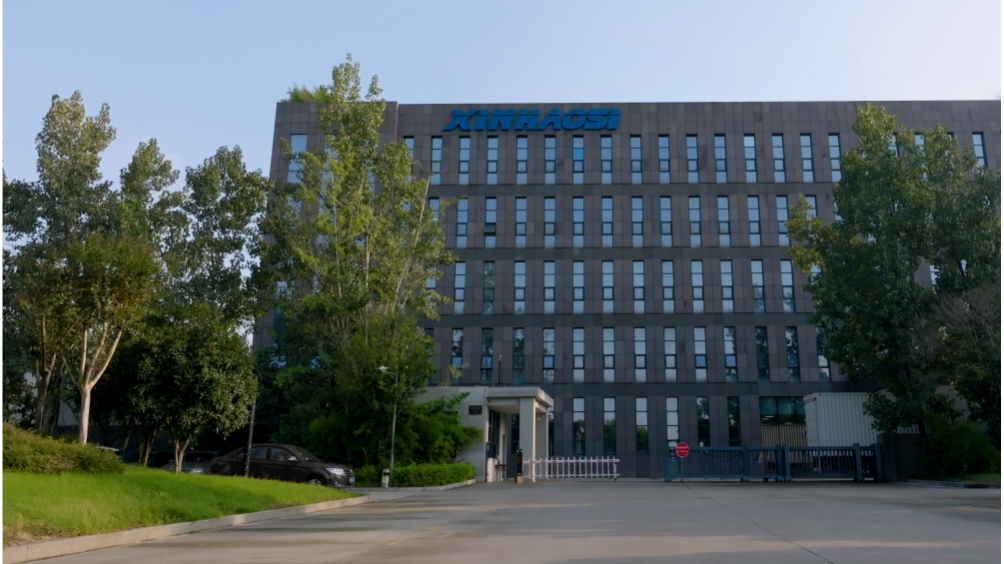
Xinhaosi Headquarters & Advanced R&D Laboratory in Chengdu
Founded in 2003, Xinhaosi is one of the most influential and trusted brands in the global gas safety industry. Over the past two decades, we have steadily built a robust and comprehensive production and service system. This integrates cutting-edge R&D, intelligent manufacturing with advanced automation equipment, digital marketing across global channels, professional after-sales support with an experienced technician team, flexible OEM/ODM services, and CNAS-Accredited laboratory calibration services that meet international standards.
Our diversified product portfolio covers industrial & residential gas detection & alarm systems, industrial & household gas solenoid valves, and urban gas pipeline network monitoring systems—all engineered to adapt to complex working environments and strict safety requirements. We produce and sell tens of millions of units annually, catering to a wide range of industries that demand reliable gas detection solutions, including oil & gas exploration and production, petrochemicals, urban gas distribution, automotive manufacturing, pharmaceuticals, new energy, steel production, and beverage processing.
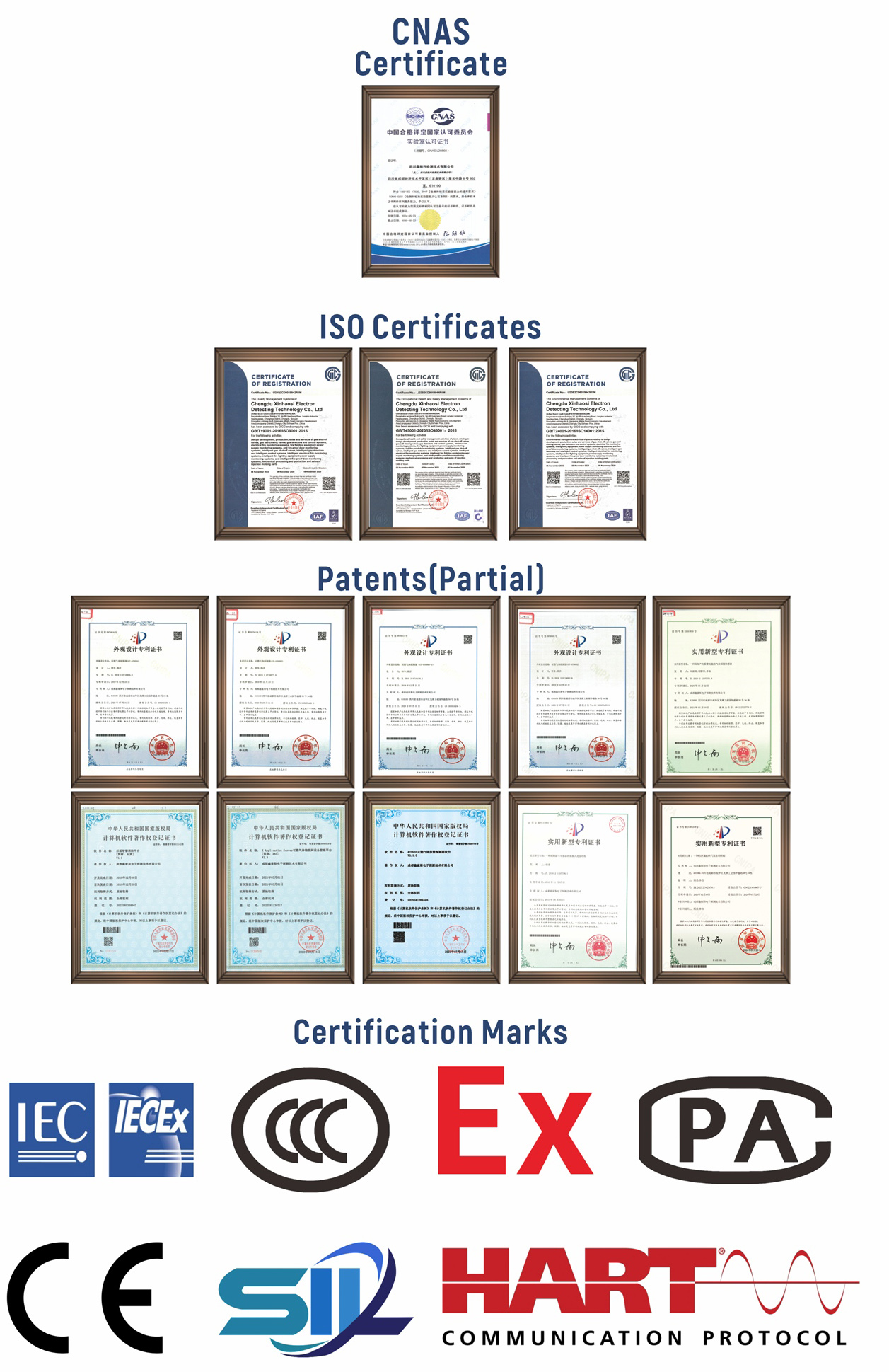
Adhering to ISO9001 quality management system standards, Xinhaosi's core products have obtained a full range of authoritative certifications, including national compulsory Products Certification, explosion-proof certification, fire product certification, CPA measurement instrument type approval certificate, and international approvals such as CE and SIL. Additionally, Xinhaosi holds honors such as "National Quality Integrity Benchmark Enterprise" and "National Quality Leading Enterprise in the Gas Alarm Industry," is a member of the China Fire Protection Association, and serves as the main drafting organization for the national standard of solenoid valves, confirming its industry influence and reputation.
Our in-house laboratory is accredited by the China National Accreditation Service for Conformity Assessment (CNAS), recognized both domestically and internationally under the ILAC-MRA framework. It operates in accordance with ISO/IEC 17025, the international standard for testing and calibration laboratories. It provides reliable and traceable testing services for gas detection and alarm products, solenoid valves, and related safety equipment. Test reports issued by the CNAS-accredited laboratory are widely accepted by regulatory authorities, certification bodies, and customers in China and overseas, helping to ensure product quality, safety compliance, and market access.
CNAS Accredited Calibration and Testing Chamber
Operating dual manufacturing hubs in Chengdu and Deyang, we provide B2B clients with significant volume scalability and risk mitigation.
Our Deyang Factory features automated SMT surface mount assembly lines, automated optical inspection (AOI), and robotic gas-chamber testing rigs that calibrate thousands of gas detectors simultaneously under temperature-controlled settings.
Unlike factories that operate merely as assembly houses, Xinhaosi controls the entire manufacturing chain—from plastic injection moulding for structural detector bodies to sensor PCB design and the fabrication of gas solenoid valves.
Every detector replacement module is printed with a unique matrix ID containing factory testing parameters, raw sensor lot numbers, and assembly timestamps. This provides B2B clients with 100% trace-back capabilities.
From a dedicated startup to a global provider of intelligent gas detection and safety control systems.
Established on April 17th, 2003. Launched our first-generation gas leak alarms and fire protection products, establishing a baseline of safety compliance in key domestic markets.
Initiated high-capacity safety valve production and significantly expanded our OEM services. Relocated our corporate office to Longtan Industrial Park to handle growing operation sizes.
Achieved 10 million units sold in cumulative gas detector products. Completed our nationwide sales and service distribution network and introduced advanced fire power monitoring products.
Launched our proprietary IoT safety platform. Developed fire automatic alarm systems and emergency evacuation systems. Awarded "National High-Tech Enterprise" status and became a qualified supplier for China's top five gas utility companies.
Began construction of our Deyang Smart Manufacturing facility. Established the specialized Petrochemical & International Business Division to better serve industrial partners outside China.
Deyang smart factory began operations, integrating Factory 4.0 automation. Launched urban gas pipeline network monitoring platforms, wireless safety systems, and AI-enabled gas solenoid valves.
We provide B2B buyers with comprehensive technical and manufacturing services to streamline global supply chains.
Modify sensor specifications, alarm thresholds, and chassis structures to suit your specific target market. Our designers supply ready-to-test prototypes, complete with localized language translations and graphic packaging.
Our technical team prepares documentation packages to assist you through regional audits. From UL testing profiles and FCC/CE reports to SIL-2 functional safety declarations, we help accelerate your market entry.
With massive raw material inventories, established chip sourcing channels, and multi-location factories, we mitigate geographic risks and maintain delivery schedules during market disruptions.
Essential technical answers regarding carbon monoxide sensor degradation, OEM configurations, and procurement processes.
A: Electrochemical sensors operate via a chemical reaction where CO gas is oxidized at a working electrode, generating an electrical signal. Over time, the internal liquid electrolyte evaporates, catalysts degrade due to high temperatures or humidity, and baseline drift occurs. This reduces detection accuracy and necessitates replacements every 5 to 10 years.
A: Yes. We can customize micro-controller firmware to output specific visual, audible, or digital bus communication codes when the sensor reaches its pre-determined functional lifetime, complying with localized regulations like UL 2034 or EN 50291.
A: For standard replacement modules or housing designs, standard production lead times run between 4 and 6 weeks. For custom OEM designs requiring housing changes or PCB layout adjustments, times typically range from 10 to 12 weeks, including testing and calibration certification.
A: Every replacement sensor runs through an automated calibration line inside a temperature-controlled gas chamber. Sensors undergo baseline zero adjustments and multi-point calibration verification using traceable reference gases, verified within our CNAS-accredited laboratory.
A: We offer multiple protocols, including Wi-Fi, Zigbee, LoRaWAN, NB-IoT, and wired industrial options like Modbus RTU, BACnet, and traditional 4-20mA current loops to connect directly into centralized BMS platforms.
Explore our full line of safety systems, designed to integrate with automated emergency shut-offs and cloud monitoring platforms.