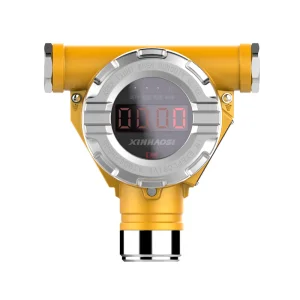
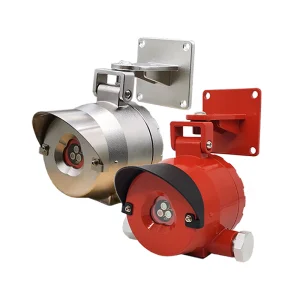
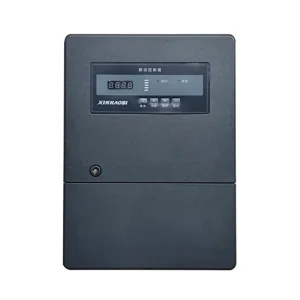
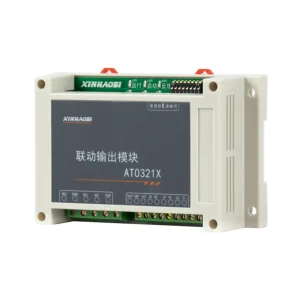
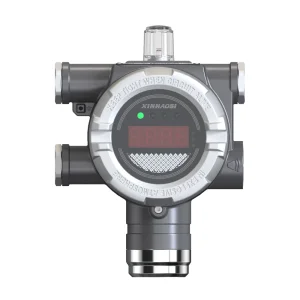
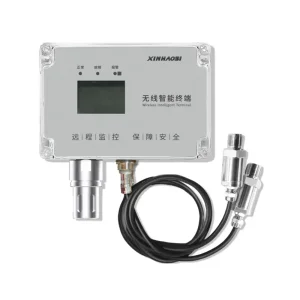
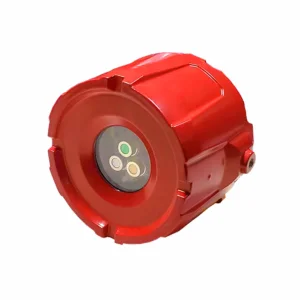
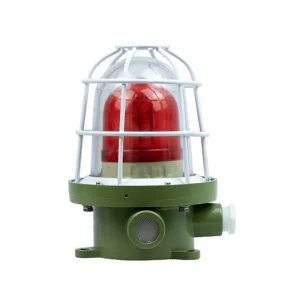
Engineered to integrate seamlessly with emergency response workflows and industrial processes.
Founded in 2003, Xinhaosi is one of the most influential and trusted brands in the global gas safety industry. Over the past two decades, we have steadily built a robust and comprehensive production and service system, which integrates cutting-edge R&D, intelligent manufacturing with advanced automation equipment, digital marketing across global channels, professional after-sales support with an experienced technician team, flexible OEM/ODM services, as well as CNAS-Accredited laboratory calibration services that meet international standards.
Our diversified product portfolio covers industrial & residential gas detection & alarm systems, industrial & household gas solenoid valves, and urban gas pipeline network monitoring systems—all engineered to adapt to complex working environments and strict safety requirements. We produce and sell tens of millions of units annually, catering to a wide range of industries that demand reliable gas detection solutions, including oil & gas exploration and production, petrochemicals, urban gas distribution, automotive manufacturing, pharmaceuticals, new energy, steel production, and beverage processing.
Guided by the core mission of "Making Gas Safety Accessible Everywhere," we consistently deliver high-performance, reliable products and customized solutions tailored to each client's unique needs. Every item we manufacture undergoes rigorous quality control tests, and every service we provide is backed by our professional technical team, fully embodying our unwavering commitment to safeguarding gas safety across both industrial workplaces and residential environments.

Chengdu R&D Center and Corporate Headquarters

Deyang Modern Intelligent Manufacturing Hub
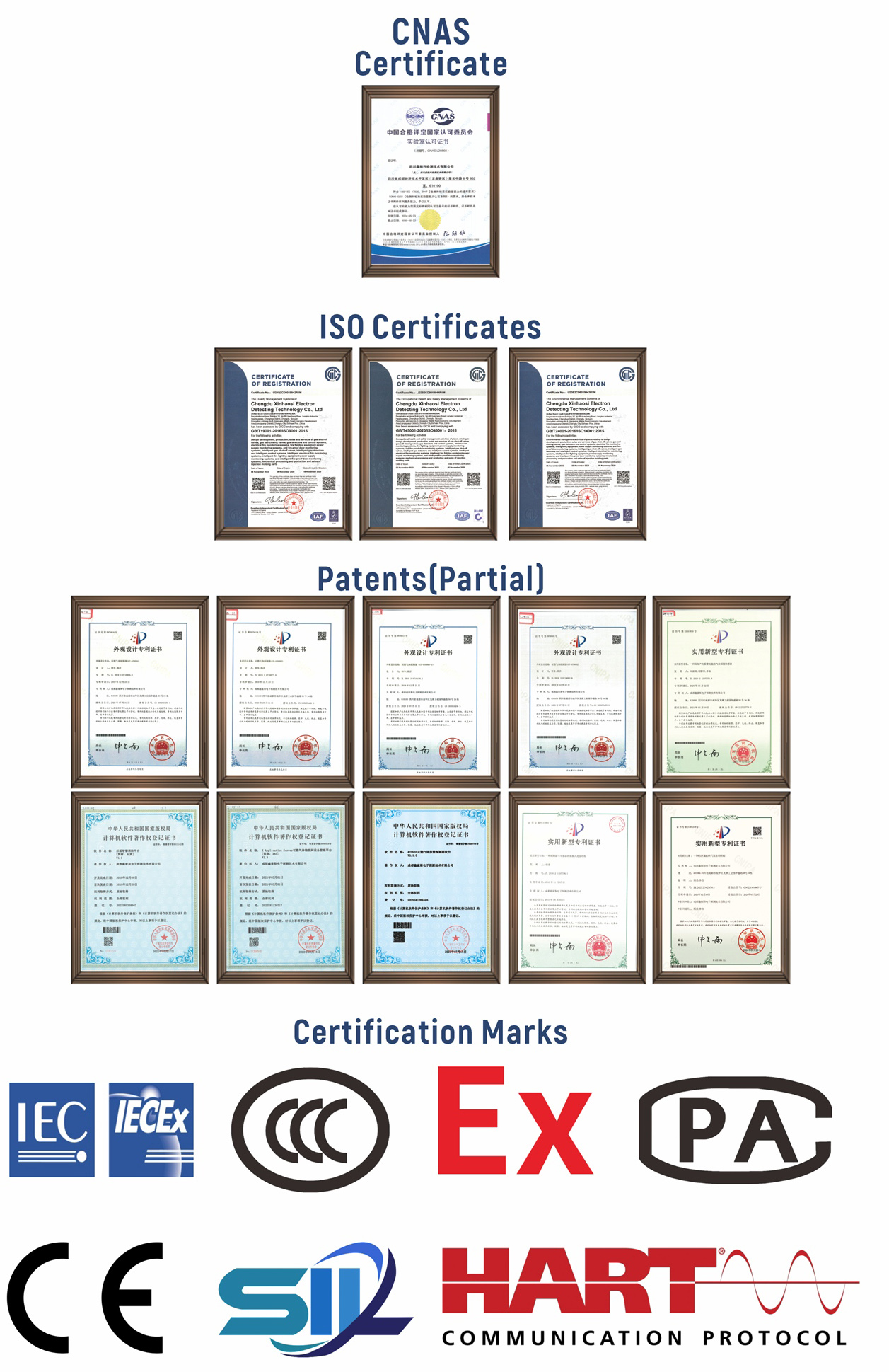
Adhering to ISO9001 quality management system standards, Xinhaosi's core products have obtained a full range of authoritative certifications, including national compulsory Products Certification, explosion-proof certification, fire product certification, CPA measurement instrument type approval certificate, and international approvals such as CE and SIL (Safety Integrity Level). Additionally, Xinhaosi holds honors such as "National Quality Integrity Benchmark Enterprise", "National Quality Leading Enterprise in the Gas Alarm Industry," member of the China Fire Protection Association, and acts as the main drafting organization for the national standard of solenoid valves, further confirming its industry influence and reputation.
In the field of intellectual property, Xinhaosi has built a robust innovation system with over 50 patents and software copyrights. These patents cover core technological areas, including a graphical monitoring system for gas detection and alarm, which enables predictive maintenance based on historical data to reduce equipment failure rates by over 30%, and a solenoid valve with flow monitoring functionality that integrates flow detection and alarm capabilities. The company also pioneered China's first networked bus-type gas leakage monitoring system and the only maximum-point gas leakage monitoring system certified by the Ministry of Public Security, demonstrating its leading position in cutting-edge technological research.
Our in-house laboratory is accredited by the China National Accreditation Service for Conformity Assessment (CNAS), recognized both domestically and internationally under the ILAC-MRA framework. It operates in accordance with ISO/IEC 17025, the international standard for testing and calibration laboratories. It provides reliable and traceable testing services for gas detection and alarm products, solenoid valves, and related safety equipment. Test reports issued by the CNAS-accredited laboratory are widely accepted by regulatory authorities, certification bodies, and customers in China and overseas, helping to ensure product quality, safety compliance, and market access.
A deep technical analysis of emergency shut-off valves, valve-seat integrity, and coil reliability in industrial gas systems.
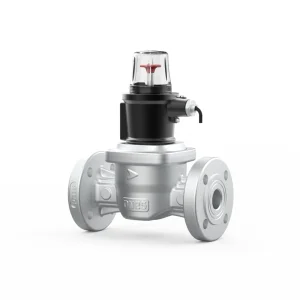
The primary safety solenoid valve acts as the final control element in safety-instrumented systems (SIS). We utilize high-purity electrical steel to optimize magnetic flux density, ensuring instantaneous response times (<0.5 seconds) under zero-differential pressure conditions. The dual-seal architectures mitigate risks of continuous coil excitation burnout.
Gas pipelines introduce friction and chemical erosion. Our factory leverages FKM (Viton) and modified NBR elastomer seals to withstand hydrocarbons and hydrogen-blended natural gas. The bodies are constructed using low-lead brass or SS316 stainless steel to eliminate galvanic corrosion.
In combustible atmospheres, safety devices must not initiate combustion. Our valves feature flameproof enclosures (Ex d IICT6 Gb) and intrinsically safe circuitry (Ex ia). Castings undergo helium leak testing to maintain zero-leakage profiles under severe ambient thermal ranges (-40°C to +80°C).
The shift toward clean energy infrastructure—including natural gas transition phases, hydrogen storage terminals, and LNG transport pipelines—demands unparalleled valve reliability. Traditionally, industrial networks relied on manual shut-off valves, which introduced unacceptable delay margins during gas releases. Today, safety solenoid valves are globally mandated as standard configurations within boiler houses, automotive finishing shops, and municipal gas pressure regulating stations. Modern installations require interconnected control systems where the solenoid valve operates as a system-dependent executor, receiving immediate control signals from centralized control boxes and optical detectors.
Implementing customized valve and gas sensor configurations for complex regional regulatory demands.
Low-pressure municipal gas networks require valves with low valve-opening pressure limits. Our XF3 series valves are widely integrated with district heating lines, shutting off local feeds if pressure drops, preventing gas dispersion in urban settings.
High-pressure environments demand flanged, heavy-duty stainless steel solenoid valves. We supply petrochemical processing hubs with ATEX and SIL2-certified valves featuring bypass assemblies for safe line charging and depressurization loops.
As gas providers blend hydrogen into municipal lines, safety valves must prevent hydrogen embrittlement. Our R&D incorporates specialized alloys and valve seat coatings designed for lower molecular weight gases.
Operating out of our advanced hubs in Chengdu and Deyang, Xinhaosi has vertically integrated its supply chain. From the initial stages of high-precision brass forging and precision CNC machining, to internal coil winding and final automated assembly lines, every process step is completed under our direct supervision. This high level of vertical integration guarantees stable lead times and excellent quality control.
Our CNAS-accredited laboratory executes rigorous validation tests on each model line:
Salt Spray Testing: Evaluates corrosion resistance of the outer surface treatment over a continuous 96-hour period.
High/Low Temperature Operations: Verifies the mechanical seal performance at ambient extremes ranging from -40°C to +80°C.
Overpressure Proof Testing: Ensures structural body and seal integrity up to 1.5 times the rated operating pressure limit.
Developing tomorrow's safety infrastructure through advanced IoT platforms, wireless controls, and smart telemetry.
Integrating pressure sensors and microprocessors directly into the valve coil cover. This allows real-time current profile analysis to detect internal mechanical friction changes before failure occurs.
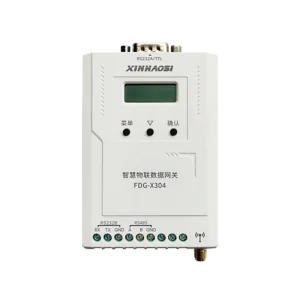
Connecting our safety valves with the FDG-X304 Intelligent Data Gateway to enable cloud telemetry. This allows operators to check valve status across different industrial zones remotely.
Utilizing edge computing and history database trends to predict gas line anomalies and initiate preemptive isolation, reducing reliance on manual operator actions during gas leaks.
Two decades of steady growth, safety innovations, and manufacturing scale expansions.
Expert answers to common engineering questions regarding the selection, deployment, and testing of safety valves.
A safety solenoid valve is specifically designed for fail-safe emergency shut-off applications, typically holding certifications like SIL2/3 and Ex-proof for flammable gases. Unlike standard process control valves, they are designed to guarantee closure in under 500 milliseconds when power is cut (fail-safe close) and are built with specialized elastomer seals that resist chemical degradation from fuel gases.
A CNAS-accredited calibration ensures that the safety equipment’s pressure limits, sensor thresholds, and response times are traceable to national and international measurement standards. Testing done under these guidelines (following ISO/IEC 17025) is globally accepted under the ILAC-MRA framework, giving engineering teams assurance of reliable, compliant field performance.
Normally Open (NO) valves remain open during regular operation and require a short electric pulse to close, which is common in municipal gas networks to prevent shutdown during localized power outages. Normally Closed (NC) valves require constant electrical power to stay open, making them ideal for high-risk industrial installations where any power failure should prompt immediate, safe shut-off of the gas line.
The safety valve functions as the executor within an integrated system loop. When a gas detector (like the GTYQ-AT0505/d) detects concentrations exceeding set thresholds, it sends a signal to the central controller (such as the JB-TB-AT2020LH). The controller then triggers the output control box to cut power or send an electrical pulse to the solenoid valve, shutting down the gas line automatically.
Coil burnout is typically caused by excessive heat or voltage fluctuations. To prevent this, we build our coils using Class H insulation (rated up to 180°C) and encapsulate them in thermally conductive epoxy. Additionally, low-power latching designs can be used to hold the valve open mechanically, drawing power only during switching states.
Integrated monitoring accessories, output modules, and flame sensing technology for safety loops.