Direct factory supply of high-precision combustible gas detectors, controllers, and smart monitoring devices certified for global safety standards.
Understanding the molecular dynamics, Lower Explosive Limit (LEL) metrics, and sensor hardware mechanisms essential for industrial plant safety.
Methane ($CH_4$) is a colorless, odorless, highly flammable hydrocarbon gas with a relative density of 0.55 relative to air. In industrial processing, energy extraction, and municipal distribution, uncontrolled methane releases pose catastrophic safety risks including thermal explosions and rapid asphyxiation. The Lower Explosive Limit (LEL) for methane is strictly defined at 5.0% volume in air (50,000 ppm), while the Upper Explosive Limit (UEL) reaches 15.0% volume.
Modern industrial methane gas detector factories must engineer devices capable of detecting trace gas concentrations at the parts-per-million (PPM) level for environmental fugitive emission monitoring, as well as rapid response percentage LEL (%LEL) monitoring for explosion prevention in classified hazard zones (ATEX Zone 1 / Zone 2).
Auto-Ignition Temperature: 580°C | LEL Threshold: 5.0% Vol (100% LEL) | Vapor Density: 0.55 (Lighter than air)
| Sensing Mechanism | Detection Range | Response Time ($T_{90}$) | Poisoning Vulnerability | Oxygen Requirement | Expected Sensor Lifespan | Primary Industrial Use Case |
|---|---|---|---|---|---|---|
| Catalytic Bead (Pellistor) | 0–100% LEL | < 15 seconds | High (Silicones, Lead, Sulfur) | Required (>10% $O_2$) | 3 – 5 Years | Refineries, Power Plants, Boiler Rooms |
| NDIR Optical | 0–100% Vol / % LEL | < 10 seconds | Immune (Zero Poisoning) | None (Operates in Inert Gas) | 8 – 10+ Years | Offshore Rigs, Petrochemical Plants, Inert Tanks |
| TDLAS (Laser Absorption) | 0–50,000 ppm-m | < 2 seconds | Immune | None | 10+ Years | Long-distance Pipelines, Gas Distribution Grid |
| Planar Semiconductor | 0–10,000 ppm | < 20 seconds | Moderate (High Organic Vapors) | Required | 3 – 5 Years | Residential Homes, Commercial Kitchens |
Deploying certified methane safety monitoring systems across complex environmental conditions, subterranean networks, and hazardous manufacturing zones.
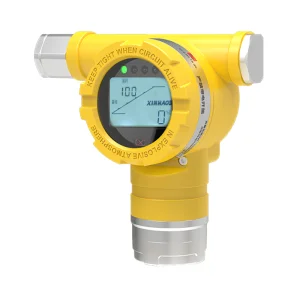
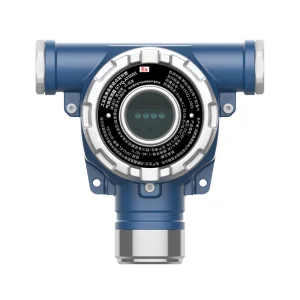
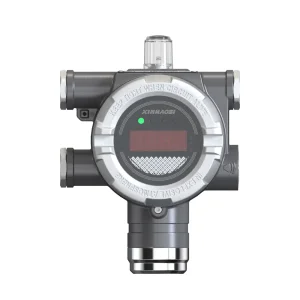
Offshore drilling rigs and wellhead processing plants require explosion-proof ($Ex\ d\ \text{IIC\ T6}$) stationary methane detectors with IP66/IP67 ingress ratings. Devices must withstand salt-spray corrosion, continuous vibrations, and extreme thermal fluctuations ranging from -40°C to +70°C.
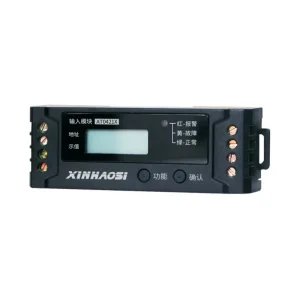
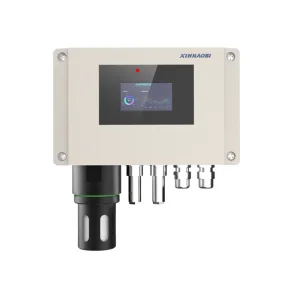
Subterranean pipe galleries, underground valve vaults, and city gate stations utilize networked bus-type and wireless battery-powered monitoring units (e.g., GT-AT0616 Series). Low-power LoRaWAN/NB-IoT telemetry transmits pressure and gas leak telemetry in real-time to central municipal control centers.
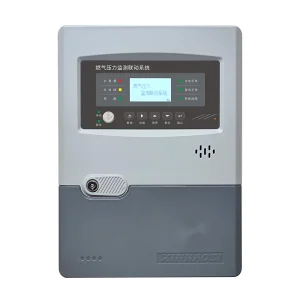
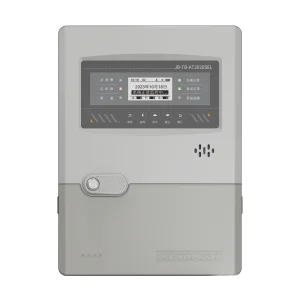
Steel mills, fertilizer synthesis plants, and pharmaceutical cleanrooms demand multi-channel fixed gas monitor controllers (such as the JB-TB-AT2020SEL) with relay outputs that trigger automated explosion-proof emergency shut-off solenoid valves upon reaching 20% LEL thresholds.
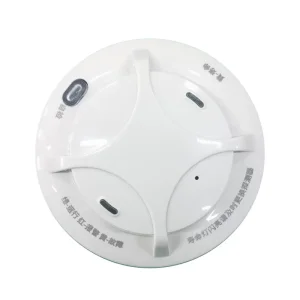
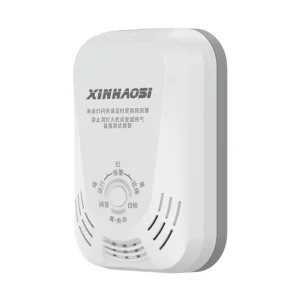
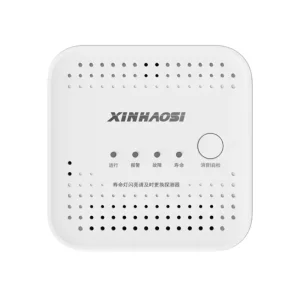
High-density residential complexes rely on household combustible gas alarms (e.g., JT-AT2004BII & JT-AT3068 series) compliant with EN 50194 / UL1484. Bus-type digital wiring enables centralized building management notification and automatic kitchen safety valve closure.
As global energy systems transition to decarbonized gas networks, factories must supply specialized gas detectors calibrated to monitor blended methane-hydrogen streams without signal drift or non-linear calibration errors caused by cross-sensitivity.
Underground coal mining shafts require intrinsically safe ($Ex\ ia\ \text{I}$) portable detectors and fixed shaft monitors designed to withstand continuous dust accumulation, high humidity, and physical impact while maintaining ultra-reliable fast-response alarms.
Founded in 2003, Xinhaosi (GasSafetyPro) stands as one of the most influential and trusted manufacturing powerhouses in the global gas safety sector. Operating state-of-the-art dual manufacturing facilities in Chengdu and Deyang, Sichuan Province, the organization combines over two decades of precision manufacturing expertise with automated digital SMT infrastructure.
Our integrated supply chain model covers every tier of production—from raw component sourcing and automated circuit board assembly to high-precision robotic gas calibration and final pressure housing testing. Producing tens of millions of units annually, Xinhaosi guarantees global distributors and OEM/ODM partners ultra-competitive lead times, total quality control, and unparalleled cost-to-performance advantages.
Our in-house calibration and testing center is formally accredited by the China National Accreditation Service for Conformity Assessment (CNAS) and recognized globally under the ILAC-MRA framework. Operating strictly to ISO/IEC 17025 standards, our test reports provide direct market access across regulatory authorities globally.
Strict adherence to safety certifications guarantees legal market entry, operational safety, and risk mitigation for international engineering procurement.
Certified to flameproof enclosure standards ($Ex\ d\ \text{IIC\ T6\ Gb}$) and intrinsic safety ($Ex\ ia\ \text{IIC\ T4\ Ga}$) for explosive hazardous gas environments.
Evaluated under IEC 61508 / IEC 61511 standards, achieving SIL2 and SIL3 capability for Safety Instrumented Systems (SIS).
Domestic and international calibration traceability verified under the ILAC-MRA mutual recognition agreement.
Main drafting organization for China's national standards on gas safety solenoid valves and networked combustible gas alarms.
From pioneering early leak alarms to establishing automated multi-factory manufacturing and smart AI safety valve platforms.
Company established on April 17th, 2003. Successfully developed and launched the 1st generation of gas leak alarms and integrated fire fighting products, establishing foundational R&D workflows.
Initiated mass production of gas safety valves and rapidly expanded international OEM business channels. Relocated corporate headquarters to Longtan Industrial Park office facility.
Achieved historic milestone of 10 million units cumulative gas detector sales. Moved into the expanded Chengdu factory facility, finalized nationwide sales/service networks, and launched fire power monitoring systems.
Pioneered proprietary cloud IoT platform. Launched fire automatic alarm, emergency lighting, and evacuation systems. Certified as a High-Tech Enterprise and qualified as an official supplier to China’s Top 5 gas distributors.
Began construction of the Deyang mega-factory base. Formally established the dedicated Petrochemical & International Business Division. Honored with the Sichuan Provincial Technology Center designation.
Deyang intelligent factory construction completed and fully operational. Launched urban gas pipeline network monitoring platforms, long-range wireless detectors, and AI-enabled smart safety valve lines.
Practical directives for facility managers, field engineers, and system integrators ensuring long-term measurement reliability.
Because methane gas ($CH_4$) possesses a relative vapor density of 0.55 (significantly lighter than standard atmospheric air), escaping methane rises rapidly toward ceiling structures. Incorrect mounting near floor levels will lead to complete system failure during an active leak.
Ensuring robust signal transmission across expansive industrial facilities requires selecting appropriate electrical communication architecture:
Detailed technical and commercial answers for OEM buyers, EPC contractors, and safety distribution partners.
Catalytic bead sensors detect methane via thermal oxidation on an active filament, making them affordable for general 0-100% LEL use, but they require oxygen (>10%) and can be poisoned by silicones or heavy sulfur. NDIR sensors use optical infrared light absorption, require no oxygen, cannot be poisoned, and last significantly longer (8-10+ years), making them superior for harsh offshore or inert industrial environments.
Xinhaosi provides comprehensive OEM/ODM services including custom enclosure molding, tailored PCB layout design, private-label branding, customized firmware communication protocols (Modbus, BACnet, HART, LoRaWAN), localized alarm threshold settings, and specialized packaging engineered for target regional compliance (ATEX, UL, CE, SIL).
Every unit manufactured at our Deyang and Chengdu facilities undergoes automated 100% multi-point calibration, environmental stress screening (thermal cycling and humidity conditioning), and electronic aging tests. Furthermore, our CNAS-accredited laboratory operates to ISO/IEC 17025, validating sample batches with international measurement traceability.
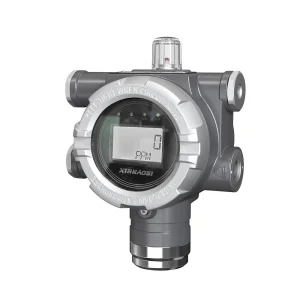
Our industrial methane detector line (e.g., GTYQ-XP3000, GTYQ-AT0501, GTYQ-AT0602A) features robust cast-aluminum or stainless steel housings certified for Ex d IIC T6 Gb (Flameproof) and Ex ia IIC T4 Ga (Intrinsically Safe), suitable for direct deployment in ATEX / IECEx Zone 1 and Zone 2 hazardous classified locations.
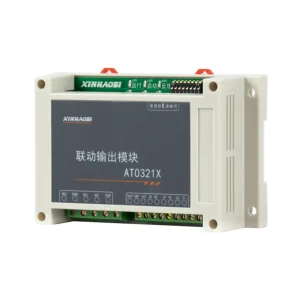
Yes. Our residential and industrial detectors (as well as control panels like the JB-TB-AT2020SEL) feature built-in relay contacts and pulse output drives designed specifically to trigger household or industrial solenoid shut-off valves instantly upon gas leak detection, stopping fuel flow at the source.
Thanks to our dual-factory infrastructure in Deyang and Chengdu spanning high-speed automated SMT lines, standard product orders typically ship within 2 to 3 weeks. Custom OEM orders requiring unique certification documentation or modified enclosures are generally fulfilled within 4 to 6 weeks.
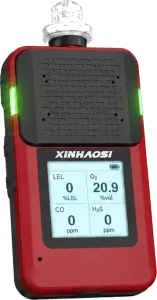
Explore our full line of factory-direct output devices, portable units, explosion-proof transmitters, and control consoles.