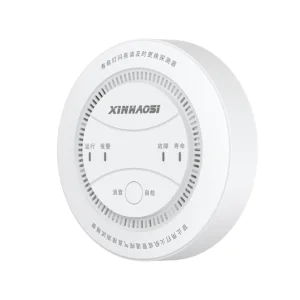
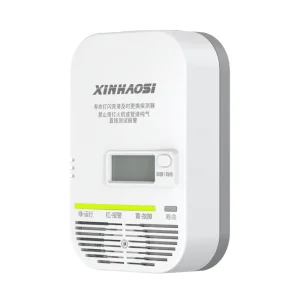
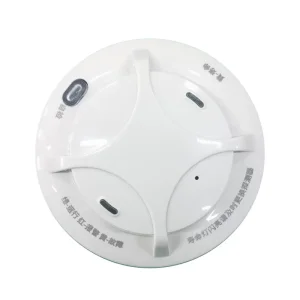
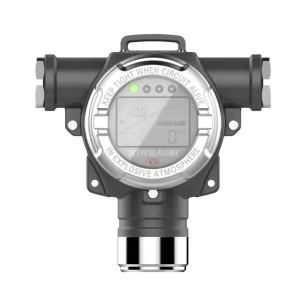
Engineered for swift integration into domestic environments, residential building networks, and commercial multi-family housing complexes across America.
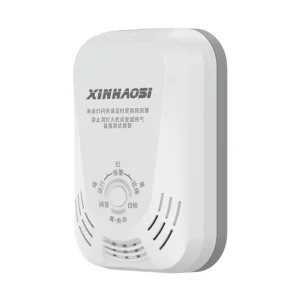
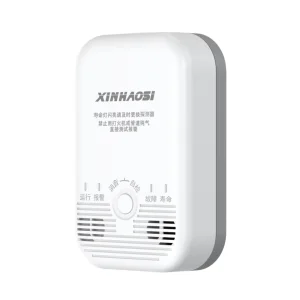
The safety landscape for residential housing in the United States is experiencing a profound transition. As state legislatures move towards proactive mitigation of fuel gas leaks, new compliance standards are becoming mandatory. For example, legislative actions like New York State's Senate Bill S3235 and similar ordinances in Maine and Connecticut require the installation of combustible gas detectors in residential structures containing natural gas or propane systems.
Unlike traditional fire alarms, modern residential gas detectors must offer long-term sensor stability, zero drift, and resistance to environmental contaminants such as household cleaners and aerosol sprays. Compliance with UL 1484 (Standard for Residential Gas Detectors) and NFPA 715 (Standard for the Installation of Combustible Gas Detection Devices) is now a central criterion for procurement by North American HVAC distributors, multi-family housing developers, and municipal utility providers.
At Xinhaosi, we align our R&D with these strict regulatory shifts, supplying robust, highly selective sensor architectures that protect families and property while minimizing nuisance false alarms.

Chengdu Factory & Engineering Headquarters
Deploying the right sensing technology is vital for regulatory compliance and operational safety in North American residential applications.
Ideal for cost-sensitive, high-volume residential deployments. Features excellent sensitivity to Methane (CH4) and Liquid Petroleum Gas (LPG) with robust resistance to thermal shock.
Provides highly linear response profiles up to the Lower Explosive Limit (LEL). Designed with high selectivity, avoiding interference from humidity and volatile organic compounds.
Integrates electrochemical cells for carbon monoxide (CO) monitoring and combustible gas tracking inside a unified micro-controller unit, optimizing device footprint.
| Parameter | Catalytic Bead Sensor | Metal Oxide Semiconductor (MOS) | NDIR Infrared (Future Roadmap) |
|---|---|---|---|
| Target Gas Selection | Methane, Propane, Hydrogen | Methane, Propane, Butane | Hydrocarbon Gases (Specific CH4) |
| Lifespan Estimate | 3 - 5 Years | 5 - 7 Years | 8 - 10+ Years |
| Operating Temperature Range | -40°F to 158°F (-40°C to 70°C) | 14°F to 122°F (-10°C to 50°C) | -22°F to 140°F (-30°C to 60°C) |
| Calibration Stability | High stability, low baseline drift | Requires temperature compensation | Extreme stability, self-calibrating |
| Relative Cost Matrix | Moderate | Cost-Effective / High Volume | Premium / Project Specific |
Explore our foundational residential and multi-point gas safety line, designed for developers, distributors, and global OEM partners.
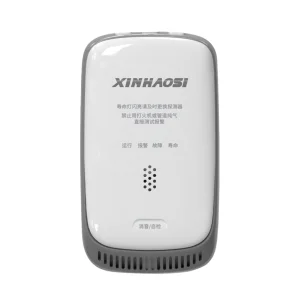
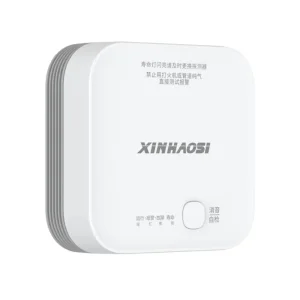

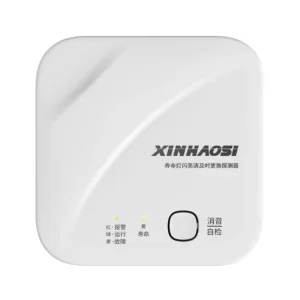
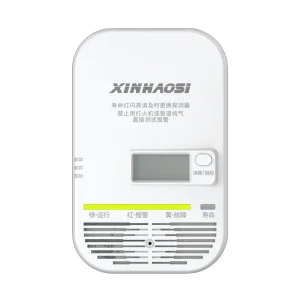
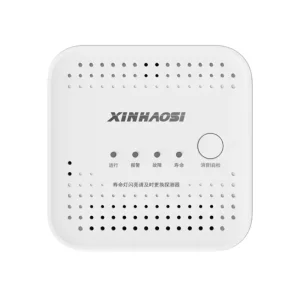
From advanced SMT lines to our ISO/IEC 17025 accredited calibration lab, quality control is integrated into every phase of production.

Deyang Intelligent Manufacturing Factory
Established in 2003, Xinhaosi has spent two decades building a global reputation in the safety industry. Integrating research, design, production, and service, we supply gas safety technology to global markets, including North America, Europe, and the APAC region.
Our core production is backed by the ISO9001 Quality Management System, alongside certifications including CE, SIL, and localized national approvals. By running an in-house laboratory accredited by the China National Accreditation Service for Conformity Assessment (CNAS), operating under the ILAC-MRA framework, we guarantee that all performance and calibration data is traceable to international reference standards.
Our intelligent factories in Chengdu and Deyang feature automated SMT placement, advanced environmental simulation test chambers, and precision gas-mixing equipment. These tools enable us to test every product under extreme conditions, including varying humidity and temperature extremes, before shipment.
Innovation is key to protecting life and property. Xinhaosi holds over 50 patents and software copyrights. Our R&D team pioneered networked bus-type monitoring configurations and software platforms that enable predictive maintenance. By analyzing sensor drift and output cycles, our systems can help reduce equipment failures by up to 30%.
We are also active contributors to safety standards, acting as a primary drafting unit for national standards in solenoid valve technology and flow-integrated detection equipment. This industry leadership helps keep our technology aligned with emerging global compliance demands.
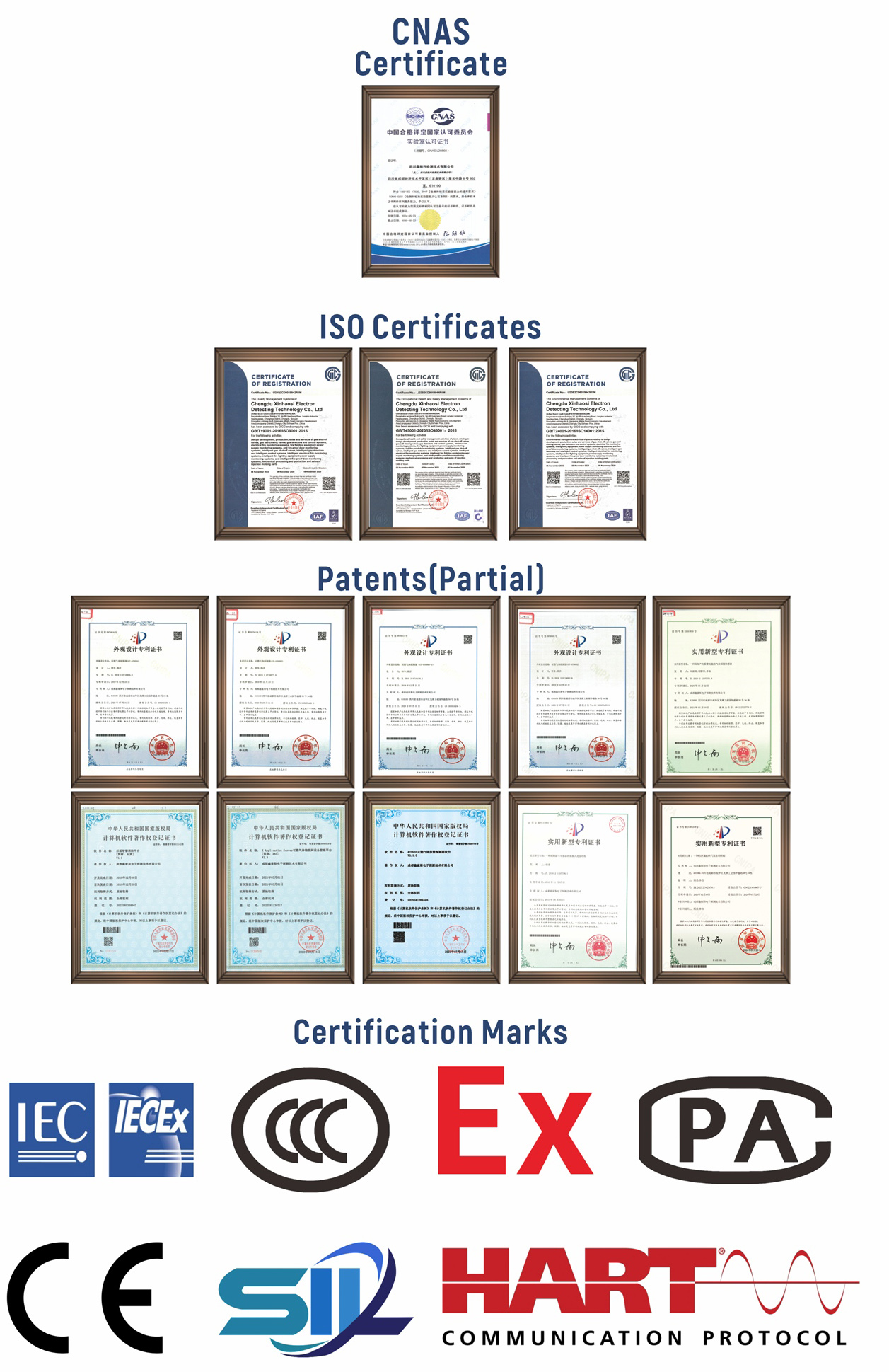
CNAS Accredited Calibration Laboratory (ISO/IEC 17025)
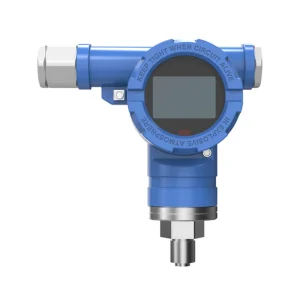
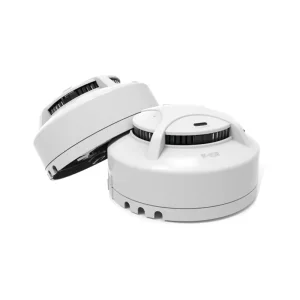
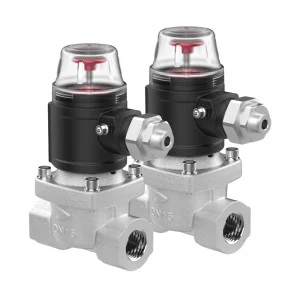
Essential components and specialized devices for complete building protection, including parking facilities, plant rooms, and industrial infrastructure.
Over two decades of milestones, growing from a regional safety pioneer into a global manufacturer.
Establishment & Startup: Founded Xinhaosi on April 17, 2003. Launched our first-generation gas leak alarms and basic fire fighting products.
Scale & OEM Expansion: Initiated production of specialized safety solenoid valves. Expanded our global OEM services and relocated to our Longtan Industrial Park office building.
Rapid Growth: Achieved a milestone of 10 million units sold. Moved into our dedicated Chengdu factory facility and expanded our domestic service network.
IoT & Industrial Integration: Launched our proprietary IoT safety platform. Developed networked monitoring systems and qualified as an official supplier to China's top gas companies.
Advanced Production: Started construction of the Deyang manufacturing plant. Established our Petrochemical & International Business Division to focus on overseas compliance.
Next-Gen Tech: Deyang smart factory begins full operations. Launching wireless detection lines, AI-assisted safety valves, and expanded IoT systems for urban networks.
Collaborating with a global supplier requires reliable logistics, compliance support, and flexible customization. We support our US partners with a streamlined business model:
Whether you are distributing through wholesale HVAC channels or bidding on large-scale municipal projects, our engineering teams provide the back-end support you need.
Answers to common questions about compliance, sensor types, and procurement processes for gas safety systems.
Contact our technical sales team for comprehensive product datasheets, compliance files, and volume pricing estimates tailored for the United States market.
Send Inquiry Now