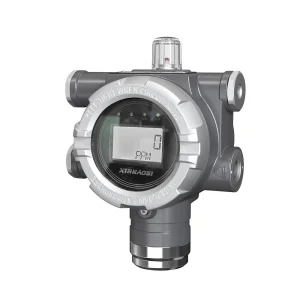
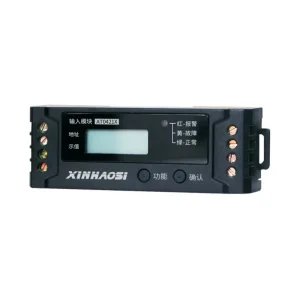
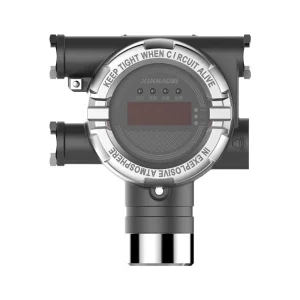
Explore our elite range of gas solenoid valves, wireless transmitters, and explosion-proof detection systems designed for demanding industrial applications.


Chengdu Headquarters & R&D Center

Deyang Manufacturing Hub
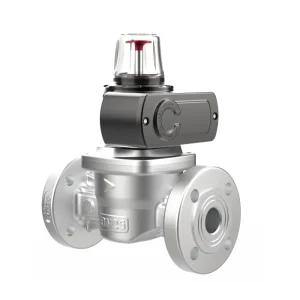
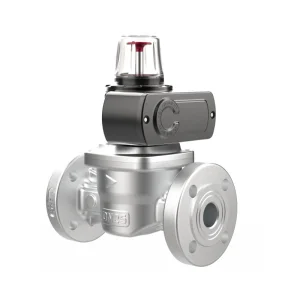
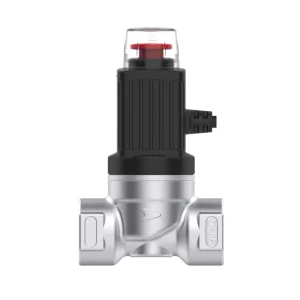
Solenoid valves are the silent guardians of modern industrial, commercial, and residential safety loops. Utilizing electromagnetic force to actuate quick-closing or modulating gas flow corridors, these components prevent cataclysmic leakages, explosions, and systemic system failures. In gas line applications, solenoid valves respond to automated alarm signals (such as those from combustible gas detectors), instantaneously isolating high-pressure pipelines.
Founded in 2003, Xinhaosi has risen as one of the most influential and trusted brands in the global gas safety landscape. For over two decades, we have engineered safety solutions through our vertically integrated infrastructure. This comprises cutting-edge R&D labs, advanced manufacturing plants in Chengdu and Deyang, flexible OEM/ODM capabilities, and CNAS-Accredited laboratory calibration services conforming to ISO/IEC 17025.
From micro-volt household gas shutoff systems to massive pipeline distribution networks in metropolitan centers, our solenoid valves and gas detectors safeguard millions of lives daily. Our manufacturing volume runs into the tens of millions of units annually, validating our market presence in petrochemicals, new energy, pharmaceuticals, metallurgy, and smart city architectures.
Backed by rigorous certifications, over 50 patents, and domestic standard-drafting authority.
Conforming to strict ISO9001 systems, our valves and detectors hold national compulsory Product Certification (CCC), explosion-proof accreditation, fire protection certifications, and global standards like CE and SIL levels. This ensures immediate regulatory compliance in domestic and overseas markets.
Our in-house calibration facility is accredited by the China National Accreditation Service (CNAS) under the ILAC-MRA framework, verifying traceability, objective evaluation, and compliance with the strict ISO/IEC 17025 standard. All testing protocols are globally accepted.
Xinhaosi serves as a principal drafting organization for China's national standards governing gas safety solenoid valves. Holding more than 50 patents, we designed the nation's initial networked bus-type gas leakage monitoring networks.
| Solenoid Valve Class / Parameter | Common Application Scenario | Actuation Mechanics | Key Standard Compliance |
|---|---|---|---|
| Direct-Acting Solenoid Valves | Residential gas safety, kitchen shut-offs | Immediate magnetic force lift | GB 4706, CE, RoHS |
| Pilot-Operated Valves | Industrial high-pressure piping networks | Differential fluid pressure control | SIL 2 / SIL 3, ATEX Ex-proof |
| Explosion-Proof Valves (Ex d/Ex ia) | Petrochemical, offshore oil & gas rigs | Flameproof / Intrinsically safe housing | IECEx, CNEx, GB 3836 |
| Auto-Shutoff / Manual-Reset Valves | Commercial boiler rooms, multi-unit housing | Pulse trigger closure, manual pull reset | Standard Fire Code Compliance |
Years Industry Leadership
Patents & Software Copyrights
Reduction in System Failure Rate
Annual Production Volume
Understanding user intent and application-specific parameters is essential when sourcing solenoid valves. Industrial settings present vastly different operating conditions than residential properties. Here is how Xinhaosi optimizes solenoid valves across core global sectors:
Global procurement teams face the challenge of balancing strict quality benchmarks with cost efficiency. Xinhaosi addresses this through advanced manufacturing at our Chengdu and Deyang facilities:
Vertical Integration: We control the entire production pipeline, from design and structural modeling to copper coil winding, aluminum die-casting, CNC precision machining, and final performance testing. This minimizes external dependencies and reduces lead times.
Precision CNC Automation: Automated manufacturing cells produce critical valve components to sub-micron tolerances, maintaining airtight seals and high batch-to-batch consistency.
100% Quality Testing: Every solenoid valve undergoes rigorous bubble-tight leakage tests and high-voltage insulation tests before leaving the facility. This matches Western quality expectations at competitive production costs.
Over two decades of dedication to industrial progress and safety systems.
Sourcing solenoid valves for heavy industries requires a thorough evaluation of technical specifications. Engineering teams must analyze several operational conditions to prevent premature field failures:
Natural gas, LPG, and manufactured gas have different chemical profiles. Corrosive gases with high sulfur content (H2S) require stainless steel or specialized brass bodies. Valve seals must be made of Viton (FKM) or NBR, depending on the minimum operating temperature. Specifying the correct seal material prevents chemical degradation and gas bypass leaks.
Valves installed in hazardous areas must use certified explosion-proof enclosures. In the EU, ATEX certification is required, while other markets rely on IECEx or local equivalents. The choice between intrinsically safe coils (Ex ia) and flameproof enclosures (Ex d) depends on the zone classification (Zone 0, 1, or 2) and the available power supply.
Selecting the correct flow coefficient (Cv or Kv value) is critical. Under-sizing a valve causes high pressure drops and starves downstream equipment (like burners or boilers). Over-sizing pilot-operated valves can lead to unstable operation and incomplete opening. Working pressure limits (OPD) must account for peak system pressure fluctuations.
Safety-critical applications, such as emergency shutdown systems (ESD), require SIL-certified solenoid valves. SIL 2 or SIL 3 certifications verify that the valve has a low probability of failure on demand (PFD), meeting safety standards for chemical processing and refining.
Answers to common technical and sourcing questions from global procurement and engineering teams.
Direct-acting valves use electromagnetic force to pull the plunger and open the orifice. They operate from zero differential pressure up to their maximum rating. Pilot-operated valves use the process gas pressure to open and close. They require a minimum pressure differential (typically 0.3 to 0.5 bar) to function correctly but can handle much larger flow sizes and higher pressures with relatively small coils.
Our explosion-proof solenoid valves are certified by recognized national bodies, conforming to the GB 3836 series of standards, which align with IECEx and ATEX explosion-proof frameworks. The coil enclosures are designed to contain internal explosions without igniting combustible gases in the surrounding atmosphere.
The most common failures are coil burnouts and internal leakage caused by particulates. Xinhaosi uses H-class insulation (rated to 180°C) to prevent coil burnouts from continuous duty. To prevent leakage from particulates, we recommend installing inline Y-strainers upstream of the valve to protect the seal surfaces.
Yes. We offer OEM/ODM services that allow customization of operating voltages (12VDC, 24VDC, 110VAC, 220VAC), housing materials, paint finishes, and private labeling. We also support custom engineering for specific pressure ranges and flow ratings, backed by our R&D team and testing laboratories.
Our CNAS laboratory conducts calibration, electromagnetic compatibility (EMC) testing, ambient temperature performance testing, gas leakage sensitivity tests, and mechanical life cycling. All reports issued by our facility are recognized internationally under the ILAC-MRA framework, providing traceable quality documentation for compliance.
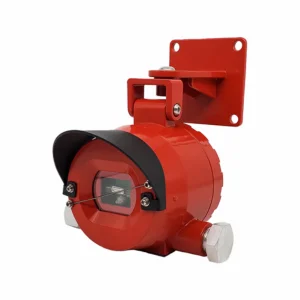
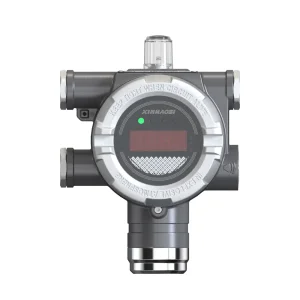
Heavy-duty industrial solenoid valves, flame detectors, and gas monitoring systems for hazardous operations.