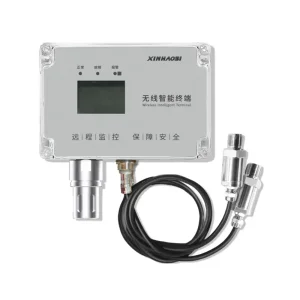
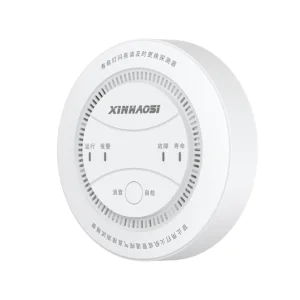
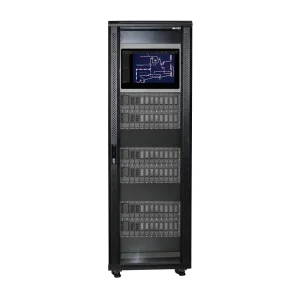
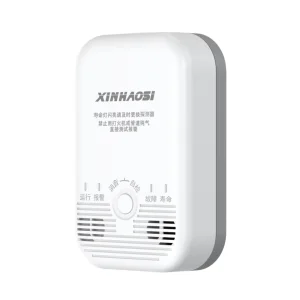
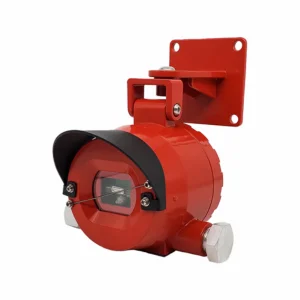
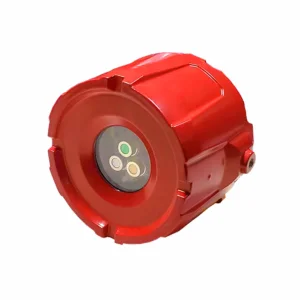
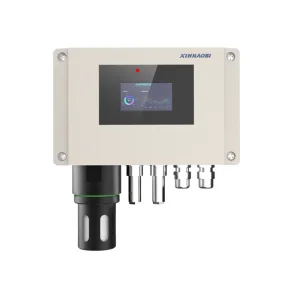
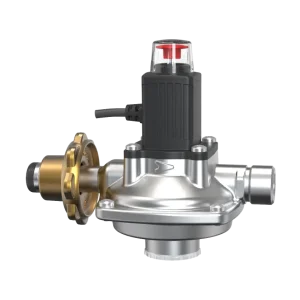
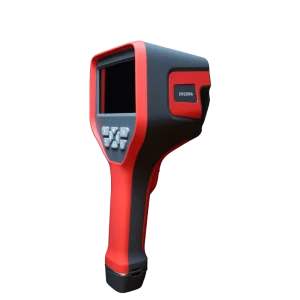
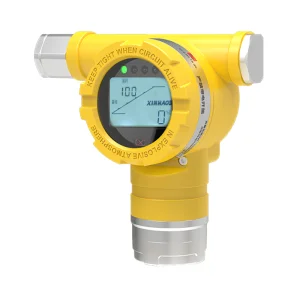
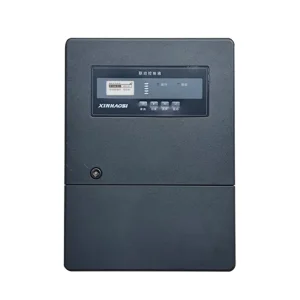
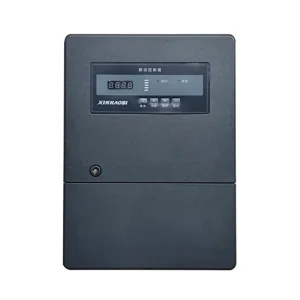
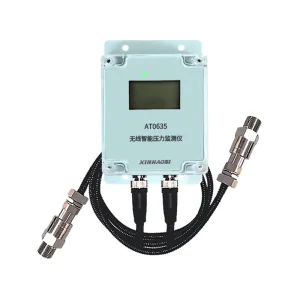
Explore our foundational range of wireless terminals, combustible gas detectors, and professional system controllers engineered for extreme operating reliability.
In safety-critical gas distribution and industrial pipelines, the normally closed (NC) emergency shutoff solenoid valve is the primary safeguard against hazardous leaks, catastrophic pressure loss, and explosive gas accumulation. These systems rely on electromagnetic actuation: when electrical power is applied, the magnetic coil generates an electromagnetic field that overcomes the mechanical spring pressure, lifting the valve plunger to open the line. Upon loss of power, the valve returns instantly to its closed position via the heavy-duty return spring. This fail-safe mechanism ensures the line shuts down autonomously during system blackouts, signal cuts, or active detector trips.
The operational integrity of a closed solenoid valve hinges on three core metrics: response time, sealing efficiency, and explosive environment ratings. For pipeline safety, response times under 1.0 second are vital to prevent critical build-ups of methane, LPG, or hydrogen. High-performance elastomeric seals, typically made from Fluorocarbon (Viton/FKM) or Nitrile (NBR), are selected to guarantee bubble-tight shut-off across varying fluid types and temperature profiles. The coil must also be housed in an explosion-proof enclosure (typically meeting Ex d IIC T6 standards) to prevent any electrical arcs from triggering an ignition in combustible environments.
Founded in 2003, Xinhaosi is one of the most influential and trusted brands in the global gas safety industry. Over the past two decades, we have steadily built a robust and comprehensive production and service system, which integrates cutting-edge R&D, intelligent manufacturing with advanced automation equipment, digital marketing across global channels, professional after-sales support with an experienced technician team, flexible OEM/ODM services, as well as CNAS-Accredited laboratory calibration services that meet international standards.
Our diversified product portfolio covers industrial & residential gas detection & alarm systems, industrial & household gas solenoid valves, and urban gas pipeline network monitoring systems—all engineered to adapt to complex working environments and strict safety requirements. We produce and sell tens of millions of units annually, catering to a wide range of industries that demand reliable gas detection solutions, including oil & gas exploration and production, petrochemicals, urban gas distribution, automotive manufacturing, pharmaceuticals, new energy, steel production, and beverage processing.
Guided by the core mission of “Making Gas Safety Accessible Everywhere,” we consistently deliver high-performance, reliable products and customized solutions tailored to each client’s unique needs. Every item we manufacture undergoes rigorous quality control tests, and every service we provide is backed by our professional technical team, fully embodying our unwavering commitment to safeguarding gas safety across both industrial workplaces and residential environments, and striving to build a safer world with sustainable gas safety technologies.
 Chengdu Factory & Office
 Deyang Factory
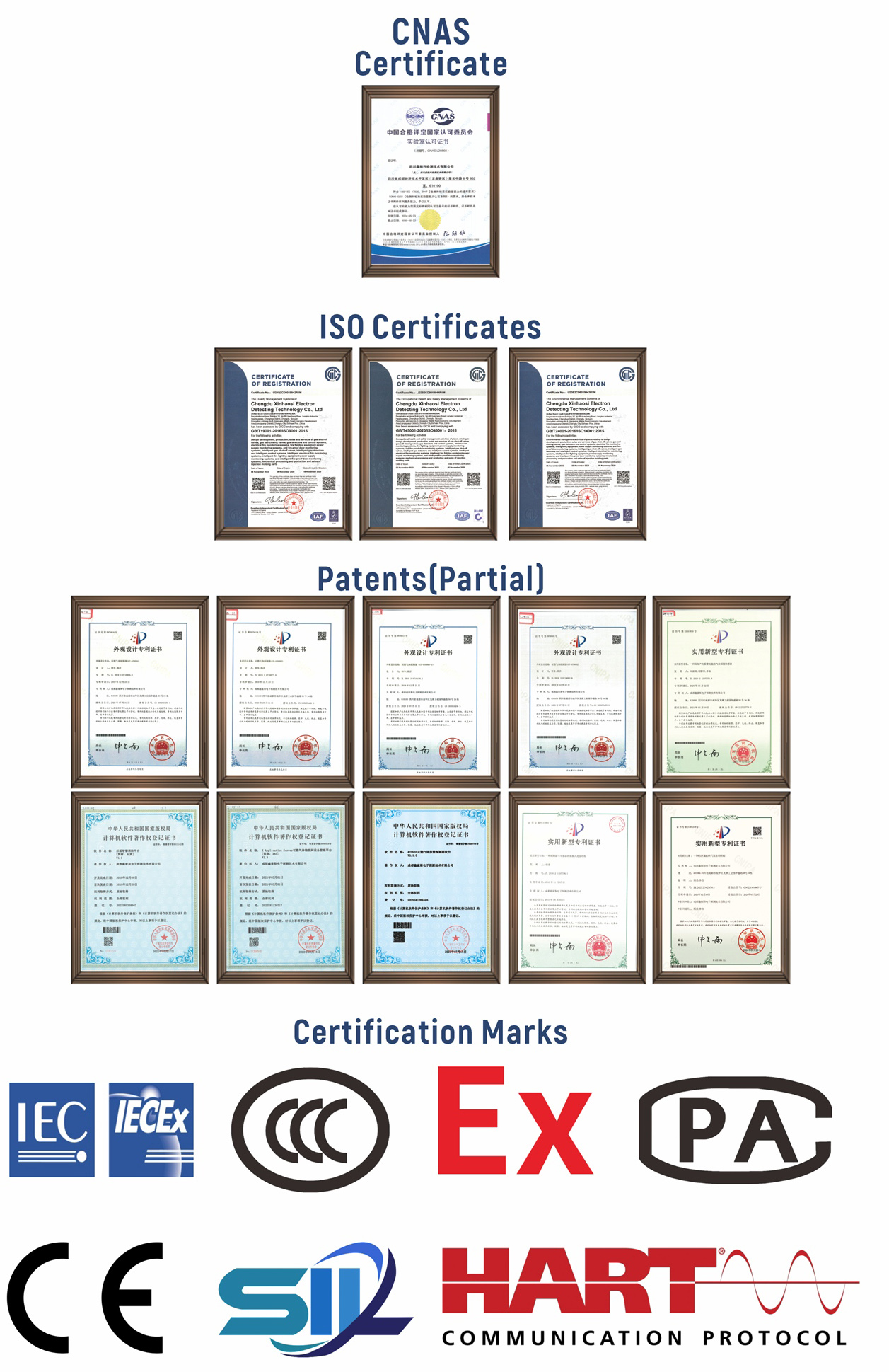
Adhering to ISO9001 quality management system standards, Xinhaosi's core products have obtained a full range of authoritative certifications, including national compulsory Products Certification, explosion-proof certification, fire product certification, CPA measurement instrument type approval certificate, and international approvals as CE and SIL. Additionally, Xinhaosi holds honors such as "National Quality Integrity Benchmark Enterprise", "National Quality Leading Enterprise in the Gas Alarm Industry," member of the China Fire Protection Association, and the main drafting organization for the national standard of solenoid valves, further confirming its industry influence and reputation.
In the field of intellectual property, Xinhaosi has built a robust innovation system with over 50 patents and software copyrights. These patents cover core technological areas, including a graphical monitoring system for gas detection and alarm, which enables predictive maintenance based on historical data to reduce equipment failure rates by over 30%, and a solenoid valve with flow monitoring functionality that integrates flow detection and alarm capabilities. The company also pioneered China's first networked bus-type gas leakage monitoring system and the only maximum-point gas leakage monitoring system certified by the Ministry of Public Security, demonstrating its leading position in cutting-edge technological research.
Our in-house laboratory is accredited by the China National Accreditation Service for Conformity Assessment (CNAS), recognized both domestically and internationally under the ILAC-MRA framework. It operates in accordance with ISO/IEC 17025, the international standard for testing and calibration laboratories. It provides reliable and traceable testing services for gas detection and alarm products, solenoid valves, and related safety equipment. Test reports issued by the CNAS-accredited laboratory are widely accepted by regulatory authorities, certification bodies, and customers in China and overseas, helping to ensure product quality, safety compliance, and market access.
Choosing the correct internal flow configuration ensures reliable mechanical actuation and optimal flow efficiency across industrial lines.
| Feature | Direct-Acting NC Solenoid Valves | Pilot-Operated NC Solenoid Valves |
|---|---|---|
| Operating Mechanism | Plunger directly unseats the main valve seal using electromagnetic force alone. | Solenoid controls a pilot port; fluid pressure differences actuate the main piston/diaphragm. |
| Differential Pressure Requirement | Zero differential pressure (0 bar) required to open or close. | Requires a minimum differential pressure (typically 0.3 - 0.5 bar) to operate effectively. |
| Flow Coefficients (Cv) & Port Sizes | Typically lower Cv, optimized for smaller port sizes (DN15 - DN25). | Very high flow capacity (high Cv), suitable for large port sizes up to DN100 and above. |
| Response Speed | Ultra-rapid (10 to 30 milliseconds) due to direct force path. | Moderate (50 to 500 milliseconds), depending on system pressure dynamics and fluid viscosity. |
| Media Compatibility | Highly tolerant of slight particulate contamination due to clear physical clearances. | Sensitive to particulates; debris can clog the miniature pilot orifice. |
| Typical Safety Application | High-speed residential gas safety lines, emergency generator fuel feeds. | Macro-scale urban distribution systems, large industrial gas manifolds, steelworks. |
Providing the documentation, certifications, and technical guarantees demanded by enterprise-level engineering, procurement, and construction (EPC) firms.
International procurement departments require safety products verified under the IEC 61508 standard. Safety Integrity Level (SIL) certification ensures the valve has a low Probability of Failure on Demand (PFD), minimizing hazardous risks in petrochemical and industrial facilities.
Explosion-proof safety certifications are crucial. Global compliance dictates adherence to ATEX directives in Europe, IECEx globally, and CNEx/GB standards in Asia, confirming that our solenoid coils cannot generate enough thermal or electrical energy to ignite gas groups like IIA, IIB, and IIC.
To meet strict quality control standards, buyers require comprehensive raw material trace records (EN 10204 Type 3.1 certification). This confirms the structural integrity of the forged body, ensuring there are no internal stress fractures or air pockets that could leak gas at high pressures.
Custom-engineered emergency shutoff systems integrated into high-risk process lines across manufacturing and distribution sectors.
For city gas networks and distribution pipelines, our high-flow, low-pressure drop normally closed solenoid valves are coupled with remote pressure monitoring terminals. During high or low pressure events, the central control room or localized edge computers trigger automatic emergency shutoff, isolating urban districts instantly to prevent pipeline ruptures from feeding fires.
High-temperature blast furnaces and hydrocarbon refinement complexes require solenoid valves constructed from cast steel or stainless steel with Class H insulation. Integrated with gas leakage controllers (such as the JB-TB-AT2020LH) and infrared flame detection arrays, these valves provide automatic emergency shutdown in harsh chemical processing environments.
In school kitchens, hotel cooking facilities, and apartment complexes, our domestic-grade aluminum body gas solenoid valves connect to smart household combustible gas detectors. Upon detecting minimal traces of natural gas or LPG, the detector sends a DC pulse to trip the safety valve, closing the line until a technician manually resets the mechanical arm.
Large heating plants and steam boilers demand double-block solenoid valves to guarantee that gas cannot leak into combustion chambers during downtime. Our custom double-valve systems feature integrated pressure validation ports, enabling automated tightness verification systems (Valve Proving Systems - VPS) to run pre-ignition leak checks.
Investing in next-generation research to lead the evolution of digital gas safety systems.
As industries transition to clean hydrogen fuel mixes, our R&D is optimizing sealing materials and metallic bodies to resist hydrogen embrittlement and gas molecule leakage, developing specialized valves for up to 100% hydrogen pipelines.
Integrating low-power sensors inside the solenoid coil to monitor internal temperature, current fluctuations, and stroke speed. These diagnostic data points are sent via LoRaWAN/NB-IoT to detect coil degradation before failure.
Developing specialized valves that integrate internal flow monitoring sensors, enabling the valve to identify abnormal flow rates (such as downstream pipe breaks) and trigger self-actuated emergency shutdowns without external sensors.
A history of innovation, expansion, and technological contributions to the global gas safety industry since 2003.
Founded on April 17th, 2003. Developed and launched our first-generation gas leakage alarm and residential firefighting products, laying the foundation for our safety-first mission.
Initiated the manufacturing of gas safety valves. Scaled up our OEM/ODM partnership operations and consolidated business activities in our dedicated offices within the Longtan Industrial Park.
Achieved 10 million units in gas detector sales. Moved manufacturing operations to our customized Chengdu factory building, expanding our sales and technical support network across China while launching fire power monitoring systems.
Launched our self-developed IoT safety monitoring platform. Introduced certified fire automatic alarms and emergency lighting systems. Earned the High-Tech Enterprise Certificate and qualified as an official partner to major state-level energy distributors.
Began construction of the Deyang Factory to triple production capacity. Established dedicated Petrochemical & International Business Divisions. Received status as a Sichuan Provincial Technology Center.
Completed and launched operations at our Deyang Factory. Rolled out our urban gas pipeline network monitoring units, smart wireless detectors, and AI-enabled safety shutoff solenoid valves.
Answering common questions regarding the operation, safety compliance, and configuration of closed solenoid valves.
Premium flame detection units, explosion-proof transmitters, safety interlocks, and pressure monitoring stations.