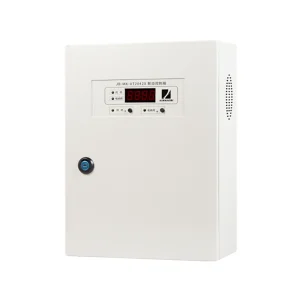
OEM Gas Methane Detector Suppliers & Manufacturers

Pioneering Industrial Gas Safety Infrastructure Through High-Precision Sensing Technologies & Global OEM/ODM Calibration Scale

About Xinhaosi

Two Decades of Industrial Methane Detection & Safety Excellence

Founded in 2003, Xinhaosi has spent more than twenty years building a reputation as one of the global gas safety industry's most trusted manufacturers and OEM partners. Integrating state-of-the-art Research & Development, highly automated smart manufacturing, comprehensive global supply networks, and a dedicated team of engineers, we provide life-saving gas safety technologies worldwide.

Our footprint extends across two massive manufacturing facilities: our core Chengdu Office & Factory and our newly developed Deyang Production Base. Together, these facilities manufacture tens of millions of gas alarms, intelligent solenoid valves, and network control devices annually, ensuring reliable safety installations for clients across heavy industrial sectors, municipal networks, and millions of residential homes.

Our mission, "Making Gas Safety Accessible Everywhere," guides us to construct highly resilient sensing devices engineered to withstand extreme climates, chemical interference, and rigorous usage scenarios.
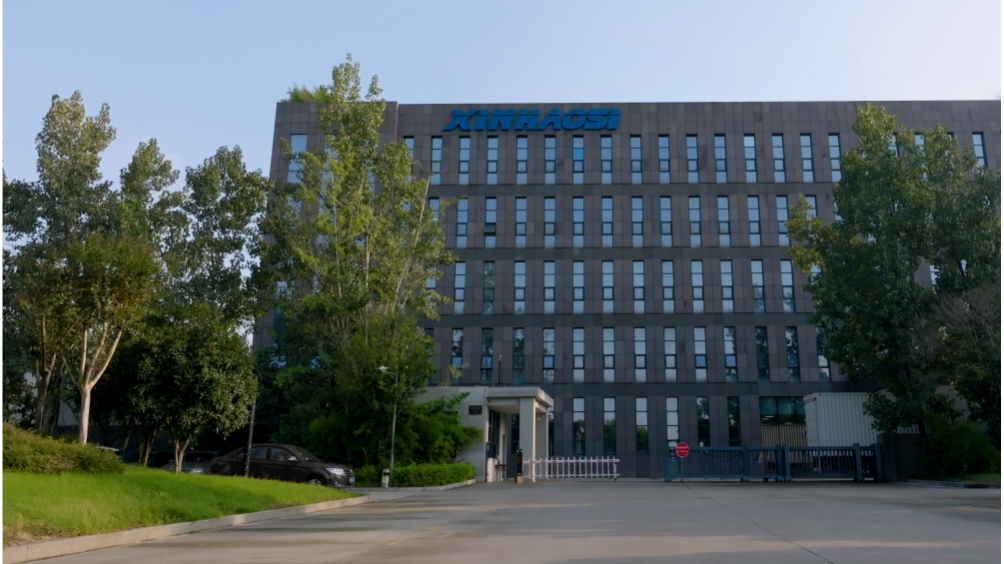
Xinhaosi Chengdu Factory and Office

Chengdu R&D Center and Corporate Office

Xinhaosi Deyang Factory Base

Advanced Deyang Intelligent Production Base

Global Footprint & Integrated Capabilities

As global energy systems transition to mitigate methane slip and fugitive emissions, Xinhaosi helps industrial enterprises build compliant, automated monitoring networks. We specialize in custom OEM and ODM configurations, tailoring sensor selection, enclosure designs, communications (Modbus, LoRa, NB-IoT), and safety certifications to specific regional market demands.

  • CNAS-accredited calibration laboratories compliant with ISO/IEC 17025.
  • High-speed SMT assembly and automated gas calibration lines for zero-defect production.
  • Comprehensive catalog spanning domestic LEL alarms to heavy industrial explosion-proof devices.
Technical Leadership

Metrology Compliance, Certifications & Patent System

Xinhaosi operates under strict adherence to the ISO9001 Quality Management System, securing certifications including National Compulsory Product Certification (CCC), ATEX/IECEx explosion-proof certifications, and SIL (Safety Integrity Level) ratings.

Our in-house calibration lab is accredited by the China National Accreditation Service (CNAS) and recognized globally under the ILAC-MRA framework, operating under ISO/IEC 17025. This ensures that every gas sensor calibrated at our facility is fully traceable to international reference standards, simplifying import, compliance, and field deployment processes for international markets.

We hold over 50 patents and copyrights, including pioneering developments in network bus-type gas leakage monitoring systems and custom gas solenoid valves featuring integrated flow monitoring.
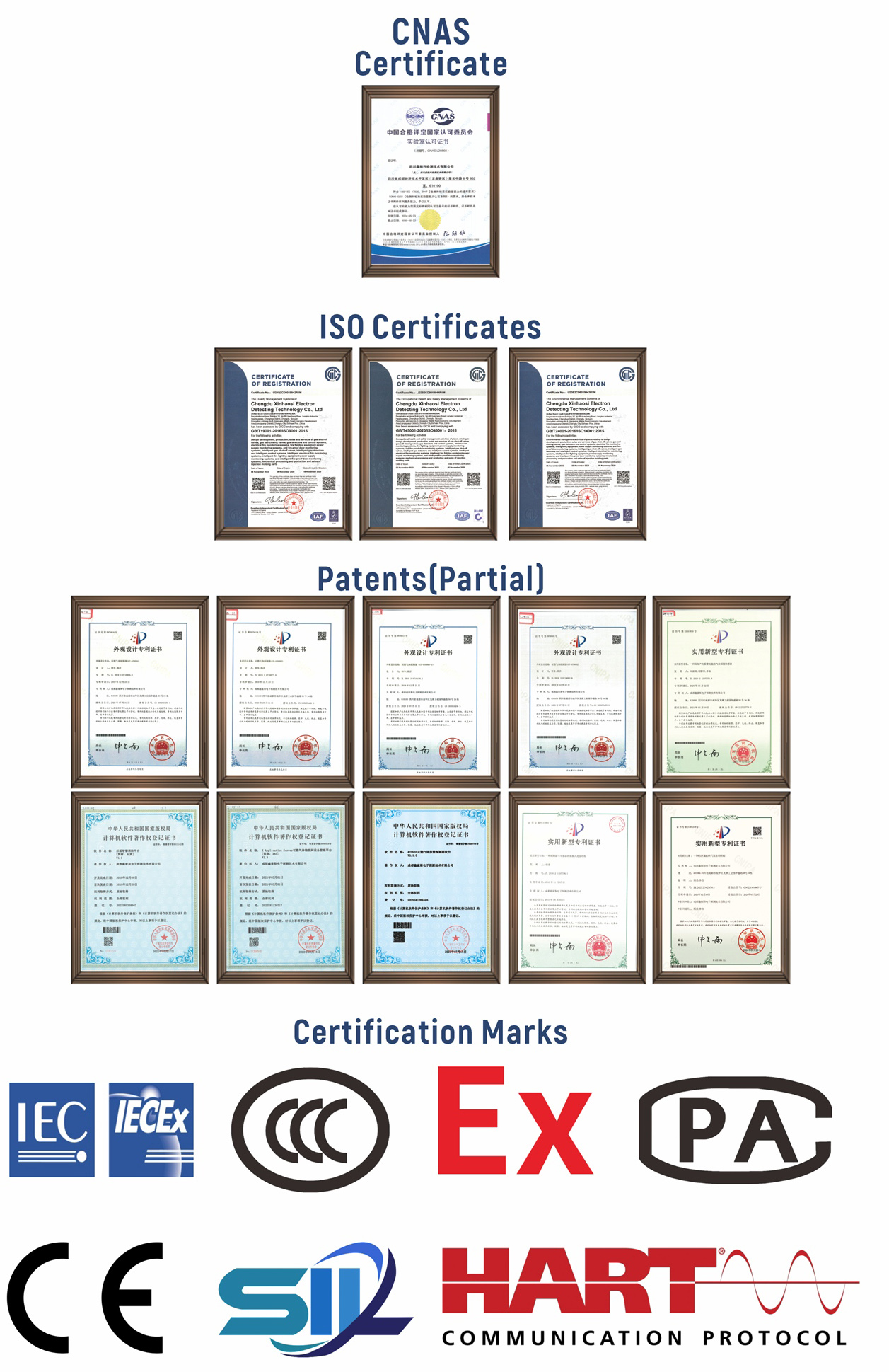
Xinhaosi Certifications and Laboratory Testing

CNAS-Accredited ISO/IEC 17025 Testing & Calibration Facility

20+
Years Industry Experience
50+
Patents & Copyrights
10M+
Annual Production Units
SIL2
Industrial Safety Certification
Technical Routes & Future Development

Comparing the core technologies used in methane sensing and outlining our long-term R&D roadmap.

Catalytic Combustion

Principles: Measures the heat generated when methane oxidizes on a catalytic pellistor bead. Used for detecting 0–100% LEL (Lower Explosive Limit).

Pros & Cons: Cost-effective, robust, and highly responsive. Susceptible to sensor poisoning from silicones, lead, or sulfur compounds over time.

Non-Dispersive Infrared (NDIR)

Principles: Uses gas-specific infrared absorption characteristics (typically at 3.3μm or 7.7μm) to measure concentration without physical contact.

Pros & Cons: Immune to chemical poisoning, long operational lifespan (>10 years), and operates in oxygen-depleted atmospheres. Higher upfront cost.

TDLAS Spectroscopy

Principles: Tunable Diode Laser Absorption Spectroscopy targets a specific methane absorption line, eliminating cross-sensitivity to other gases.

Pros & Cons: Extreme precision, ppm-level sensitivity, and long-range measurement. Typically reserved for specialized open-path and pipeline leak mapping.

Strategic Development & Tech Roadmap

Xinhaosi's R&D efforts focus on integrating intelligent edge diagnostics, low-power IoT protocols, and hybrid sensor configurations.

2003 – 2012: Foundation & Expansion
Pioneered the first generation of domestic gas leakage alarms and fire protection control units in Sichuan. Opened our Longtan Industrial Park facility and entered the OEM industrial sector, integrating gas safety valves and solenoid shutoff systems.
2013 – 2020: Industrial Maturity & Smart IoT Integration
Relocated to our dedicated Chengdu production facility and surpassed 10 million units in sales. Developed and launched China's first high-capacity networked bus monitoring system and introduced our proprietary Gas Safety Cloud IoT platform.
2021 – 2023: Global Compliance & Deyang Expansion
Established our international business and dedicated petrochemical divisions. Began construction of our intelligent Deyang plant and secured international approvals (CE, SIL2) for high-integrity industrial safety loops.
2024 & Beyond: AI Automation & Advanced Remote Sensing
Began operations at our automated Deyang plant. Launched our new wireless IoT gas monitoring system, intelligent self-testing safety valves, and TDLAS laser methane remote detectors to support net-zero methane reduction goals.
Industrial Applications & Localization

How our OEM methane detection systems are deployed across diverse industries and localized to meet strict regulatory safety standards.

Petrochemical, Oil & Gas

Fugitive methane emissions pose significant safety risks and environmental challenges across upstream, midstream, and downstream infrastructure.

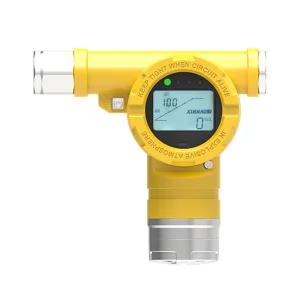
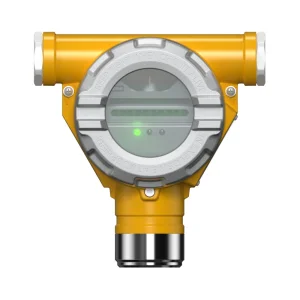
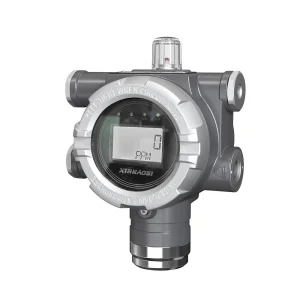
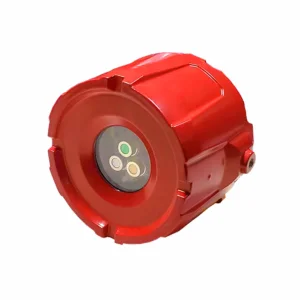
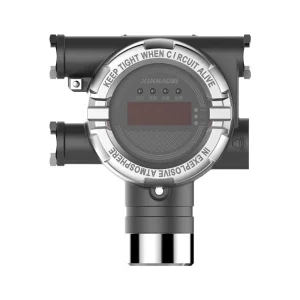
Our Solution: Explosion-proof, SIL2-certified detectors like the GTYQ-XP4000 and XP3000 series. Built with heavy-duty cast aluminum or stainless steel housings, these units resist corrosion and operate reliably in hazardous Class I Division 1 (Zone 1 and 2) atmospheres.

Municipal Utility & Pipeline Networks

Urban gas grids require continuous monitoring at distribution stations, regulator pits, and valve chambers where leaked gas can pool undetected.

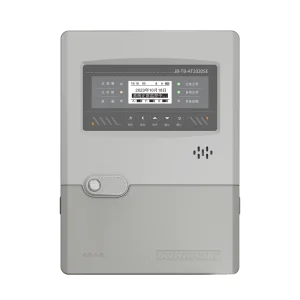
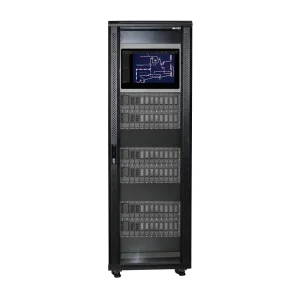
Our Solution: Low-power wireless gas detectors paired with high-performance controllers like the JB-TB-AT2020. These systems interface with safety shutoff valves (e.g., the XF3III Solenoid Valve) to automatically isolate leaks before they reach explosive limits.

Commercial & Residential Safety

High-density housing and commercial kitchens require reliable, low-maintenance gas alarms that minimize false triggers from cooking vapors.

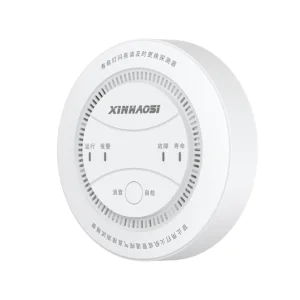
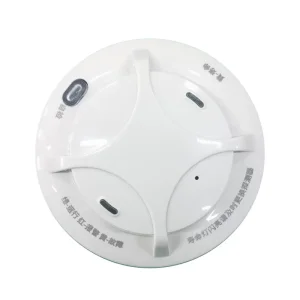
Our Solution: The JT-AT3068 and JT-AT2013A residential detector series feature pre-calibrated, hot-swappable sensor modules, loud acoustic alarms, and direct relays to trigger home shutoff valves.

Industrial Process Plants

Steel manufacturing, automotive painting, chemical processing, and wastewater facilities often involve co-existing toxic and combustible gases.

Our Solution: Multi-gas platforms like the XP4000P track toxic gases, oxygen displacement, and volatile organic compounds (VOCs) on a single, unified bus network.

Supply Chain Resilience & OEM Customization

Ensuring consistent production capacity, high-speed delivery, and flexible customization for global safety equipment providers.

Vertically Integrated SMT Lines

We control the entire manufacturing process, from raw PCB assembly on high-speed SMT lines to sensor encapsulation. This integration minimizes reliance on external component suppliers and keeps production schedules on track.

Automated Calibration Chambers

Our automated gas calibration chambers expose thousands of sensors simultaneously to precise gas mixtures under controlled temperatures, eliminating the manual calibration errors common with smaller factories.

Agile OEM & ODM Workflows

We support custom housing designs, private-label branding, customized firmware, and regional communication protocols (such as Modbus RTU, BACnet, or LoRaWAN), helping clients bring products to market quickly.

Technical Q&A & Reference Guide

Answers to common technical, design, and calibration questions faced by safety engineers and OEM purchasers.
Q1: How does catalytic bead sensor drift occur, and what is the recommended calibration interval?
Catalytic bead sensors rely on a chemical reaction on the pellistor's active surface. Exposure to airborne silicones, lead, phosphates, or sulfur compounds can gradually deactivate the catalyst, causing "sensor poisoning" and sensitivity loss. Under standard conditions, we recommend calibration checks every 3 to 6 months. For high-integrity industrial safety loops, integrating an automatic self-testing routine or transitioning to NDIR sensors can extend calibration intervals to 12 months.
Q2: Can NDIR sensors detect methane in oxygen-deficient environments?
Yes. Catalytic combustion sensors require oxygen to burn gas on the pellistor bead. In contrast, Non-Dispersive Infrared (NDIR) sensors measure gas concentrations by monitoring infrared light absorption across a specific optical path. Because NDIR does not rely on combustion, it performs reliably in oxygen-depleted, inert, or nitrogen-blanketed environments, making it ideal for deep storage tanks and process piping.
Q3: What are the advantages of a bus-type installation over a traditional point-to-point (4-20mA) topology?
Traditional point-to-point topologies require dedicated analog cabling for each detector, driving up installation costs. Our networked bus-type system uses RS-485 Modbus or CAN bus protocols to link hundreds of sensors to a central controller (like the JB-TB-AT2020LH) via a single cable loop. This configuration reduces copper cabling requirements by up to 60%, simplifies diagnostics, and enables remote sensor calibration and configuration.
Q4: Why is SIL2 certification critical for methane detection systems?
SIL (Safety Integrity Level) ratings measure a safety function's reliability under IEC 61508. A SIL2-certified methane detector guarantees a Probability of Failure on Demand (PFD) between 0.01 and 0.001. This certification ensures the system is built with internal redundancy, comprehensive diagnostics, and failsafe logic, making it suitable for hazardous industrial environments where sensor failures could lead to catastrophic events.
Q5: How do safety solenoid valves integrate with the methane detection network?
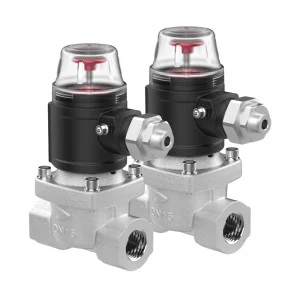
When a methane detector senses a gas leak that exceeds pre-set alarm thresholds (e.g., 25% LEL), the central controller triggers a dry-contact relay. This relay activates a safety solenoid valve, such as the XF3III series, using a brief electrical pulse. The valve automatically closes to isolate the gas supply, containing the leak at the source until the system is manually inspected and reset.
Q6: What is the differences between LEL-level detection and PPM-level detection?
LEL (Lower Explosive Limit) detection focuses on combustion prevention, measuring gas concentrations between 0-100% LEL (equivalent to 0-5% methane by volume in air). PPM (Parts Per Million) detection is designed for toxic exposure limit monitoring and early leak detection, measuring concentrations well below the explosive threshold. We select and calibrate sensor types based on the target application: catalytic and NDIR sensors for LEL ranges, and electrochemical or semiconductor sensors for PPM ranges.
Q7: How do environmental factors like temperature and humidity affect sensor accuracy?
Extreme temperatures and humidity variations can cause drift in gas sensors. To mitigate this, Xinhaosi detectors feature integrated temperature sensors and compensation algorithms. These algorithms adjust the raw sensor readings in real time based on reference curves mapped in our CNAS laboratories, ensuring stable performance from -40°C to +70°C.
Q8: How does Xinhaosi assist global distributors with local certification compliance?
We provide comprehensive support for regional certifications, including ATEX, IECEx, UL, and local metrological approvals. Our team provides detailed engineering schematics, component lists, test documentation from our CNAS lab, and sample units to accelerate testing and approval processes with local compliance authorities.