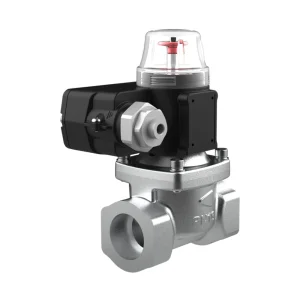
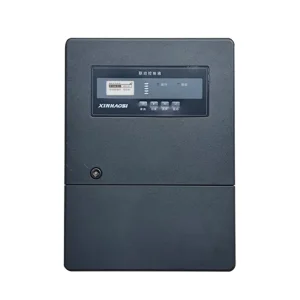
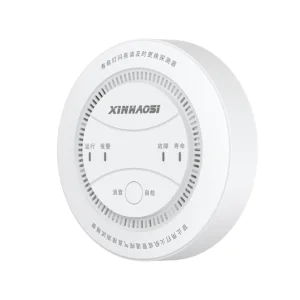
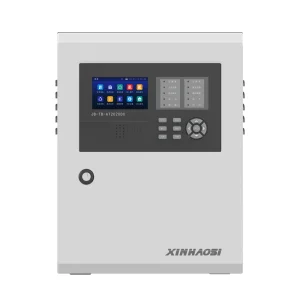
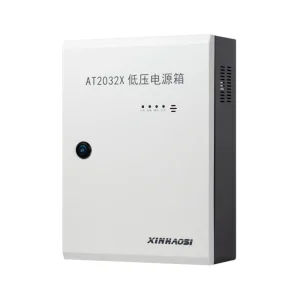
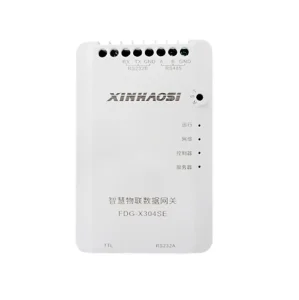
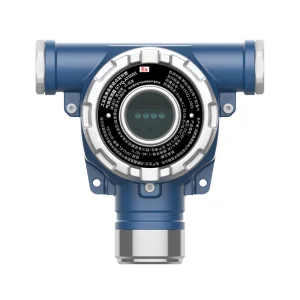
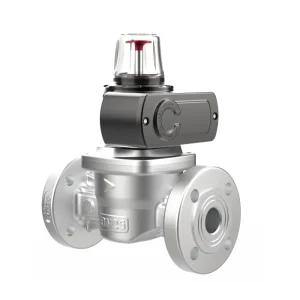
Explore our premium range of explosion-proof monitoring sensors, controllers, and industrial solenoid valves certified for safety-critical systems.

Understanding environmental mandates, hazardous classifications, and continuous monitoring systems in global industrial hubs.
Industrial installations globally face unprecedented regulatory pressures to monitor and reduce Volatile Organic Compounds (VOCs). Environmental protection bodies, such as the US EPA (EPA Method 21) and the EU Industrial Emissions Directive (IED), mandate strictly enforced concentration ceilings to limit atmospheric emissions and mitigate smog formation.
Workplace health organizations like OSHA and EU-OSHA actively enforce threshold limit values (TLVs) for toxic volatile chemicals such as benzene, formaldehyde, and chlorinated solvents. Real-time VOC monitors protect workforce personnel from immediate hazards and long-term health risks.
In petrochemical processing plants, chemical storage areas, and pharmaceutical cleanrooms, volatile gases frequently reach Lower Explosive Limits (LEL). Implementing robust, explosion-proof VOC detectors is an absolute mandate to secure insurance, guarantee process safety, and protect critical assets.
Information Gain: Industrial VOC monitors have evolved from passive, localized diffusion detectors to networked, active-sampling PID/FID monitoring units. These systems feed predictive machine learning models to identify fugitive emissions before they develop into hazard conditions or regulatory infractions.
Deep-dive into the sensor technologies, ionization energies, and edge computation models driving next-gen VOC detection.
High-quality VOC monitoring demands precise analytical instrumentation tailored to detect a myriad of organic compounds in complex gaseous backgrounds. Contemporary VOC monitors depend primarily on two sensing paradigms: Photoionization Detection (PID) and Flame Ionization Detection (FID).
Photoionization Detection (PID): PIDs use high-energy ultraviolet (UV) lamps to ionize VOC gas molecules in a test sample. The resulting electrical current is proportional to the concentration of the target gas. Lamps with energies of 10.6 eV are most common due to their balance of longevity and broad sensitivity, while 9.6 eV lamps offer selective detection for aromatics like benzene, and 11.7 eV lamps cover highly volatile chlorinated hydrocarbons.
Future Technical Roadmap: The industry is transitioning from legacy analogue gas detectors to modular, digital systems that incorporate edge processing. The integration of advanced micro-electro-mechanical systems (MEMS) sensors combined with IoT gateways (like our FDG-X304SE Intelligent Data Gateway) allows real-time diagnostics, remote auto-calibration, and multi-sensor fusion. These developments eliminate false positives caused by humidity changes or cross-sensitive background gases.
How VOC monitoring architectures adapt to the specific requirements of unique industrial settings.
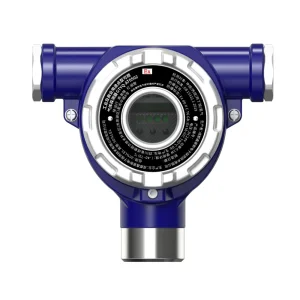
In refining centers and petrochemical processing yards, VOC monitors are permanently installed in open-path or point configurations around storage depots, valves, and transport pipelines. These systems continuously monitor for fugitive BTEX (Benzene, Toluene, Ethylbenzene, Xylene) leaks in hazardous Class I, Div 1 zones, utilizing heavy-duty explosion-proof enclosures like the XP3000 series.
Modern semiconductor fabrication plants (Fabs) require precise environmental control. Trace Airborne Molecular Contamination (AMC) can ruin wafer production runs. Sub-parts-per-billion (ppb) PID monitors track volatile organic off-gassing from solvents and lithography processes, ensuring ambient air purity is maintained to prevent product defects.
Automobile assembly lines, shipyard coating bays, and consumer electronics factories emit high levels of vaporized solvents during spraying and curing phases. High-range VOC monitors manage ventilation rates, optimize thermal oxidizer processes, and confirm that exhaust air meets air quality regulations before atmospheric discharge.
Behind the advanced factories of Chengdu and Deyang delivering world-class gas safety systems.

Chengdu R&D and Office Headquarters

Deyang Advanced Manufacturing Base
Leveraging Chinese industrial supply chains provides significant advantages for global customers. At our production facilities in Chengdu and Deyang, we utilize vertically integrated supply systems that streamline the entire process from raw material acquisition to precision SMT assembly, casing fabrication, and automated sensor calibration.
This localized supply chain design offers distinct operational advantages:
Founded in 2003, Xinhaosi is one of the most influential and trusted brands in the global gas safety industry. Over the past two decades, we have built a robust and comprehensive production and service system, which integrates cutting-edge R&D, intelligent manufacturing with advanced automation equipment, digital marketing across global channels, professional after-sales support with an experienced technician team, flexible OEM/ODM services, as well as CNAS-Accredited laboratory calibration services that meet international standards.
Our diversified product portfolio covers industrial & residential gas detection & alarm systems, industrial & household gas solenoid valves, and urban gas pipeline network monitoring systems—all engineered to adapt to complex working environments and strict safety requirements. We produce and sell tens of millions of units annually, catering to a wide range of industries that demand reliable gas detection solutions, including oil & gas exploration and production, petrochemicals, urban gas distribution, automotive manufacturing, pharmaceuticals, new energy, steel production, and beverage processing.
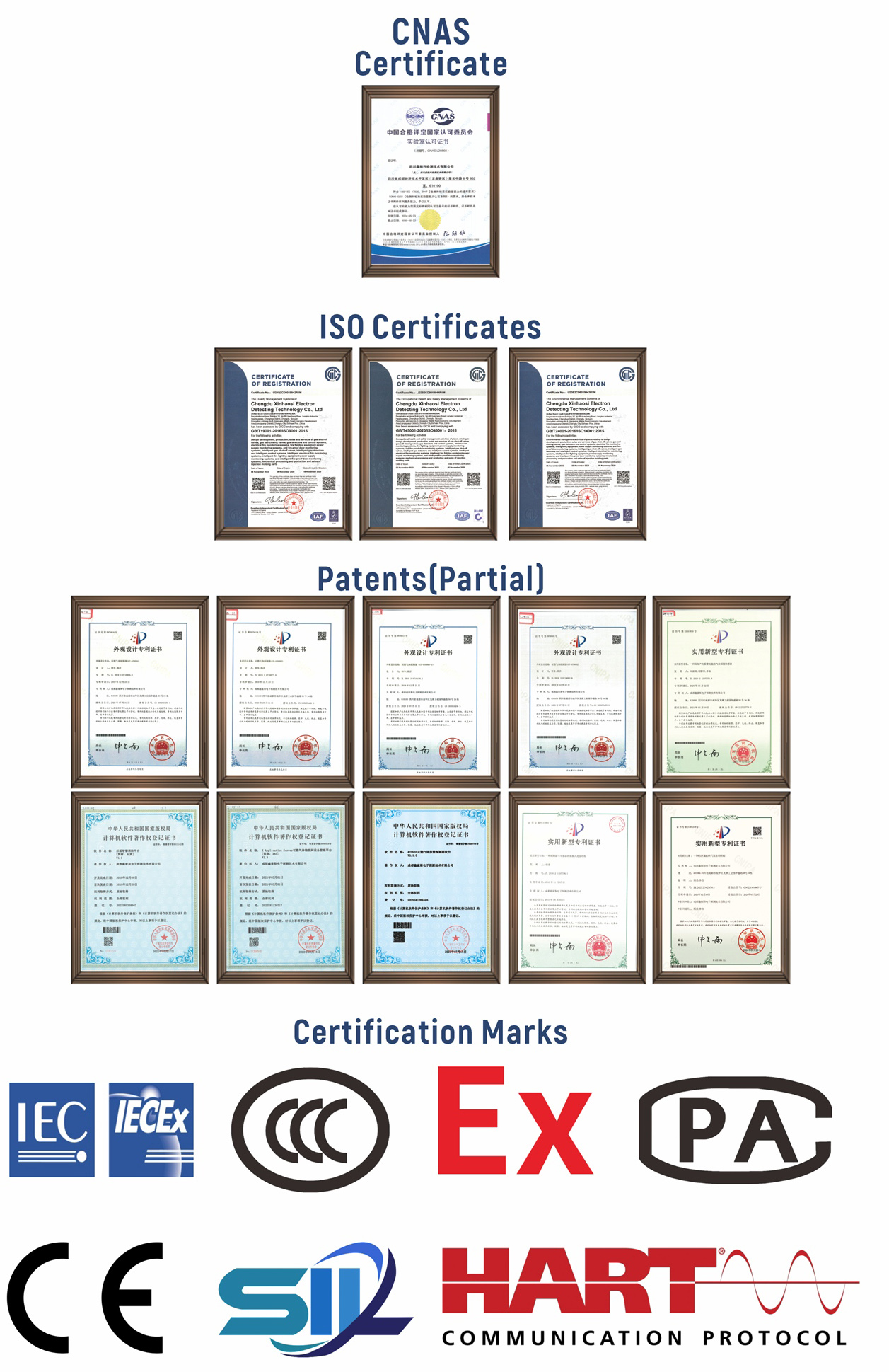
Adhering to ISO9001 quality management system standards, Xinhaosi's core products have obtained a full range of authoritative certifications, including national compulsory Products Certification, explosion-proof certification, fire product certification, CPA measurement instrument type approval certificate, and international approvals as CE and SIL. Additionally, Xinhaosi holds honors such as "National Quality Integrity Benchmark Enterprise" and "National Quality Leading Enterprise in the Gas Alarm Industry," is a member of the China Fire Protection Association, and served as the main drafting organization for the national standard of solenoid valves.
In the field of intellectual property, Xinhaosi has built an innovation system with over 50 patents and software copyrights. These patents cover core technological areas, including a graphical monitoring system for gas detection and alarm, which enables predictive maintenance based on historical data to reduce equipment failure rates by over 30%, and a solenoid valve with flow monitoring functionality that integrates flow detection and alarm capabilities. The company also developed a networked bus-type gas leakage monitoring system and a high-capacity gas leakage monitoring system certified by the Ministry of Public Security.
CNAS Accredited Testing Laboratory: Our in-house testing laboratory is accredited by the China National Accreditation Service for Conformity Assessment (CNAS) and recognized internationally under the ILAC-MRA framework. Operating in compliance with ISO/IEC 17025, it provides fully traceable calibration and testing for gas detectors and solenoid valves, ensuring all market access and safety compliance requirements are met.
Company Startup: Established on April 17th, 2003. Launched our first-generation gas leak alarm and fire fighting systems.
Initial Scale & Expansion: Initiated production of specialized gas safety valves and expanded OEM manufacturing partnerships. Relocated to the Longtan Industrial Park office facility.
Rapid Domestic Growth: Achieved milestone of 10 million cumulative gas detector units sold. Established a comprehensive sales and service network across China and launched fire power monitoring systems.
IoT Innovation: Developed and launched our proprietary IoT monitoring platform. Introduced smart fire evacuation systems and secured official supplier status with China's top five major gas providers.
Sustained Development: Commenced construction of the Deyang manufacturing base. Formed the specialized Petrochemical & International Business divisions and recognized as a Sichuan Provincial Technology Center.
Next Generation Engineering: Deyang factory fully operational. Launched wireless gas detection lines, AI-enabled safety valves, and intelligent urban pipeline network monitors.
Bridging global standards and local support to keep safety-critical infrastructure running without interruption.
Gas sensor parameters drift over time due to environmental factors and chemical exposure. We coordinate with local technical networks to provide periodic field calibration traceable to national standards, minimizing downtime and maintaining compliance.
Integrating our detectors with the FDG-X304SE Intelligent Data Gateway enables remote monitoring. Local control stations receive instant telemetry, facilitating swift emergency response and proactive system diagnostics.
We build safety monitors to meet local and global standards, including ATEX, IECEx, CE, and SIL2. This thorough alignment ensures smooth installation approvals and simplifies regulatory compliance for international projects.
Addressing the technical, operational, and regulatory questions most critical to control engineers and safety managers.
The primary difference lies in the ionization method and selectivity. Photoionization Detectors (PID) use ultraviolet light to ionize gas molecules, making them highly sensitive, non-destructive, and suitable for portable and real-time gas detectors. Flame Ionization Detectors (FID) use a hydrogen flame to burn organic compounds, producing ions that are measured by an electrode. While FIDs detect almost all hydrocarbons (including methane) and are destructive, PIDs do not detect methane and are more selective based on the eV rating of the UV lamp, making them ideal for monitoring toxic VOCs in environments containing natural gas.
A compound can only be detected by a PID sensor if its ionization energy (measured in electronvolts, or eV) is lower than the energy output of the detector's UV lamp. A 10.6 eV lamp is widely used as it detects a broad range of VOCs, including BTEX, while offering a long operating life. A 9.6 eV lamp has a lower energy output and is more selective, making it ideal for detecting aromatics in the presence of other solvents. Conversely, an 11.7 eV lamp is required for compounds with high ionization potentials, such as formaldehyde and chloroform, though these lamps have a shorter service life due to the nature of the window materials.
Our industrial monitors use a multi-sensor fusion approach, pairing primary VOC sensors with built-in temperature and humidity compensators. The detector's firmware runs correction algorithms that adjust the raw current readings based on real-time environmental data, preventing false alarms caused by humidity fluctuations. Additionally, optional chemical pre-filter tubes can be used to scrub out interfering compounds, focusing the sensor's response solely on target hazards like benzene.
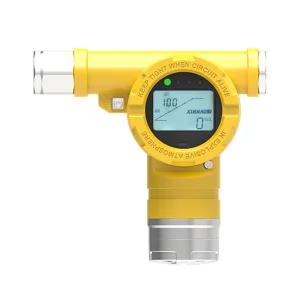
For installations in areas with potential explosive hazards, gas monitors must carry appropriate explosion-proof certifications. Globally recognized standards include ATEX (for Europe) and IECEx (international), which classify equipment based on zone safety (such as Zone 1 or Zone 2). In China, devices must comply with national GB standards and hold CNEX certification. Xinhaosi’s industrial detectors, such as the GTYQ-AT0502, are designed and certified to meet these explosion-proof requirements, ensuring safe operation in hazardous industrial environments.
An IoT gateway, such as the FDG-X304SE Intelligent Data Gateway, bridges the gap between field-level gas monitors and centralized control systems. By collecting real-time sensor data and transmitting it via wired or wireless networks (such as Modbus, 4G, or LoRa), it enables continuous safety monitoring. This connectivity supports automated logging, instant push alerts, and predictive maintenance scheduling based on historical sensor drift, improving overall facility safety and compliance management.
Explore additional high-performance safety components including solenoid shutoff valves, low-voltage control hubs, and smart gateways.