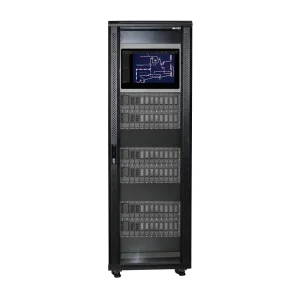
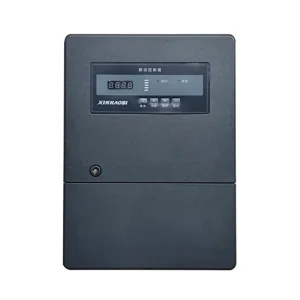
Explore our CNAS-certified, high-precision industrial safety monitoring devices engineered for hazardous atmospheres, gas control systems, and localized environmental detection.
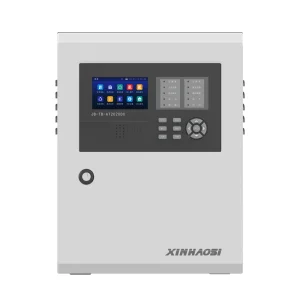
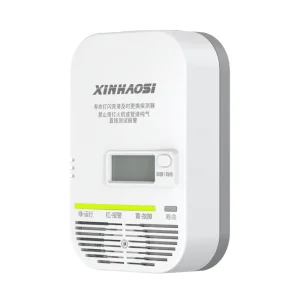
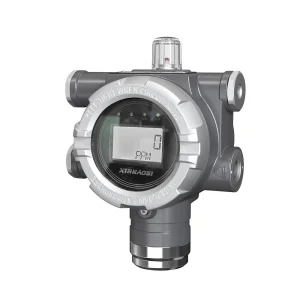
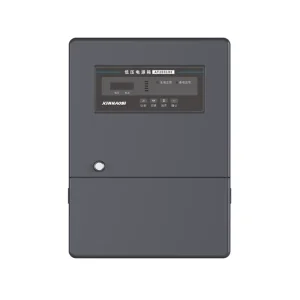
Carbon monoxide (CO) remains one of the most insidious chemical hazards in modern industrial environments. Odorless, colorless, and non-irritating, CO poses severe physiological risks even at trace exposure levels.
In industrial facilities, underground mining shafts, petrochemical refining facilities, and municipal utility vaults, personal safety relies entirely on the precision and immediate responsiveness of portable carbon monoxide monitors. A high-quality portable CO monitor functions not merely as a sensing tool, but as a life-critical safety apparatus that operates continuous electrochemical and optical evaluation algorithms in real time.
According to safety mandates set forth by the Occupational Safety and Health Administration (OSHA), the National Institute for Occupational Safety and Health (NIOSH), and European ATEX Directives, exposure limits are strictly capped. OSHA establishes a Permissible Exposure Limit (PEL) of 50 parts per million (ppm) as an 8-hour Time-Weighted Average (TWA), whereas NIOSH recommends a lower threshold of 35 ppm TWA with a ceiling limit of 200 ppm. Advanced portable monitors engineered by leading global factories must ensure ultra-low zero-drift performance, sub-15-second response times ($T_{90} < 15\text{s}$), and intrinsic safety certification ($Ex\ ia\ IIC\ T4\ Ga$) to survive harsh operational zones.
Understanding the electrochemical, optical, and micro-embedded systems driving next-generation portable carbon monoxide instrumentation.
At the core of high-quality portable CO monitors lies a micro-engineered three-electrode electrochemical sensor (Working Electrode, Counter Electrode, and Reference Electrode). Carbon monoxide diffuses through a porous membrane and undergoes an oxidation reaction at the working electrode:
CO + H₂O → CO₂ + 2H⁺ + 2e⁻
Simultaneously, oxygen from ambient air is reduced at the counter electrode. The resulting electric current is directly proportional to the CO concentration. Leading manufacturers utilize high-purity platinum/gold alloy catalysts and integrated chemical filters (e.g., activated charcoal and selective chemical scrubbers) to neutralize interfering gases such as Hydrogen ($H_2$), Hydrogen Sulfide ($H_2S$), and Nitrogen Dioxide ($NO_2$), eliminating false-alarm events in complex industrial atmospheres.
For high-concentration or oxygen-deprived confined space entry (where traditional electrochemical cells suffer from electrolyte desiccation or lack of ambient $O_2$), dual-beam Non-Dispersive Infrared (NDIR) optical sensors are integrated. NDIR technology measures the specific absorption band of CO molecules at the 4.67 μm wavelength.
By employing micro-optical mirrors and sapphire optical windows, NDIR-based portable devices deliver zero-maintenance stability over multi-year deployments, immunity to chemical poisoning (such as silicones or sulfur compounds), and extreme resilience against thermal shock.
Sensing hardware is complemented by 32-bit ARM Cortex-M4 microcontrollers running proprietary digital signal processing (DSP) firmware. Electrochemical output varies non-linearly with ambient temperature ($ -30^\circ\text{C}$ to $+60^\circ\text{C}$) and relative humidity ($10\%$ to $95\%$ RH).
Xinhaosi's algorithm engine leverages dynamic matrix temperature compensation tables and humidity-drift polynomial correction curves stored in non-volatile memory, achieving an accuracy tolerance within $\pm 3\%$ of full-scale reading across extreme operational parameters.
Portable devices operated in Zone 0, Zone 1, or Class I, Division 1 hazardous environments must strictly avoid generating electrical sparks or thermal ignition sources. Instrument enclosures are cast from high-impact anti-static polycarbonate-ABS alloys with surface resistivity below $1\text{ GOhm}$.
Internal energy-limiting circuitry (using redundant Zener diodes and current-limiting resistors) ensures that even under double-fault conditions, no spark capable of igniting explosive gas-air mixtures can occur. Rated to IP67/IP68 ingress protection, these monitors endure 2-meter drop impacts onto concrete.
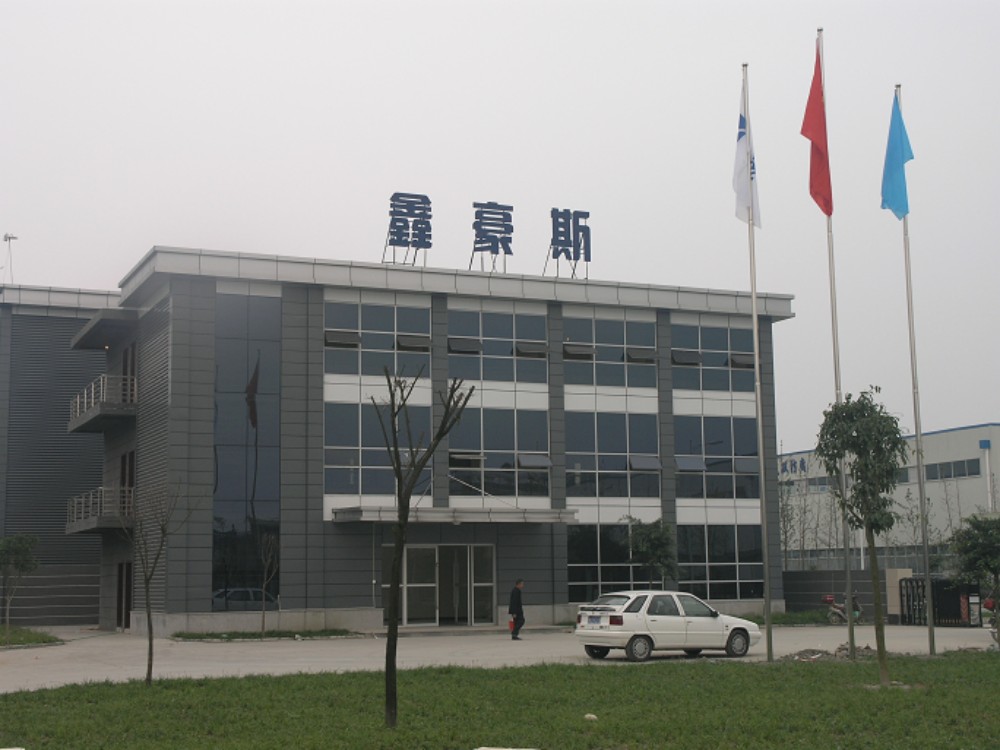
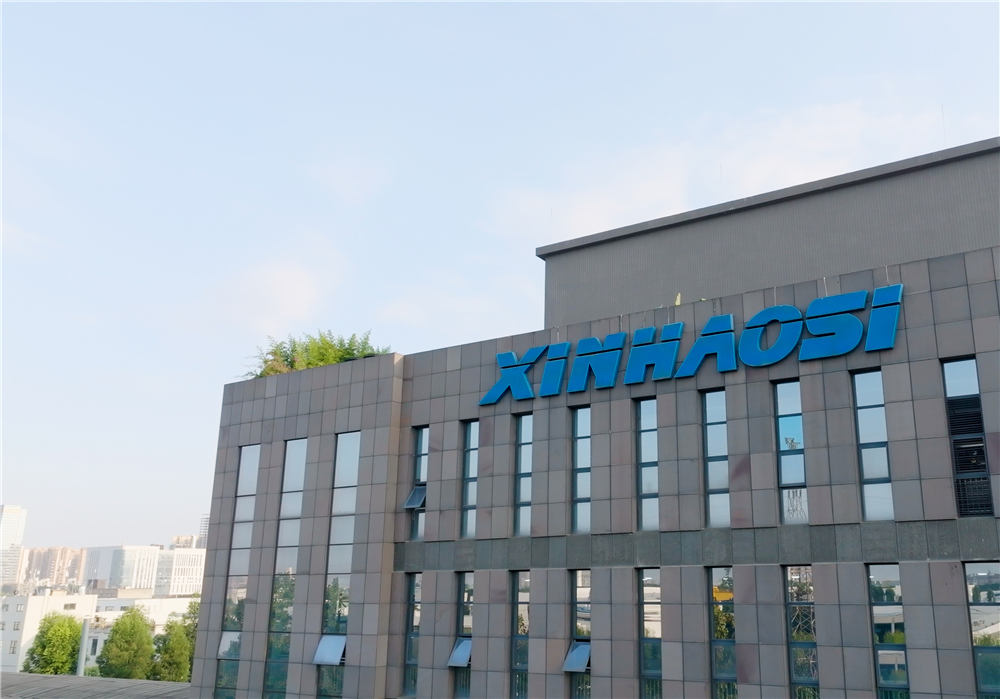
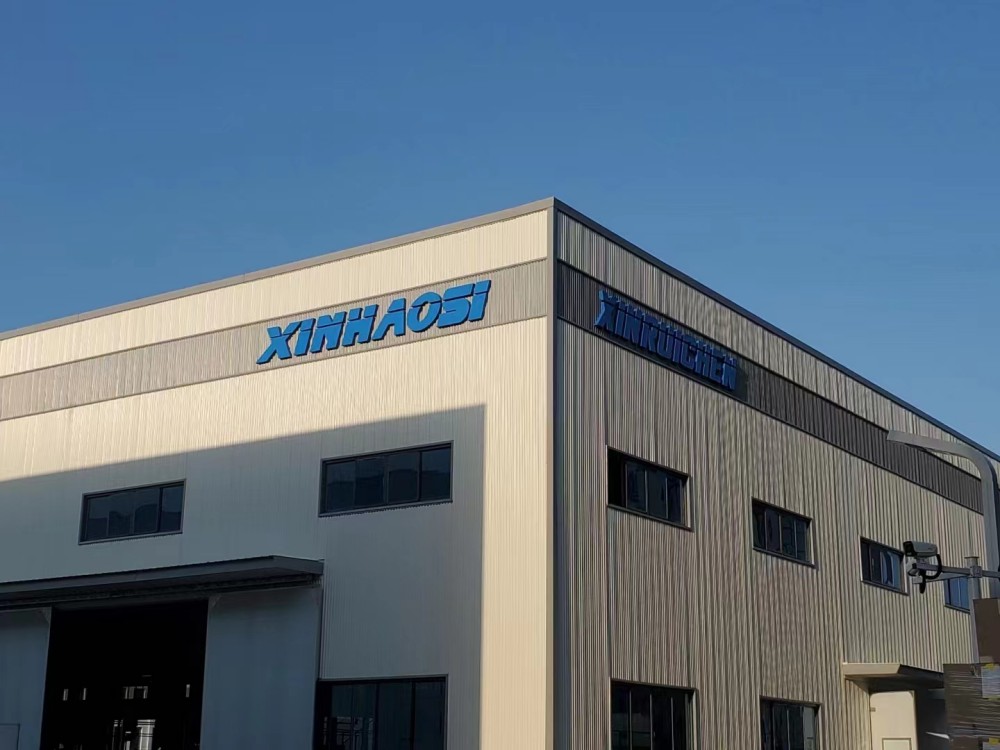
Founded in 2003, Xinhaosi is one of the most influential and trusted brands in the global gas safety industry. Over the past two decades, we have steadily built a robust and comprehensive production and service system.


Xinhaosi integrates cutting-edge R&D, intelligent manufacturing with advanced automation equipment, digital marketing across global channels, professional after-sales support with an experienced technician team, flexible OEM/ODM services, as well as CNAS-Accredited laboratory calibration services that meet international standards.
Our diversified product portfolio covers industrial & residential gas detection & alarm systems, industrial & household gas solenoid valves, and urban gas pipeline network monitoring systems—all engineered to adapt to complex working environments and strict safety requirements. We produce and sell tens of millions of units annually, catering to a wide range of industries that demand reliable gas detection solutions, including oil & gas exploration and production, petrochemicals, urban gas distribution, automotive manufacturing, pharmaceuticals, new energy, steel production, and beverage processing.
Guided by the core mission of “Making Gas Safety Accessible Everywhere,” we consistently deliver high-performance, reliable products and customized solutions tailored to each client’s unique needs. Every item we manufacture undergoes rigorous quality control tests, fully embodying our unwavering commitment to safeguarding gas safety across industrial workplaces and residential environments.
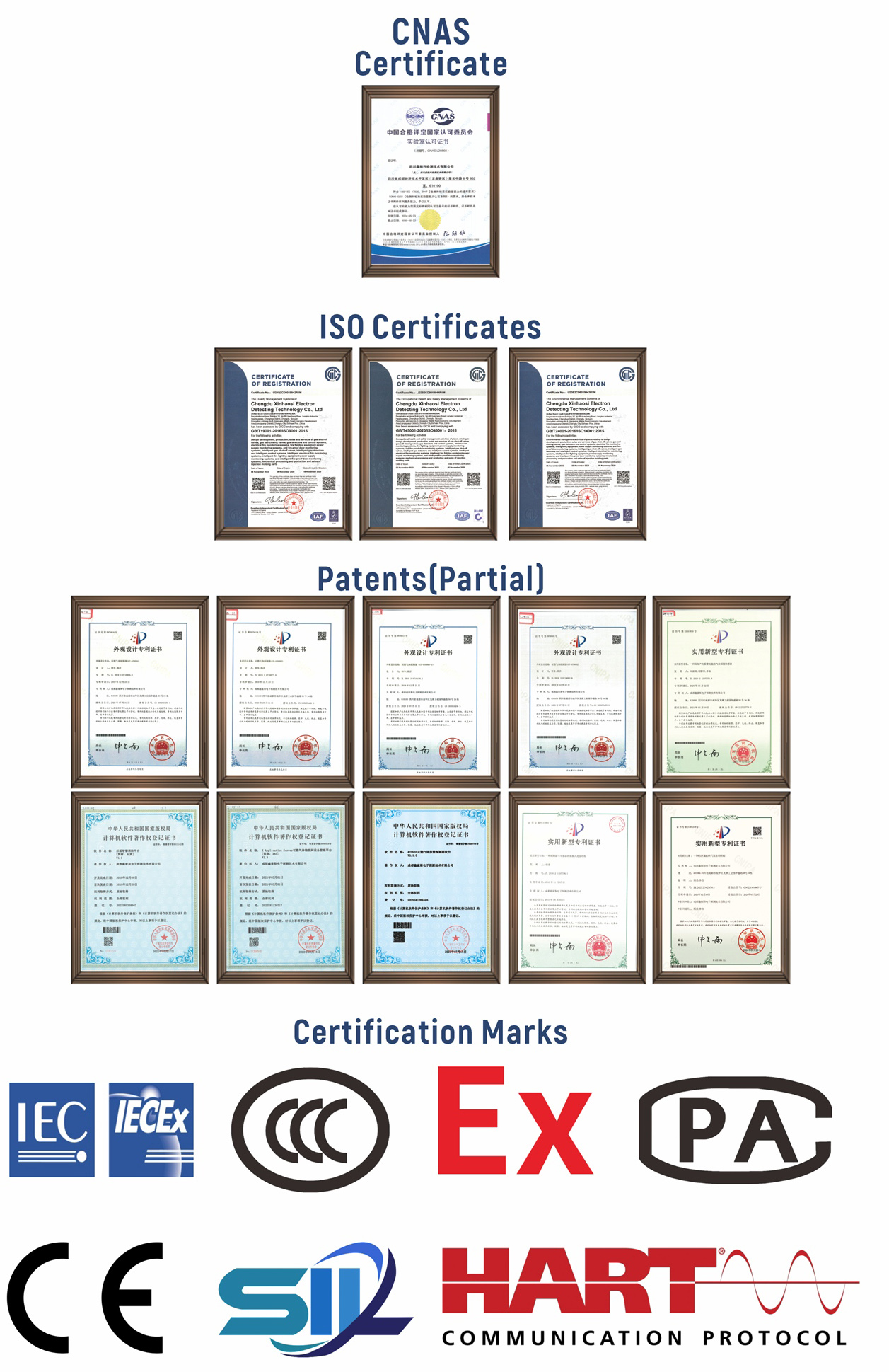
Adhering to ISO9001 quality management system standards, Xinhaosi's core products have obtained a full range of authoritative certifications, including national compulsory Products Certification, explosion-proof certification, fire product certification, CPA measurement instrument type approval certificate, and international approvals such as CE and SIL. Additionally, Xinhaosi holds honors such as "National Quality Integrity Benchmark Enterprise", "National Quality Leading Enterprise in the Gas Alarm Industry," member of the China Fire Protection Association, and the main drafting organization for the national standard of solenoid valves, further confirming its industry influence and reputation.
In the field of intellectual property, Xinhaosi has built a robust innovation system with over 50 patents and software copyrights. These patents cover core technological areas, including a graphical monitoring system for gas detection and alarm, which enables predictive maintenance based on historical data to reduce equipment failure rates by over 30%, and a solenoid valve with flow monitoring functionality that integrates flow detection and alarm capabilities. The company also pioneered China's first networked bus-type gas leakage monitoring system and the only maximum-point gas leakage monitoring system certified by the Ministry of Public Security, demonstrating its leading position in cutting-edge technological research.
Our in-house laboratory is accredited by the China National Accreditation Service for Conformity Assessment (CNAS), recognized both domestically and internationally under the ILAC-MRA framework. It operates in accordance with ISO/IEC 17025, the international standard for testing and calibration laboratories. It provides reliable and traceable testing services for gas detection and alarm products, solenoid valves, and related safety equipment. Test reports issued by the CNAS-accredited laboratory are widely accepted by regulatory authorities, certification bodies, and customers in China and overseas, helping to ensure product quality, safety compliance, and market access.
Deploying portable carbon monoxide safety systems and integrated detection arrays across high-risk operational environments worldwide.
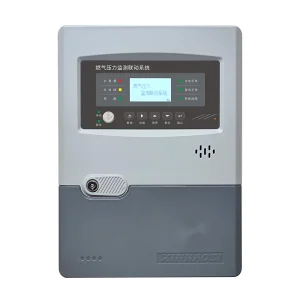
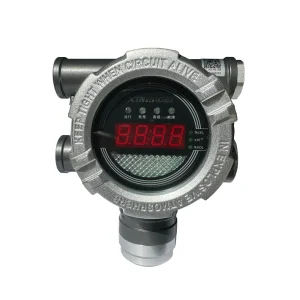
In underground coal mines and deep rock shafts, incomplete combustion from diesel haulage machinery and blasting operations generates lethal CO pockets. Portable diffusion monitors integrated with the GT-AT0616 Series Underground Shaft Monitoring Device provide continuous localized protection, vibrating and flashing instantly when ambient CO exceeds 24 ppm.
Blast furnace gas in steel mills contains up to 30% CO gas. Maintenance crews entering hot-work zones carry pump-aspirated portable monitors equipped with high-concentration electrochemical sensors and multi-gas arrays (CO, $H_2S$, $O_2$, LEL) to detect sudden pressure leaks from main flange junctions.
Urban gas operators inspecting underground valve pits utilize portable monitors prior to descending into confined structures. Pre-entry sampling wand accessories draw gas from a distance of 15 meters, ensuring zero worker exposure to toxic gas accumulation before clearance is granted.
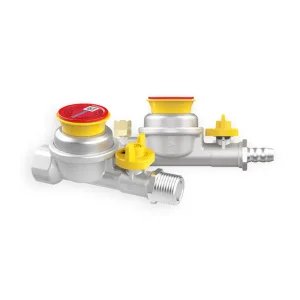
In commercial buildings and district heating stations, flue gas back-drafting or burner misalignment can release carbon monoxide into mechanical spaces. Portable monitors paired with automatic pipeline shut-off valves provide immediate emergency mitigation and localized safety alarms.
First responders entering overhaul fires require ultra-rugged, drop-proof CO monitors with wireless mesh connectivity. Real-time toxic concentration telemetry is transmitted back to command posts, keeping incident commanders informed of overhaul safety parameters.
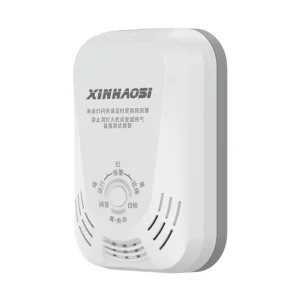
Combining domestic gas detectors (JT-AT2006 / JT-AT2004A series) with portable service units allows HVAC technicians to conduct fast residential safety audits, verifying zero CO back-spill from water heaters and furnace chimneys.
Pioneering the convergence of AI dynamic diagnostic models, MEMS sensor arrays, and 5G-RedCap wireless safety networks.
Integrating real-time machine learning models onto microcontroller firmware. By monitoring baseline sensor signal impedance and temperature gradients, AI routines predict sensor degradation and electrolyte drying 60 days before failure occurs, eliminating uncalibrated field downtime.
Transitioning from traditional wet electrochemical cells to ultra-compact silicon MEMS toxic gas sensors. MEMS fabrication reduces sensor module power consumption by 85%, enabling wearable CO monitors no larger than a standard wrist watch with 3-year continuous battery life.
Direct device-to-cloud telemetry via 5G-Reduced Capability (RedCap) and LoRaWAN architectures. Every portable monitor automatically syncs location coordinates, worker bio-vitals, and gas concentration logs to enterprise cloud platforms without requiring intermediate mobile gateways.
Developing self-contained micro-gas generation cells inside portable housings that release nano-liter calibration gas doses automatically on schedule, validating sensor accuracy without manual intervention from safety managers.
How Xinhaosi leverages vertical integration, automated SMT lines, and mega-scale manufacturing to deliver unmatched technical quality at global cost-efficiency.
From precision injection molding of anti-static casings and SMT high-speed circuit assembly to automated sensor calibration chambers, Xinhaosi controls 100% of the manufacturing chain. This eliminates reliance on third-party sub-contractors and guarantees strict quality control.
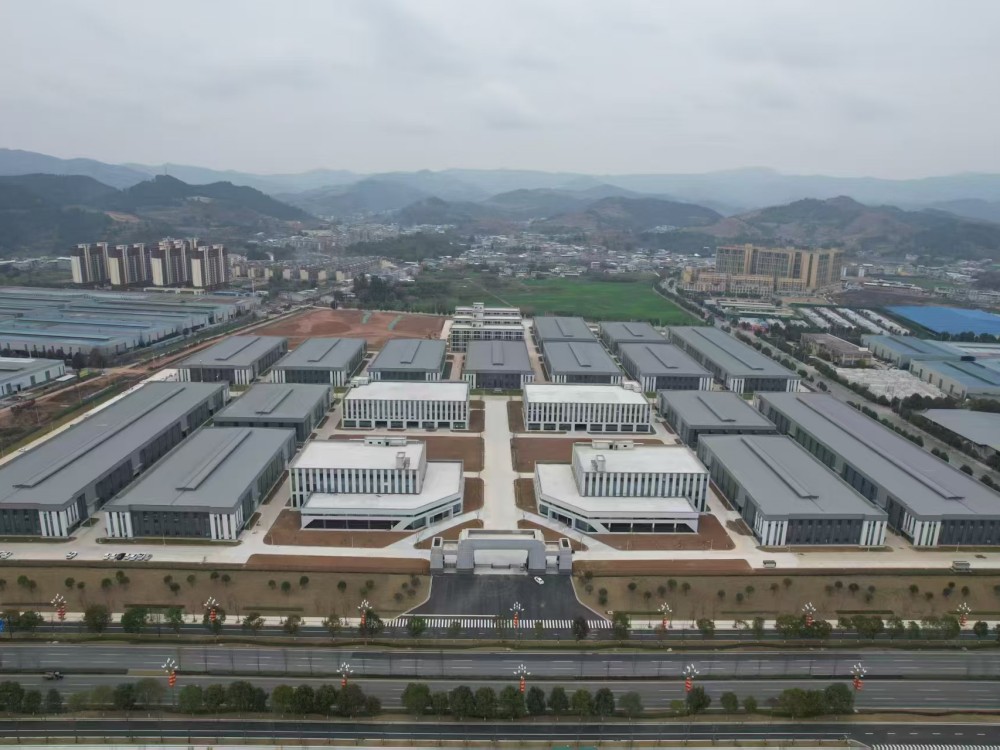
Our Deyang factory houses automated robotic calibration chambers where thousands of CO sensors undergo 72-hour burn-in and multi-point span gas exposure under computer-controlled thermal cycles, assuring zero defect leakage before shipment.
Producing tens of millions of gas safety units annually gives Xinhaosi massive raw material procurement leverage. OEM and ODM partners benefit from rapid 14-day sample prototyping, tailored firmware options, and customized branding.
Navigating complex international safety standards with certified compliance and responsive localized field support services.
Industrial gas detection instruments operate under stringent international regulatory regimes. Xinhaosi portable monitors and integrated gas detection controllers comply fully with international standards including EN 50291 (European standard for electrical apparatus for the detection of carbon monoxide), EN 45544 (toxic gas measurement in workplace atmospheres), ATEX Directive 2014/34/EU, IECEx explosion protection requirements, and SIL2/SIL3 functional safety levels under IEC 61508.
To support global enterprise procurement, Xinhaosi maintains an extensive network of certified service engineering partners across Europe, North America, Southeast Asia, the Middle East, and Latin America. Localized support includes annual sensor recalibration, CNAS-traceable certificate issuance, on-site field training, and rapid spare-part fulfillment.
Two decades of continuous innovation and expansion in gas safety technology.


In-depth technical answers addressing B2B engineering procurement, sensor performance, calibration protocols, and global compliance.
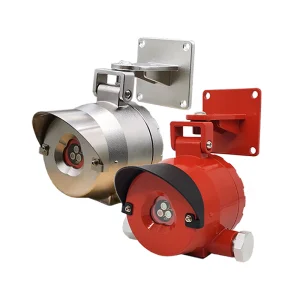
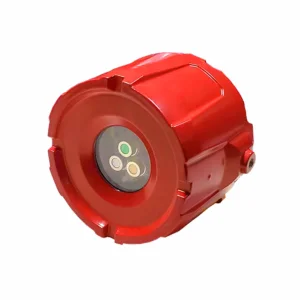
Complementary safety instruments, automatic shut-off valves, flame detectors, and specialized shaft monitoring hardware.