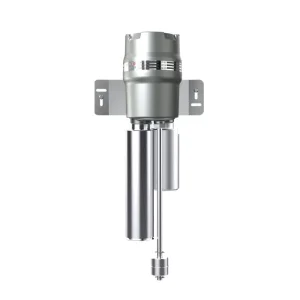

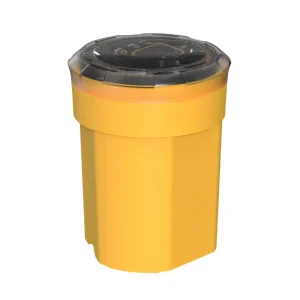

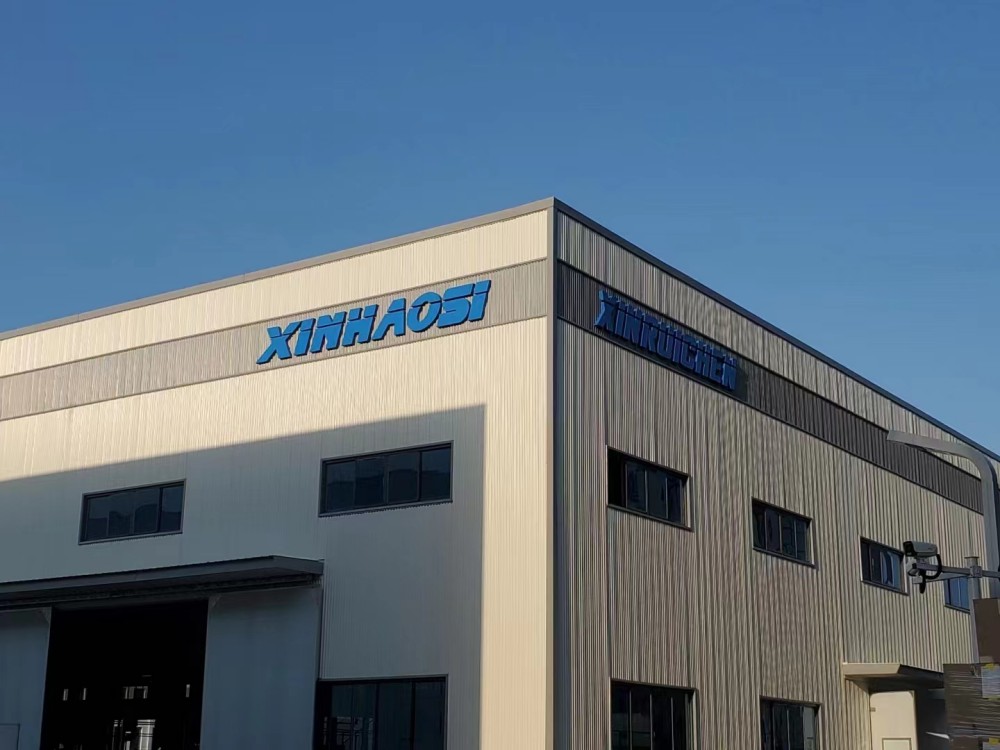
Chengdu Factory & Office

Deyang Factory
Founded in 2003, Xinhaosi is one of the most influential and trusted brands in the global gas safety industry. Over the past two decades, we have steadily built a robust and comprehensive production and service system, which integrates cutting-edge R&D, intelligent manufacturing with advanced automation equipment, digital marketing across global channels, professional after-sales support with an experienced technician team, flexible OEM/ODM services, as well as CNAS-Accredited laboratory calibration services that meet international standards.
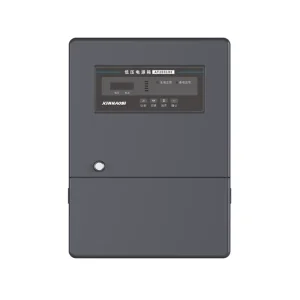
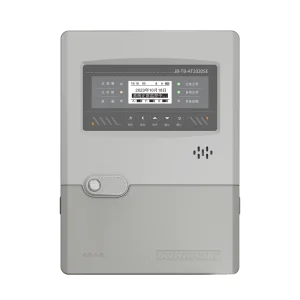
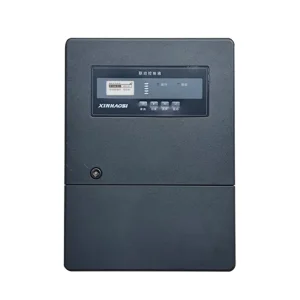
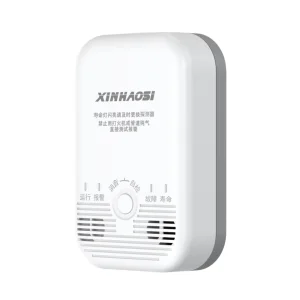
Our diversified product portfolio covers industrial & residential gas detection & alarm systems, industrial & household gas solenoid valves, and urban gas pipeline network monitoring systems—all engineered to adapt to complex working environments and strict safety requirements. We produce and sell tens of millions of units annually, catering to a wide range of industries that demand reliable gas detection solutions, including oil & gas exploration and production, petrochemicals, urban gas distribution, automotive manufacturing, pharmaceuticals, new energy, steel production, and beverage processing.
"Making Gas Safety Accessible Everywhere" — We consistently deliver high-performance, reliable products and customized solutions tailored to each client's unique needs, protecting industrial facilities and residential spaces globally.
Years of R&D Excellence
Patents & Software Copyrights
Gas Detectors Deployed Globally
Accredited Calibrations Laboratory
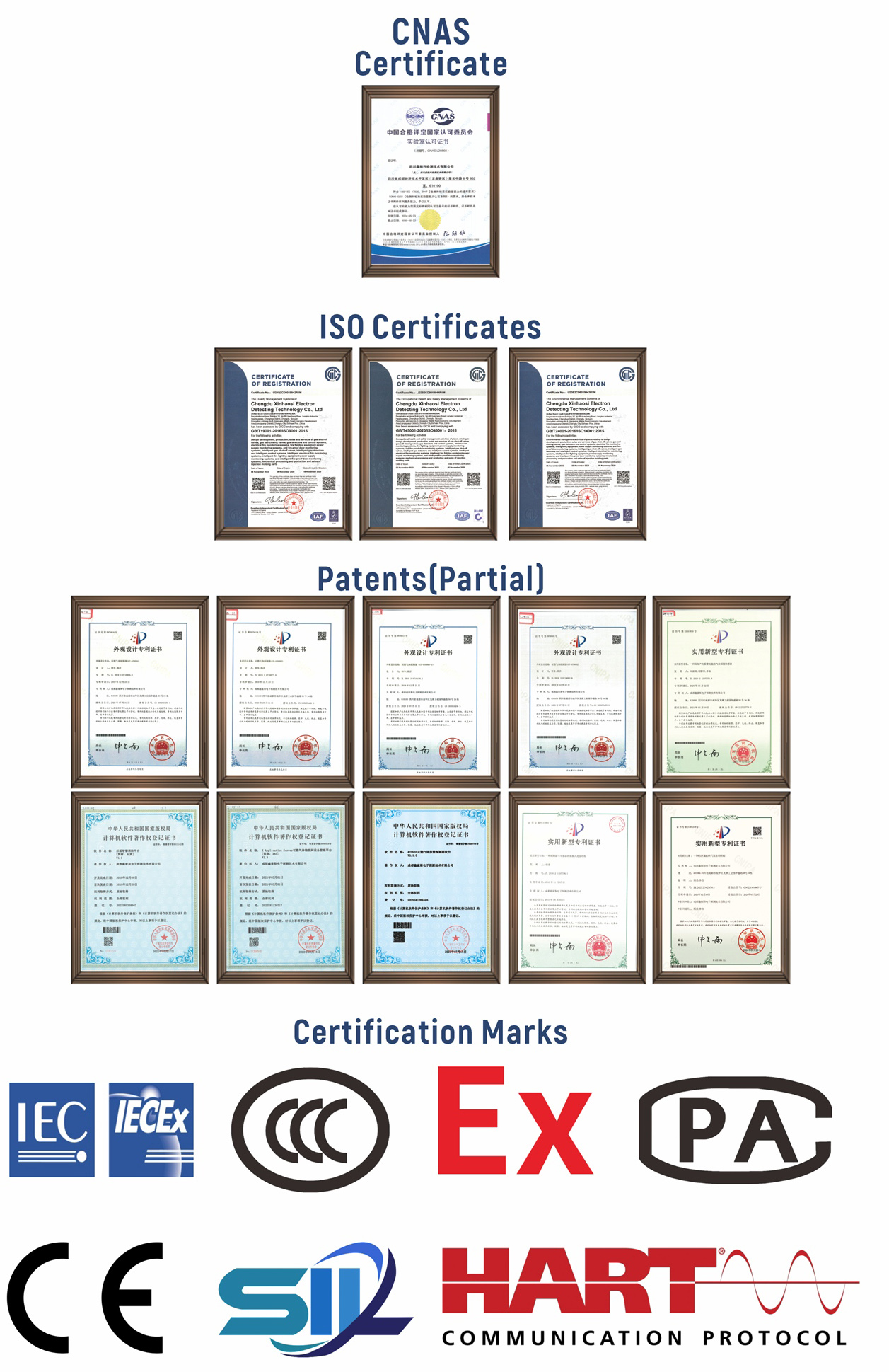
Adhering to ISO9001 quality management system standards, Xinhaosi's core products have obtained a full range of authoritative certifications, including national compulsory Products Certification, explosion-proof certification, fire product certification, CPA measurement instrument type approval certificate, and international approvals such as CE and SIL. Additionally, Xinhaosi holds honors such as "National Quality Integrity Benchmark Enterprise", "National Quality Leading Enterprise in the Gas Alarm Industry," member of the China Fire Protection Association, and the main drafting organization for the national standard of solenoid valves, further confirming its industry influence and reputation.
In the field of intellectual property, Xinhaosi has built a robust innovation system with over 50 patents and software copyrights. These patents cover core technological areas, including a graphical monitoring system for gas detection and alarm, which enables predictive maintenance based on historical data to reduce equipment failure rates by over 30%, and a solenoid valve with flow monitoring functionality that integrates flow detection and alarm capabilities. The company also pioneered China's first networked bus-type gas leakage monitoring system and the only maximum-point gas leakage monitoring system certified by the Ministry of Public Security, demonstrating its leading position in cutting-edge technological research.
Our in-house laboratory is accredited by the China National Accreditation Service for Conformity Assessment (CNAS), recognized both domestically and internationally under the ILAC-MRA framework. It operates in accordance with ISO/IEC 17025, the international standard for testing and calibration laboratories. It provides reliable and traceable testing services for gas detection and alarm products, solenoid valves, and related safety equipment. Test reports issued by the CNAS-accredited laboratory are widely accepted by regulatory authorities, certification bodies, and customers in China and overseas, helping to ensure product quality, safety compliance, and market access.
In heavy industrial piping systems, hazardous gas transmission pipelines, and high-pressure fluid control manifolds, the mechanical integrity of joint connections determines the boundary between operational efficiency and catastrophic leakages. NPT (National Pipe Taper) threads, governed by the ANSI/ASME B1.20.1 standard, utilize a specific tapered design. Unlike parallel threads (NPS) that rely on secondary washers, O-rings, or compression gaskets to prevent leaks, NPT fittings achieve seal tightness through the physical compression of the mating thread crests and roots. The taper rate for all NPT threads is 1 in 16 (which equates to a 3/4-inch change in diameter over a 12-inch length), creating a uniform slope of 1°47' relative to the central axis.
When an external male NPT thread is screwed into an internal female NPT socket, the matching flanks lock together. Under mechanical torque, this flank-to-flank contact causes structural deformation of the thread tips. However, because metal-to-metal contact is susceptible to microscopic surface variations, thread sealants (such as PTFE tape or anaerobic paste) are applied to fill the remaining spiral leak paths. In gas pipeline monitoring and automatic shut-off systems, maintaining a precise NPT thread size is critical. Any dimensional variance can lead to over-tightening (which strips the threads) or under-tightening (which causes slow, undetectable micro-leaks of volatile organic compounds or combustible gases).
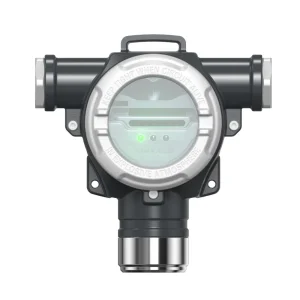
For explosion-proof instruments such as the GTYQ-AT0503 Combustible Gas Detector, NPT entries serve a dual purpose. They must support the high-pressure structural assembly of cable glands and conduit connections while maintaining the flameproof (Ex d) boundary of the system. According to IEC 60079-1 standards, thread engagement is a primary vector for mitigating internal gas explosions. Flameproof enclosures rely on the path length and mechanical clearances of the threaded joint (the flame path) to cool escaping hot gases before they can ignite the external explosive atmosphere.
| NPT Size | Threads per Inch (TPI) | Outer Diameter (inch) | Pitch Diameter (inch) |
|---|---|---|---|
| 1/8" NPT | 27 | 0.405 | 0.363 |
| 1/4" NPT | 18 | 0.540 | 0.477 |
| 3/8" NPT | 18 | 0.675 | 0.612 |
| 1/2" NPT | 14 | 0.840 | 0.758 |
| NPT Size | Threads per Inch (TPI) | Outer Diameter (inch) | Pitch Diameter (inch) |
|---|---|---|---|
| 3/4" NPT | 14 | 1.050 | 0.967 |
| 1" NPT | 11.5 | 1.315 | 1.213 |
| 1-1/4" NPT | 11.5 | 1.660 | 1.557 |
| 2" NPT | 11.5 | 2.375 | 2.269 |
In the oil and gas, petrochemical, and municipal pipeline sectors, industrial procurement networks face the challenge of reconciling regional thread and safety standards. While Europe and parts of Asia favor BSPT (British Standard Pipe Taper) or metric threads, North America and Latin America rely on NPT-compliant fittings. Modern factories like Xinhaosi provide global procurement managers with customized adapters and dual-certified equipment ports, solving interface compatibility issues for large international gas networks.
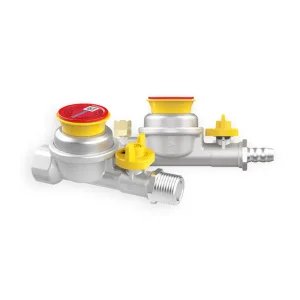
Additionally, macro industrial trends emphasize the transition from isolated, manually operated safety valves to fully integrated, networked safety shutdown systems. In high-demand scenarios such as chemical plant retrofitting or municipal gas network expansions, the availability of standardized NPT-threaded solenoid valves (like the KT-XF5 series) reduces engineering lead times. Procurement teams select these components not only for their mechanical thread compatibility but also for their electrical compliance (SIL certification) and integration capabilities with local SCADA and industrial IoT (IIoT) platforms.





Xinhaosi's IoT infrastructure integrates physical gas detection systems with cloud-based monitoring dashboards. Through real-time data collection and analysis, plant managers can track concentration levels of combustible and toxic gases across large facilities, preventing safety incidents before they escalate.
Deploying networked bus-type configurations allows hundreds of gas detectors (such as the JT-AT2004BII) to communicate over long distances using a single bus line. This architecture reduces cabling costs, simplifies installations, and provides high immunity to industrial electromagnetic interference.
By integrating fluid flow dynamics sensors with solenoid valves, Xinhaosi's smart safety shut-off systems monitor flow parameters in real time. If they detect line pressure drops or micro-leaks, the AI system automatically cuts off gas flow, minimizing the risk of secondary ignition.