
China has become an important source of gas detection equipment, including devices designed for homes, kitchens, factories, and commercial sites. Yet choosing a supplier involves more than comparing prices or product photos. A dependable Lpg Leak Detector should suit its installation environment, provide clear alarms, and come with usable technical documentation. Small details matter. Think of sensor type, response behavior, calibration guidance, enclosure quality, and the availability of replacement parts.
This overview introduces notable Chinese manufacturers and the factors buyers can use to assess them. It considers product range, manufacturing experience, quality controls, technical support, and evidence behind performance claims. Look for test reports and certificates that can be checked, rather than relying on broad marketing language. Ask how products are tested and whether support continues after delivery. These checks can reveal practical differences between suppliers.
A shortlist is not a guarantee. Product specifications and service quality can change, and one company may not fit every project. Buyers should confirm current details directly with manufacturers and check that documentation matches the intended application and destination requirements. No comparison is perfect. A careful review, however, can make the search more grounded and help buyers identify manufacturers worth evaluating further.
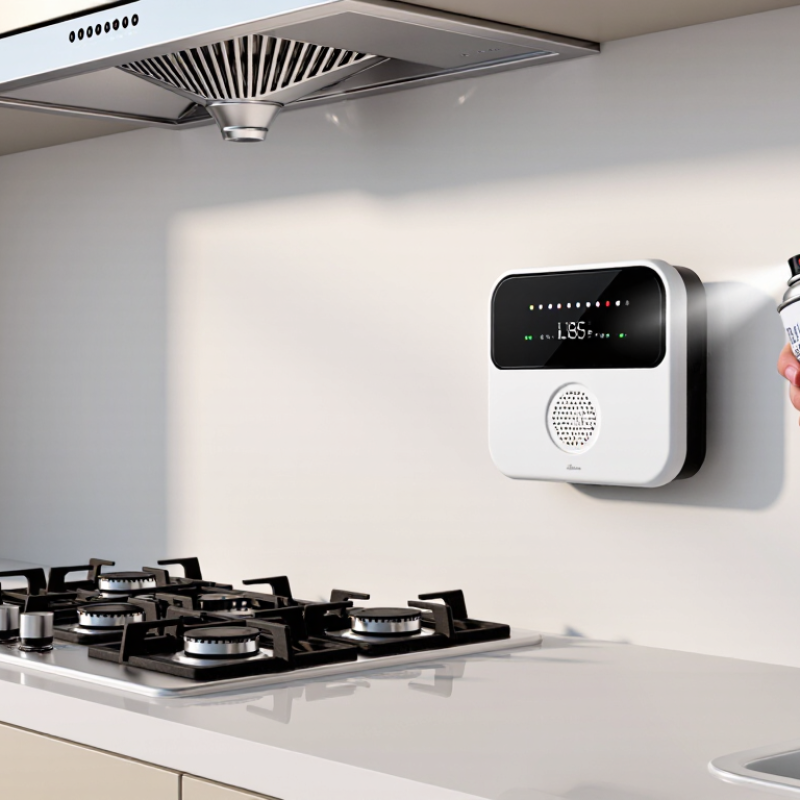
For LPG leak detectors in China, the lower explosive limit matters because propane and butane do not share one threshold. The NIOSH Pocket Guide lists propane’s LEL as 2.1% by volume, isobutane’s as 1.8%, and n-butane’s as 1.6%. The subtitle’s 1.8% figure therefore applies to isobutane, not every form of butane. That distinction is easy to miss. LPG composition can vary, so buyers should check which gas a detector is calibrated for and how its manual defines the alarm reading.
An LEL sensor usually displays a fraction of the gas’s explosive limit, not its concentration as a volume percentage. For example, a reading of 10% LEL is not 10% gas by volume. During commissioning, technicians should test the detector with the specified calibration gas, verify response, and document the result. A sensor near a cylinder valve may also behave differently from one mounted near a floor drain or enclosed pit. Ask manufacturers for calibration instructions, test records, and performance data for the intended gas mixture. Paperwork helps, but it does not replace a site test.
GB 15322.1-2019 covers point-type combustible-gas detectors for industrial and commercial applications in China. It sets performance and test requirements, making it a useful baseline when comparing Chinese LPG detector suppliers. IEC 60079-29-1 addresses performance requirements for flammable-gas detectors in explosive atmospheres. The standards are related, but they are not interchangeable. Buyers should request test reports identifying the exact model, gas, calibration range, and test conditions. A certificate alone may not show how a detector behaves after months of dust, humidity, or temperature changes.
The World LPG Association’s 2023 Statistical Review reports global LPG consumption of about 330 million tonnes in 2022. That scale makes reliable leak detection a practical concern across storage, filling, and commercial kitchens. Ask suppliers for documented response-time, alarm, and environmental tests against the applicable standard. Check whether the proposed sensor is calibrated for LPG, not merely another combustible gas. LPG vapor can collect near floor level, but placement still depends on airflow and likely leak points. Paper compliance is not field reliability. I would also review calibration intervals and maintenance instructions; these are easy to overlook during purchasing.
Chinese LPG leak detector manufacturers offer fixed wall-mounted units for kitchens, workshops, and equipment rooms, along with portable meters for inspection rounds. Common products combine a sensing head, audible and visual alarms, and relay outputs for ventilation or shutdown systems. Details matter.
Core technologies vary. Catalytic-bead sensors detect combustible gas through a heat-related change in electrical resistance, while semiconductor sensors measure changes in surface conductivity. Some suppliers also offer infrared designs, which can provide stable readings but may cost more. Buyers should check the target gas, measurement range, response time, and recovery time rather than relying on sensor type alone. A clear display helps technicians read results in dim service areas.
Good designs account for more than detection. Temperature and humidity compensation, fault alerts, replaceable sensor modules, and consistent calibration can improve field reliability. Ask how calibration is performed and whether test records are available. One point is easy to overlook: a detector that performs well in a clean lab may respond differently near grease, dust, or strong ventilation drafts. Not every unit suits every site. Compare documented test results, enclosure details, and after-sales support before selecting a manufacturer.
Lower flammable limits (LFL) show the approximate fuel concentration in air at which a gas can begin to burn. They are a useful reference for detector calibration and alarm design.
Propane: 2.1% by volume; n-butane: 1.6% by volume. Values are lower flammable limits in air, not recommended alarm setpoints. LPG composition varies, so detector specifications should be checked for the intended gas and application. Source: NIOSH Pocket Guide to Chemical Hazards.
Chinese LPG detector manufacturers commonly offer catalytic-bead, semiconductor, and infrared sensor designs. Catalytic-bead sensors are widely used for combustible-gas detection, but require oxygen and may need regular calibration. Semiconductor sensors can be compact and economical, though humidity and other gases may affect readings. Infrared sensors do not rely on oxygen, but buyers should check suitability, maintenance needs, and total cost.
Response time figures need context. A datasheet may report a laboratory value, not performance in a kitchen, plant room, or drafty enclosure. Compare the stated test concentration, sampling method, and recovery time. Ask whether the published figure applies to the complete detector or only its sensing element. Small detail, big difference. A faster number is not automatically a safer choice.
Certification should be checked model by model, not assumed from a factory’s general claims. Request current test reports, certificate scope, and evidence that the supplied unit matches the tested configuration. Also review alarm thresholds, output options, operating temperature, and calibration instructions. This comparison is easy to oversimplify: a strong supplier should explain trade-offs plainly and provide traceable documents. Even then, site conditions deserve a second look.
In homes, LPG detectors protect kitchens, utility rooms, and spaces near cylinders or pipe connections. LPG is heavier than air, so leaked gas can collect in low areas. Installers should follow the detector’s instructions and consider airflow, drains, and nearby appliances. A poorly placed sensor may respond too late. Small detail, big difference.
The International Energy Agency’s Tracking SDG7: The Energy Progress Report 2023 estimated that 2.3 billion people lacked access to clean cooking in 2022. LPG is one option used to expand clean cooking access, making dependable leak detection important in homes and shared kitchens. In restaurants, detectors can monitor areas around cooking equipment, gas manifolds, and cylinder storage. Grease, heat, steam, and ventilation can affect sensor performance. Regular testing matters.
Industrial sites may use LPG for heating, drying, or process operations. Detectors can be positioned near valves, transfer points, and storage areas, based on a site-specific hazard assessment. Teams should document alarm tests and follow sensor calibration schedules. The detector alone is not enough. Staff still need clear response steps, and maintenance records can be imperfect; that weakness deserves attention.
| Application | Common LPG Sources | Detector Placement Considerations | Useful System Features | Procurement Checks |
|---|---|---|---|---|
| Homes | Liquefied petroleum gas (LPG) cylinders, regulators, flexible connections, and gas appliances such as cookers. | LPG vapour is generally heavier than air, so detectors are commonly positioned low and near potential leak sources. Avoid locations where cupboards, furnishings, drafts, or other obstructions may affect gas movement; follow the detector instructions and local requirements. | Audible and visual alarm, clear fault indication, and a suitable power arrangement for the installation. | Check that the detector is intended for LPG, that its alarm and operating instructions are clear, and that installation and maintenance follow local rules. |
| Commercial kitchens | Fixed or cylinder-fed LPG supplies, pipework, valves, regulators, and cooking equipment. | Consider likely leak points and the kitchen’s airflow, heat, steam, and cleaning conditions. Detector locations should be selected according to the installation guidance and applicable fire and gas-safety requirements. | Alarm output that can connect to a suitable shut-off valve or building alarm system, where required; accessible status and fault indication. | Confirm compatibility with the gas supply and any connected control equipment. Check suitability for the environment and establish a documented inspection and test routine. |
| Industrial plants and workshops | LPG storage vessels, cylinder manifolds, process equipment, pipework, and gas-fired heaters or burners. | Assess the layout, ventilation, likely leak points, and potential gas accumulation areas. Where an explosive atmosphere may occur, equipment selection and installation must meet the site’s hazardous-area requirements. | Options may include remote alarms, relay outputs, fault monitoring, and integration with plant control or emergency shut-off systems. | Review the required approvals, hazardous-area suitability where applicable, operating range, environmental rating, maintenance access, and system compatibility. |
| Cylinder storage and supply areas | LPG cylinders, cylinder banks, manifolds, changeover equipment, and associated connections. | Plan detector locations around the storage arrangement, ventilation paths, barriers, and possible low points. Do not assume that one detector location suits every enclosure or outdoor layout. | Alarm signalling that can be heard or monitored in the relevant occupied area; outputs for additional controls if required by the site design. | Verify the detector’s intended indoor or outdoor use, environmental limits, power supply, and compatibility with the site alarm and emergency-response plan. |
| Commercial buildings with LPG appliances | LPG-fed boilers, water heaters, catering appliances, and local gas distribution pipework. | Consider appliance locations, connected rooms, ventilation, and the route by which leaked gas could travel. Follow applicable building and gas-safety rules for detector siting. | Local alarm indication and, where specified by the design, connection to building monitoring or gas isolation controls. | Check the detector’s LPG sensitivity, alarm behaviour, service life information, replacement guidance, and availability of technical documentation. |
Selection note: This table compares application and procurement considerations, not manufacturer rankings. Detector placement, alarm settings, approvals, and system design should be confirmed against the applicable local codes, site risk assessment, and product instructions.
Propane’s LEL is 2.1% by volume. Isobutane’s is 1.8%, while n-butane’s is 1.6%.
No. It means the reading equals one-tenth of the gas’s lower explosive limit. Easy to confuse.
Check the detector manual and ask which calibration gas it requires. LPG composition can vary, so confirm the intended gas.
Test the detector using its specified calibration gas. Verify its response and document the result. Keep the records.
Consider kitchens, utility rooms, cylinder areas, and pipe connections. Since LPG is heavier than air, low areas may matter. Follow the detector’s instructions.
Airflow, drains, enclosed pits, and nearby appliances can affect response. A sensor near a valve may behave differently from one near a floor drain.
Grease, heat, steam, and ventilation may affect performance. Check areas near cooking equipment, gas manifolds, and cylinder storage.
Site assessments can guide placement near valves, transfer points, and storage areas. Teams should test alarms and follow calibration schedules.
No. Staff need clear response steps, and sensors need regular testing. Maintenance records can miss details; that deserves a second look.
Choosing an Lpg Leak Detector for propane or butane requires understanding both the gas concentration limits and the detector’s intended environment. Propane has a lower explosive limit (LEL) of about 2.1% by volume, while butane’s is about 1.8%. In China, buyers can consider relevant requirements such as GB 15322.1-2019 and IEC 60079-29-1 when evaluating product design, testing, and certification documentation.
Chinese manufacturers offer detectors using different sensor technologies, with variations in response time, measurement range, service life, and maintenance needs. Comparing these features alongside applicable certifications can help identify a model suited to its installation conditions. LPG detectors are used in homes, commercial kitchens, and industrial settings, where placement, ventilation, alarm functions, and regular inspection all contribute to effective leak monitoring. The most appropriate choice depends on the gas, site risks, and required operating conditions.
