
An LPG release may begin quietly: a loose fitting, a worn hose, or a valve left slightly open. In a busy plant, the first warning may be a monitor reading, not a smell. A dependable Lpg Gas Monitor can help teams detect leaks early, but the right choice depends on the site, fuel system, and response plan. No single model suits every facility.
Industrial safety engineer and process-safety author Trevor Kletz is often associated with this reminder: “If you think safety is expensive, try an accident.” The line is brief, but it points to a practical truth: detection equipment is only one part of prevention. Sensor placement, calibration, alarm audibility, and routine testing all affect whether a warning leads to timely action. Small details matter. A sensor mounted too far from a likely leak may respond too late; a neglected test can create false confidence.
This guide compares leading LPG gas monitors by sensing technology, response behavior, installation needs, and maintenance demands. It also considers real operating conditions, from ventilated cylinder-storage areas to warm machinery rooms where airflow can shift gas movement. Specifications deserve close reading, and site-specific risk assessment still matters. A product ranking cannot replace that work. Some comparisons are imperfect, too; manufacturers do not always report performance in directly comparable ways. Use the shortlist as a starting point, then verify each monitor’s suitability with qualified safety personnel and the equipment documentation.
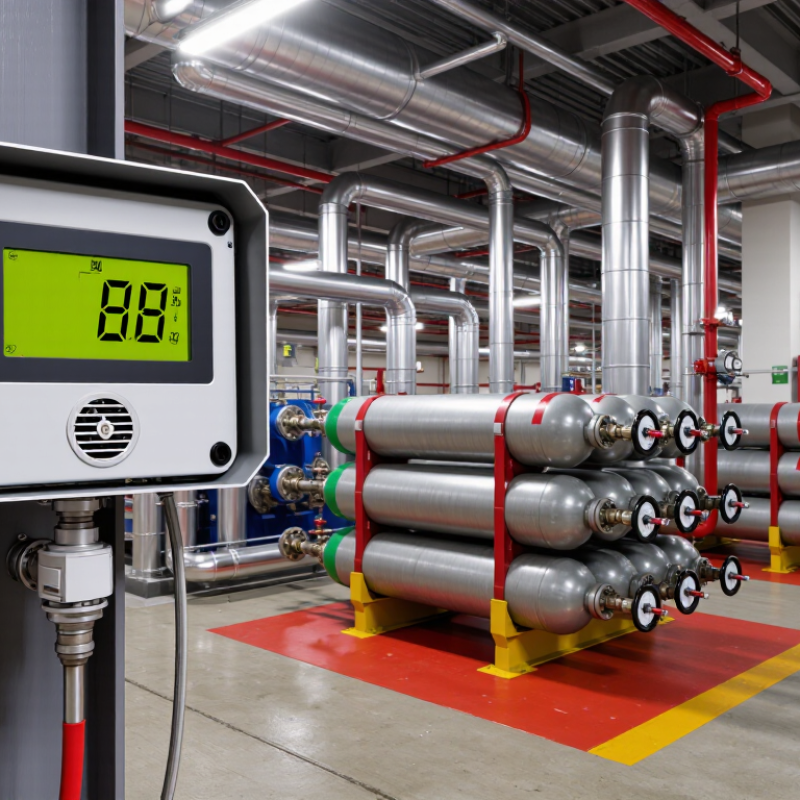
Propane and butane can form flammable mixtures well before a leak becomes obvious. The National Institute for Occupational Safety and Health lists propane’s lower explosive limit at 2.1% by volume in air. The International Chemical Safety Card for butane gives a lower explosive limit of 1.8%. These values mark the point where ignition becomes possible, not a safe operating target. LPG vapour is heavier than air, so it may settle in pits, drains, and low corners. A quiet leak can become a serious hazard.
Industrial LPG monitors help detect rising concentrations, but placement matters. Sensors near likely leak points and low-level accumulation zones can provide earlier warning. NIOSH and ICSC reference figures are useful, yet real readings depend on gas composition, temperature, airflow, and sensor condition. A detector does not replace ventilation or leak control. Nor is one sensor always enough. That deserves a second look during site reviews.
LPG monitors detect gases such as propane and butane before concentrations become hazardous. Sensor choice affects response, maintenance, and reliability. A detector’s reading also depends on placement, airflow, and calibration. No sensor works perfectly in every environment.
Catalytic-bead sensors measure heat released when combustible gas reacts on a heated element. They need oxygen and may be affected by contaminants, including some silicones. Infrared sensors detect how LPG absorbs specific wavelengths of light. They do not rely on combustion, but require suitable calibration and a clear optical path. Semiconductor sensors change electrical resistance when gas reaches their sensing surface. They can respond quickly, though humidity and other vapors may influence readings. That trade-off matters. A sensor that reacts to several gases may need more careful interpretation.
Top LPG Gas Monitors for Industrial Safety
LPG vapor is typically 1.5 to 2 times heavier than air, so a leak can settle near floor level. Low points matter. In workshops, vapor may collect beneath equipment, inside trenches, or near drains. Install monitors low enough to detect this movement, especially near valves, hose connections, and transfer areas. Exact placement depends on the site. Air currents, warm machinery, partitions, and extraction fans can redirect gas, so a detector placed low may still miss a moving plume.
Tips: Map likely leak points. Check pits and enclosed spaces. Keep sensors clear of water, dust, and impact. Follow the detector maker’s placement and maintenance instructions.
A walk-through can reveal details that a floor plan misses, such as a fan pushing vapor away from a sensor. Review locations after equipment or ventilation changes. Test monitors regularly, and record calibration and alarm checks. Do not assume that one low-mounted detector protects an entire room; use a qualified risk assessment to determine coverage and sensor height. Site layouts are rarely perfect, and detector placement may need revision after real operating conditions are observed.
Propane and butane vapors are denser than air and can collect in low-lying areas. Consider placing LPG detectors near floor level and potential accumulation points, while accounting for airflow, obstacles, pits, and applicable safety guidance. Actual readings and placement requirements depend on site conditions.
In industrial LPG monitoring, 10% LEL is commonly used as a warning alarm, while 20% LEL may trigger a higher alarm and a faster response. These values describe fractions of the gas’s lower explosive limit, not percentages of air. They are common settings, not universal requirements; site risk assessments and applicable standards should guide final choices.
The NIOSH Pocket Guide to Chemical Hazards lists propane’s LEL as 2.1% by volume in air. That makes 10% LEL about 0.21% propane by volume, and 20% LEL about 0.42%. Small numbers matter. A detector near a pipe joint may register a leak sooner than one behind a beam or in a strong exhaust stream. LPG can collect in low areas, but airflow and room layout affect how it spreads.
A warning alarm should prompt investigation, not complacency: check the area safely, confirm ventilation, and follow the site response plan. The higher alarm may require evacuation or equipment shutdown, depending on the facility’s procedures. Sensors also need correct placement, calibration, and functional testing; a setpoint cannot compensate for a drifting sensor. The numbers look precise. Real rooms are not.
When comparing industrial LPG monitors, match the measuring range to the hazard and alarm strategy. LPG is heavier than air, so leaks may collect near floors, pits, or drains; detector placement should reflect airflow and site layout. A broad range is not automatically better. Check resolution near the intended alarm points, and confirm whether readings are displayed as percent of the lower explosive limit. That matters.
Response time is usually stated as T90, the time needed to reach 90 percent of a test-gas reading. A faster response can help, but compare figures only when test conditions are similar. Tubing, filters, wind, and sensor age can all delay detection in the field. Real sites are messy.
The enclosure should suit the actual environment. Review its ingress-protection rating, operating temperature, humidity limits, and resistance to dust or corrosive vapors. Then examine calibration requirements: gas type and concentration, interval, access to calibration controls, and whether the unit supports traceable records. A bump test checks that gas reaches the sensor and alarms operate; it does not replace calibration. Follow the instrument instructions and site procedures, and have trained personnel document results. A tidy specification sheet can still miss a practical problem: calibration access may be awkward once the monitor is mounted.
| Top LPG Gas Monitors for Industrial Safety — How to Compare Range, Response Time, Enclosure, and Calibration | |||||
|---|---|---|---|---|---|
| Monitor Type | Typical Measuring Range | Typical Response Time | Enclosure and Installation Considerations | Calibration and Maintenance | Best-Fit Use and Key Limitations |
| Catalytic-bead point detector | Commonly 0–100% LEL for flammable-gas monitoring. LPG calibration should use a suitable propane or butane reference, or a documented correction factor. | Often specified at around 10–30 seconds for T90; check the individual sensor and gas specification. | Fixed industrial units are available in weather-resistant, hazardous-area-rated housings. Confirm the exact IP rating, temperature range, and hazardous-area approvals for the selected unit. | Requires zero and span checks with suitable certified gas. Calibration frequency depends on the instrument, site conditions, and applicable procedures; verify response through scheduled bump tests. | A common choice for fixed LPG leak detection. Performance can be affected by oxygen deficiency, sensor poisons, and other combustible gases. |
| Point infrared (IR) hydrocarbon detector | Commonly configured for a combustible-gas range such as 0–100% LEL; exact range and LPG response are model-specific. | Often specified at around 10–30 seconds for T90, depending on design and test conditions. | Fixed IR detectors are offered in rugged outdoor enclosures. Check ingress protection, approved operating temperature, hazardous-area certification, and mounting orientation. | Follow the manufacturer’s calibration and functional-test instructions. Some designs need less frequent routine calibration than catalytic sensors, but verification is still required. | Does not depend on oxygen in the same way as catalytic sensing and is generally resistant to catalytic-sensor poisons. IR hydrocarbon detectors do not detect hydrogen; confirm suitability for the target LPG and installation. |
| Semiconductor (MOS) gas sensor | Ranges vary widely by design and may be expressed in ppm or %LEL. Do not assume a sensor is suitable for safety-critical %LEL alarming unless its complete instrument is approved for that purpose. | Response varies with sensor design, gas concentration, humidity, and temperature; use the product’s specified test value rather than a general estimate. | Available in compact fixed or portable instruments. Verify environmental protection and hazardous-area suitability for the complete instrument, not just the sensing element. | May require baseline checks and periodic calibration or replacement, as specified by the manufacturer. Cross-sensitivity and environmental drift should be considered. | Can be useful for leak indication or specific monitoring applications. Select only a suitably certified instrument where its readings are used for industrial safety decisions. |
| Open-path IR hydrocarbon detector | Typically reports gas concentration multiplied by path length, such as LEL·m, rather than a point reading in %LEL. | System response depends on the detector, signal processing, and alarm settings; compare the specified response time for the complete system. | Requires a clear optical path between transmitter and receiver, with attention to alignment, vibration, obstructions, and weather exposure. Confirm enclosure and area approvals for each component. | Follow the manufacturer’s alignment, optical-check, and functional-test procedures. Calibration and verification requirements differ from those for point detectors. | Can monitor a broad area for hydrocarbon gas clouds. It does not identify the precise leak location or provide the same measurement as a point detector. |
| Portable catalytic-bead monitor | Commonly 0–100% LEL, with display and alarm settings dependent on the instrument. | Often specified at around 10–30 seconds for T90; sampling-tube or pump delays can add to the total response time. | Designed for personal or survey use; check ingress protection, battery rating, and hazardous-area approval before use in a classified location. | Perform the manufacturer-recommended bump test before use and calibrate at the stated interval or whenever required by the instrument’s procedures. | Useful for leak surveys and confined-space checks when used under site procedures. Readings can be affected by oxygen deficiency and sensor poisons. |
| Selection note: Propane and butane have different lower explosive limits (approximately 2.1% and 1.8% by volume in air, respectively). Alarm set points, calibration gas, correction factors, response time, enclosure rating, and hazardous-area approvals must be checked against the specific instrument, applicable standards, and site risk assessment. No single calibration interval or enclosure rating applies to every monitor. | |||||
LPG vapor is typically 1.5 to 2 times heavier than air. It may settle near floors, beneath equipment, or in trenches. Low points matter.
Inspect areas near valves, hose connections, transfer points, drains, pits, and enclosed spaces. A walk-through can reveal details a floor plan misses.
No. Fans, warm machinery, partitions, and extraction systems can redirect vapor. Airflow changes things. Placement may need review during real operations.
They are common warning and higher-alarm settings. They describe fractions of the gas’s lower explosive limit, not percentages of air.
Using a propane LEL of 2.1% by volume, 10% LEL is about 0.21% propane in air. Small numbers matter.
Follow the site response plan. Investigate safely, check ventilation, and do not treat the warning as a reason to relax.
No. A higher alarm may call for evacuation or equipment shutdown, depending on site procedures and risk assessment.
Keep sensors clear of water, dust, and impact. Test them regularly, record calibration and alarm checks, and reassess after ventilation or equipment changes. Perfect placement is hard to promise.
An Lpg Gas Monitor helps detect leaks before LPG concentrations become a serious fire or explosion hazard. Propane has a lower flammable limit (LFL) of about 2.1% by volume in air, while butane’s is about 1.8%, so even a relatively small leak can create a hazardous atmosphere. Industrial monitors may use catalytic-bead sensors to measure combustible gas, infrared sensors to detect gas through light absorption, or semiconductor sensors that respond to changes in electrical properties. Each technology has different operating requirements and advantages.
Because LPG vapor is typically about 1.5–2 times heavier than air, it can collect near floors and in low-lying spaces; monitor placement should reflect likely leak points, airflow, and site conditions. Common alarm settings provide an early warning at 10% of the lower explosive limit and a higher alarm at 20% LEL. When comparing equipment, consider its measurement range, response time, enclosure suitability, and calibration needs to ensure reliable detection in the intended environment.
