
Choosing a dependable Lpg Gas Detector manufacturer is a practical safety decision, not merely a purchasing exercise. LPG can collect near floors, inside cabinets, and around cylinder storage points. A small leak may remain unnoticed until an ignition source appears. Reliable detection therefore depends on sensor accuracy, alarm response, enclosure quality, and long-term maintenance.
James Reason, a leading safety expert, wrote, “We cannot change the human condition, but we can change the conditions under which humans work.” This principle applies directly to LPG monitoring. A well-designed Lpg Gas Detector can provide an early warning, but only when installers position it correctly and technicians test it regularly. Buyers should examine catalytic, infrared, or semiconductor sensing technologies. They should also check calibration intervals, response time, alarm visibility, IP ratings, and operating temperature ranges. Certifications must match the destination market and the intended installation environment.
Details matter greatly. A restaurant may need compact wall-mounted units near appliances. A warehouse may require multiple detectors, remote alarms, and careful zoning. Manufacturers with documented field experience usually provide clearer manuals, replacement sensors, and responsive technical support. Still, no ranking is perfect. Product data can be incomplete, and marketing claims deserve careful verification. Price alone can mislead. A cheaper detector may create higher service costs later. Global buyers should compare test reports, warranty terms, spare-part access, and distributor competence before choosing from the top Lpg Gas Detector manufacturers. The strongest choice is not always the most famous one. It is the one that performs reliably in the buyer’s actual environment.
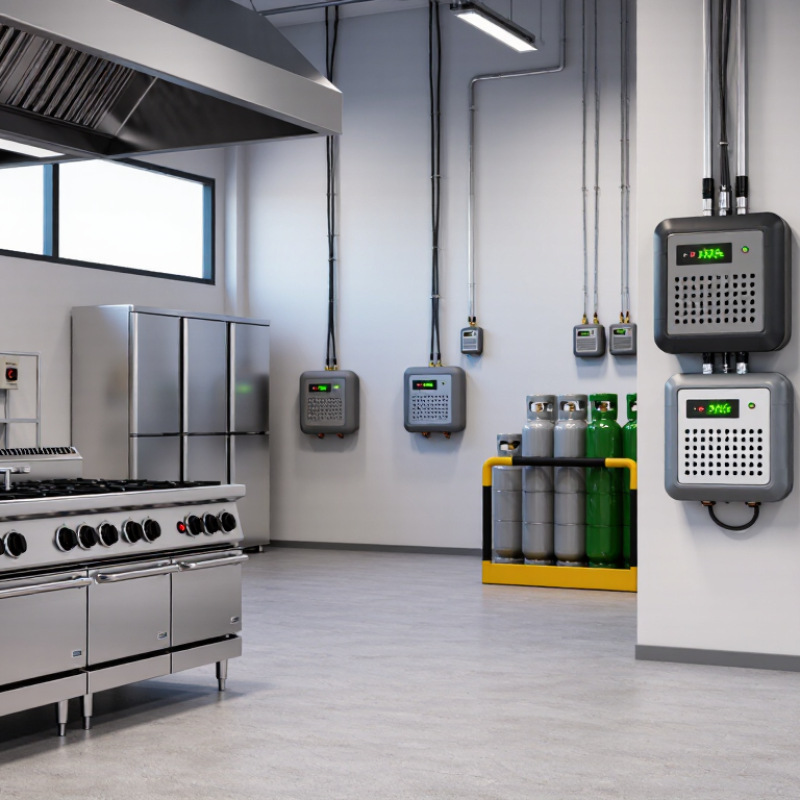
Top LPG Gas Detector Manufacturers for Global Buyers
What Is an LPG Gas Detector and Why Does It Matter?
Liquefied petroleum gas, or LPG, commonly contains propane, butane, or both. It is highly flammable and can collect near floors because the vapor is heavier than air. An LPG gas detector monitors the surrounding air and warns people when gas levels become dangerous. The warning may come through a loud alarm, flashing light, or connected control system.
Small leaks can start at a loose connector, worn hose, valve, or cylinder fitting. A detector placed near likely leak points can provide valuable early notice. However, placement matters. A unit mounted too high may respond slowly to a low-level gas cloud. Ventilation, room size, heat sources, and airflow also affect performance. No detector is perfect.
Global buyers should evaluate manufacturers through sensor technology, factory testing, calibration procedures, and after-sales support. Catalytic, semiconductor, and infrared sensors suit different environments and maintenance plans. Ask for clear detection ranges, response times, alarm settings, ingress protection details, and calibration instructions. Documentation should match the destination market and installation conditions.
Reliability depends on more than the device. Regular testing, clean sensor openings, and scheduled calibration are essential. Some buyers focus on purchase price and overlook replacement sensors or service access. That is a costly mistake. Even experienced teams should review their installation assumptions, because a technically advanced detector can still fail when poorly positioned or ignored.
It measures propane or butane concentration in indoor air. These gases often collect near floors, drains, and enclosed corners. The alarm activates when concentration reaches its set level.
Catalytic bead sensors are widely used for combustible gas detection. Infrared sensors can provide stable readings and longer service life. Semiconductor sensors cost less, but humidity and cleaning chemicals may affect accuracy.
Place it near likely leak sources and low enough to detect accumulating gas. Follow the installation instructions carefully. Placement matters.
No. LPG is usually heavier than air and may remain near the floor. A ceiling unit may miss gas collecting below. Airflow, room shape, and ventilation also influence detection.
Compare alarm level, response time, sensor lifetime, and calibration needs. A loud alarm, clear display, and visual warning improve real-world use. Battery backup helps during power interruptions.
Automatic self-testing can reveal some faults before an emergency. Relay outputs support connected safety systems. Event records show alarm history, while an IP-rated enclosure helps in dusty or damp areas.
Temperature, airflow, dust, humidity, and sensor age can change readings. Cleaning chemicals may disturb some semiconductor sensors. I would not trust impressive specifications alone.
Test the alarm after installation and at regular intervals. Check sensor replacement and calibration requirements. Missed maintenance is a common weakness.
Usually not. Residential users often choose plug-in or battery-powered units. Industrial sites may need fixed detectors, relay outputs, loud alarms, and remote monitoring. They are not interchangeable.
Check recognized safety certification, operating temperature, power compatibility, and local service access. Confirm replacement sensors and calibration tools are available. A low purchase price can become expensive later.
An Lpg Gas Detector is an essential safety device designed to identify leaks of liquefied petroleum gas before they develop into dangerous incidents. By monitoring the surrounding air and triggering an audible, visual, or connected alarm when gas levels reach a set threshold, it helps protect people, facilities, equipment, and business continuity. Important features include detection sensitivity, response speed, alarm reliability, sensor lifespan, resistance to environmental conditions, ease of installation, and compatibility with monitoring or emergency systems.
When evaluating Lpg Gas Detector manufacturers worldwide, global buyers should consider product quality, testing procedures, certifications, technical support, production capacity, customization options, and delivery reliability. Leading suppliers often serve residential, commercial, industrial, hospitality, energy, and transportation applications across multiple regions. The right supplier should understand the intended environment, provide suitable sensor technology and mounting options, offer clear maintenance guidance, and maintain consistent after-sales service. Comparing total ownership costs rather than purchase price alone can help buyers select a dependable solution for long-term gas safety.
