
A Gas Leak Tester is a practical instrument for finding unwanted gas escaping from pipes, valves, tanks, and connections. It does not merely “look” for a leak. It senses a change in gas concentration and converts that change into an audible, visual, or digital warning. Some testers detect combustible gases, while others identify specific refrigerants or toxic compounds. The correct choice depends on the gas, operating environment, and required sensitivity.
“Detection is only the first step; understanding the source and risk is what makes testing valuable,” says Mark A. Roth, a gas detection specialist and former technical director in industrial safety. His point deserves attention. A tester can show a rising reading near a valve, but it may not identify the damaged seal or explain how quickly the gas is spreading. Professional users therefore combine instrument readings with ventilation checks, equipment knowledge, and manufacturer procedures.
Most portable testers use sensors such as catalytic bead, infrared, or semiconductor technology. Each method has strengths and limitations. A catalytic sensor may respond poorly in oxygen-deficient areas. An infrared sensor can be more selective, but it may cost more. Calibration also matters. Small errors can become serious near a busy pipeline or enclosed cabinet. That part is easy to underestimate.
This guide explains what a Gas Leak Tester measures, how its sensors work, and why bump testing is necessary. It also examines common testing mistakes, including poor probe placement and ignored background readings. No device replaces trained judgment. Even a clear display can create false confidence when the tester is unsuitable, uncalibrated, or used beyond its rated conditions.
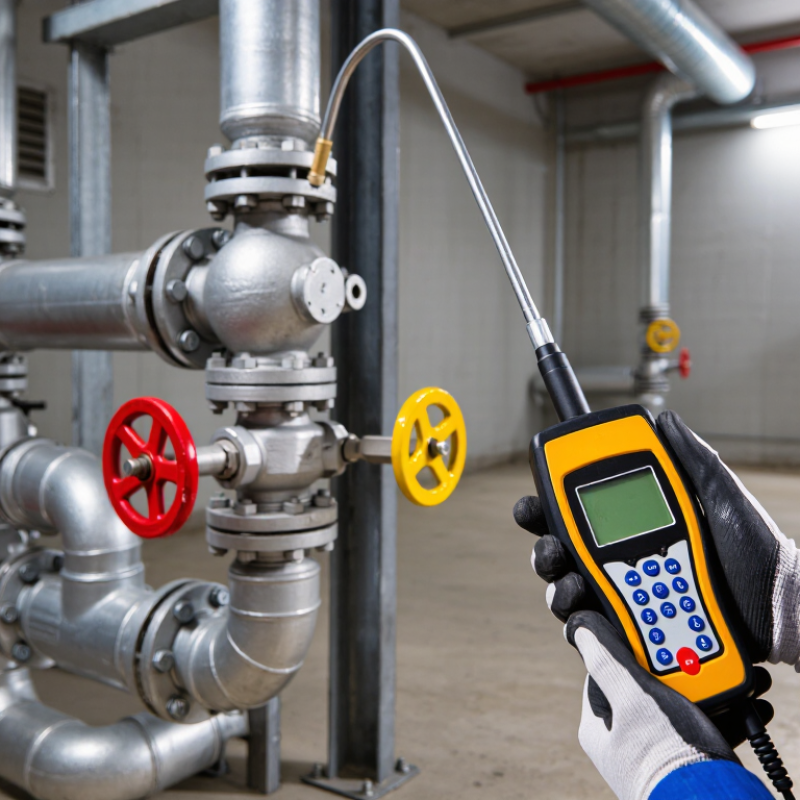
A gas leak tester is a device used to detect escaping gas near pipes, fittings, valves, or appliances. Depending on its design, it may sense combustible gases, specific gas types, or pressure changes in a sealed system. Some models show a numerical reading; others use an audible alarm or visible indicator. The purpose is to help locate a leak before it creates a fire, health, or equipment hazard. It supports inspection, but it does not replace a qualified technician’s assessment.
During a check, the tester samples air near likely leak points or monitors pressure over time. A changing reading can signal a problem, though airflow, residue, and sensor condition may affect results. No instrument tells the whole story. Even a small reading deserves attention, especially near a connection that should be sealed. Follow the instrument’s instructions, use equipment suited to the gas involved, and avoid treating one negative result as proof that an area is safe.
Tips: Check the sensor and battery before use. Move the probe slowly around joints, since a fast sweep may miss a brief signal. If the alarm activates, leave the area and contact a qualified professional. Don’t try to repair a suspected leak yourself.
A gas leak tester checks whether gas is escaping from a system. One common method is a pressure-decay test: a sealed section is pressurized, isolated, and monitored for a pressure drop over time.
Example: Sample readings from an isolated test volume at stable temperature. A pressure drop can indicate a leak, but the acceptable limit depends on the equipment and test procedure.
Gas leak testers use different methods to locate escaping gas, so the right choice depends on the equipment and test conditions. Portable combustible-gas detectors sample nearby air and respond when gas reaches their sensor. A technician may move the probe slowly around a valve stem, threaded joint, or hose connection. The display or alarm indicates a possible leak, but drafts can shift the gas and affect readings. Check the instrument’s calibration and follow its operating instructions.
Simple soap-bubble solutions reveal leaks at accessible joints. Applied with a brush or spray, the solution forms growing bubbles where gas escapes. Clear and inexpensive. However, this method is less useful on hidden pipes, hot surfaces, or locations where liquid residue could cause problems. It also depends on careful application; a quick glance can miss a small bubble.
Ultrasonic testers detect high-frequency sound created by pressurized gas escaping through a small opening. They can help locate leaks in noisy or difficult-to-reach systems, though background sound may complicate results. For sealed components, pressure-decay testing compares pressure readings over a set period; a drop may indicate leakage, but temperature changes can also alter pressure. Some controlled industrial tests use tracer gas and a dedicated detector for greater sensitivity. No single method fits every job. Confirm suspicious readings with an appropriate follow-up test, and leave gas-system inspection to qualified personnel.
A gas leak tester combines a sampling probe, sensor, processor, display, alarm, and power supply. The probe brings gas to the sensing element, while the processor turns its response into a reading, often in parts per million or percent of the lower explosive limit. Small parts matter. A cracked hose or blocked inlet can distort results before the sensor does its work.
Detection depends on the gas and sensor type. Catalytic sensors measure heat from gas oxidation; infrared sensors detect gas absorbing specific wavelengths; electrochemical cells track reactions that produce an electrical signal. A calibrated reference gas checks whether the instrument responds as expected. For industrial volatile organic compound checks, U.S. EPA Method 21 describes using calibrated portable instruments to locate leaks. A zero check helps, but it cannot replace calibration.
The scale of the problem is substantial: the International Energy Agency’s Global Methane Tracker 2024 estimated that fossil fuel operations released about 120 million tonnes of methane in 2023. A tester helps locate leaks, but readings can shift with wind, distance, and sampling technique. A low reading is only a snapshot, not proof that no leak exists. That uncertainty deserves attention.
A gas leak tester helps detect escaping fuel around pipes, valves, and appliance connections. Before using one, read its instructions and check that its battery is charged. Some electronic models need a warm-up period or a function check. Do this outdoors or in a well-ventilated area, away from flames. If you already smell gas or hear hissing, leave immediately and contact the gas supplier or emergency service from a safe location. Do not test the suspected leak yourself.
For a routine check, keep the detector’s probe close to the connection without touching it. Move slowly around each joint, valve, and accessible fitting. Pause briefly at each spot; rushing can miss a small leak. Watch or listen for the model’s alarm, and follow its instructions for interpreting the signal. Stay alert. If using approved leak-detection solution instead, apply a small amount to the joint and look for growing bubbles. Never use a flame to check for gas, and keep liquid away from electrical parts.
Mark any suspicious location without adjusting the fitting. Ventilate only if it is safe to do so, then stop using the appliance and arrange inspection by a qualified technician. A quiet detector reading does not prove a system is leak-free; airflow, placement, and device condition can affect results. I’d recheck my own probe position, too.
A gas leak tester detects gases that may escape from pipes, fittings, appliances, or storage systems. Safety standards differ by application and region, so check whether the instrument is suitable for the specific gas and inspection task. Review its stated detection range, response time, and certification details before relying on a reading. A tester is one part of a safety process, not permission to ignore warning signs.
Accuracy depends on more than the sensor. Air movement can disperse a leak, while humidity, temperature, sensor age, and incorrect sampling distance may affect results. Move the probe slowly along joints and connections, following the instrument’s instructions. Small details matter. If an alarm sounds or a strong gas odor is present, leave the area and contact qualified help; do not treat a low reading as proof that everything is safe.
Regular care supports dependable readings. Inspect the probe, tubing, filters, and battery before use, and keep the sensor clean and within its service life. Follow the manufacturer’s schedule for calibration, preferably through a qualified service provider using traceable equipment. A bump test can confirm that the sensor responds, but it does not replace calibration. Do not guess. Record test dates, results, and any unusual behavior; reviewing those notes can reveal a weakening sensor before it fails during an important inspection.
It typically has a sampling probe, sensor, processor, display, alarm, and power supply. A cracked hose or blocked inlet can affect readings.
Catalytic sensors measure heat from oxidation. Infrared sensors detect specific wavelengths, while electrochemical cells measure reactions that create electrical signals.
Read the instructions, check the battery, and allow any required warm-up period. Perform the check outdoors or in a well-ventilated area, away from flames.
Keep the probe close to the joint without touching it. Move slowly around valves and accessible fittings, pausing briefly at each spot. Stay alert.
Mark the location without adjusting the fitting. Stop using the appliance and arrange an inspection by a qualified technician.
Leave immediately. Contact the gas supplier or emergency service from a safe location. Do not test the suspected leak yourself.
No. Wind, distance, probe placement, and device condition can affect results. A low reading is only a snapshot, not a guarantee.
If approved for the task, apply a small amount to the joint and look for growing bubbles. Keep liquid away from electrical parts, and never use a flame. I would recheck my probe position, too.
A Gas Leak Tester is a device used to detect escaping gas and help confirm that pipes, fittings, appliances, or sealed systems are properly contained. Common types include electronic detectors, combustible-gas sensors, ultrasonic testers, and simple solution-based methods. Each works differently: some identify gas in the surrounding air, while others reveal leaks through sound or visible bubbles. The appropriate tester depends on the gas, the system, and the conditions in which the test is performed.
Most testers combine a sensing element, a display or indicator, and controls or a probe for checking specific areas. For reliable results, inspect the device, follow its operating instructions, allow it to warm up if required, and test connections carefully without skipping hard-to-reach points. Accuracy depends on correct use, suitable calibration, and regular maintenance, including cleaning and battery checks. Always follow applicable safety standards and workplace procedures, ventilate the area when appropriate, and stop work if a suspected leak creates an immediate hazard.
