
How to Choose the Right LPG Gas Alarm?

Time:2026-10-18 Author:Henry
0%

Choosing the right Lpg Gas Alarm is not a simple matter of buying the loudest device. LPG can collect near floors, under cabinets, or inside poorly ventilated rooms. A reliable alarm should detect danger early, even when the leak is small and difficult to smell.

Real-world safety checks often reveal misplaced sensors and ignored warning sounds. LPG is heavier than air, so installation height matters. Follow the manufacturer’s instructions and place the sensor where gas could accumulate. Check its detection range, response time, alarm volume, power source, and maintenance requirements. Battery models suit areas with unstable electricity, while wired units may provide steadier operation. Some alarms include self-testing, low-battery alerts, or shut-off connections, but these features do not replace professional installation.

Do not choose by price alone.

A trustworthy Lpg Gas Alarm should come from a traceable manufacturer with clear technical specifications and recognized safety certifications. The product should suit your gas type, room size, and local installation conditions. Read the manual before purchase, not after an alarm sounds. Test the device regularly, keep vents unobstructed, and replace aging sensors according to the stated schedule. Even experienced users can overlook a quiet fault or install a sensor too far from the likely leak source. That is why selection requires careful comparison, practical judgment, and a willingness to review the setup over time. An alarm supports safety; it cannot prevent every leak or replace responsible appliance maintenance.
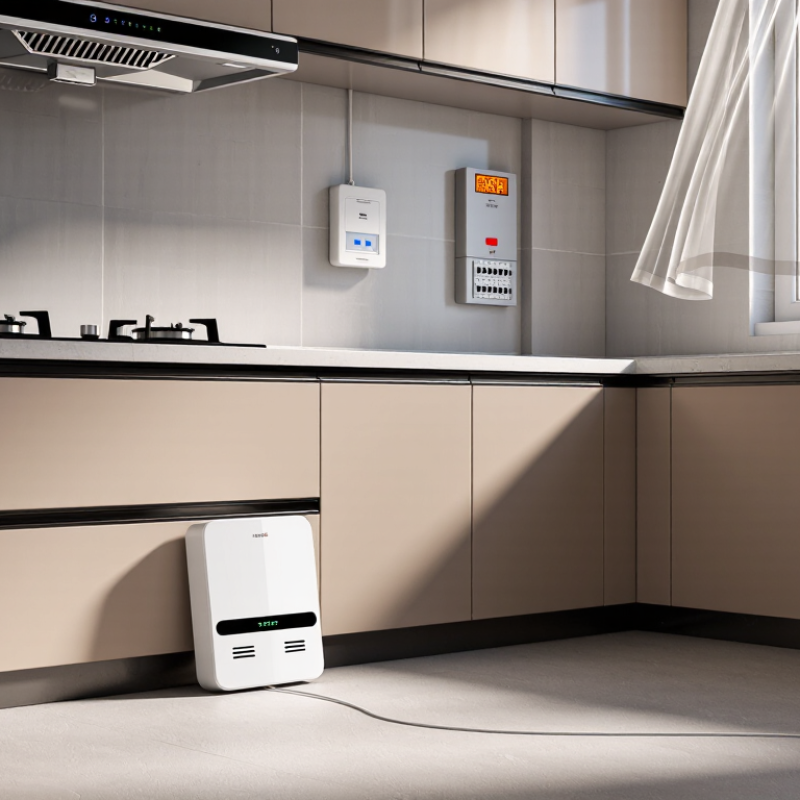
How to Choose the Right LPG Gas Alarm?

Understanding LPG Hazards and Gas Alarm Detection Methods

How to Choose the Right LPG Gas Alarm?

LPG hazards begin with how the gas moves. Propane and butane vapors are heavier than air, so they can collect near floors, drains, and poorly ventilated corners. NIOSH lists propane’s lower explosive limit at 2.1% by volume and its IDLH concentration at 2,100 ppm. A small leak may therefore become dangerous before a room smells strongly. Odor is helpful, but it is not a reliable measuring instrument.

Detection method matters. Catalytic bead sensors respond to combustible gas concentration and are widely used for fixed protection. Infrared sensors can offer longer service life and resist oxygen-deficient conditions, but they usually cost more. Semiconductor sensors may suit basic applications, yet their readings can drift with humidity, solvents, and temperature. NFPA 58 emphasizes proper installation, ventilation, shutoff controls, and equipment approval for LPG systems. An alarm placed near the ceiling is a poor choice for heavier-than-air gas.

Choose an alarm with a clear low-level warning, a loud local signal, and regular self-testing. For homes, mounting close to the floor may improve early detection, while kitchens need distance from burners and direct steam. For workshops or cylinder storage areas, professional risk assessment is safer than guessing. The World LPG Association’s safety guidance also stresses maintenance, leak checks, and trained users. I would not choose by decibel rating alone. A detector can fail, especially when neglected. That uncomfortable possibility should shape the whole safety plan.

Choosing the Correct Sensor Type for Your LPG Environment

How to Choose the Right LPG Gas Alarm?

Choosing the right LPG alarm starts with the sensor, not the display or enclosure. LPG is heavier than air. A leak can collect near floors, pits, drains, and cabinet bases. The detector must match both the gas and the space. For a small indoor cylinder room, low-level detection is usually essential. Mounting height matters as much as sensing technology.

Catalytic bead sensors suit many ordinary LPG areas. They detect gas through a heated reaction and provide a familiar combustible-gas reading. They need oxygen to operate and may respond poorly in oxygen-deficient spaces. Silicone vapors, solvents, and dust can also reduce sensitivity.

Infrared sensors avoid some poisoning concerns and work well in harsh or low-oxygen environments. However, they cost more and require correct optical maintenance. Semiconductor sensors can be sensitive, but other vapors may trigger unwanted alarms. That weakness is easy to underestimate.

Review ventilation, expected concentration, temperature, humidity, and nearby chemicals. Check whether the sensor is certified for LPG service and the intended hazardous area. Use calibration gas that matches the instrument’s instructions. Test alarms at scheduled intervals, not only after installation.

A detector near an extraction fan may react too late. One near a doorway may alarm repeatedly from transient vapors. In practice, placement errors are common, and sensor selection alone cannot repair them. Record bump tests, calibration dates, and replacement history. If the site changes, reassess the detector instead of trusting an old layout.

Evaluating Sensitivity, Safety Standards, and Alarm Features

How to Choose the Right LPG Gas Alarm?

Evaluating Sensitivity, Safety Standards, and Alarm Features

Choosing an LPG gas alarm starts with sensitivity, not the loudest siren. LPG usually settles near the floor because it is heavier than air. Place the sensor according to the manufacturer’s instructions, away from windows, vents, and direct cooking fumes. A practical inspection should check whether the alarm responds quickly without triggering during normal kitchen activity. Excessive sensitivity creates nuisance alarms. Weak sensitivity creates a dangerous delay.

Look for detectors tested against recognized safety standards, such as EN 50194-1 or equivalent requirements in your region. Certification should come from an independent testing organization. Check the product label, test documentation, and installation guidance carefully. Do not rely on vague claims like “high accuracy.” The alarm should provide a clear sound, visible warning, and a test button. Battery status and sensor fault alerts matter too. Small details matter.

A useful alarm may also include an end-of-life warning, backup power, or a relay connection for approved shutoff equipment. These features can improve protection, but they also add maintenance needs. Test the alarm regularly using its test function, never with a lighter or released gas. Keep the sensor clean and replace batteries promptly. I once assumed a louder alarm was automatically safer. It was not. Placement, certification, and reliable maintenance mattered more. Even careful choices need periodic review, especially after kitchen renovations or ventilation changes.

How to Choose the Right LPG Gas Alarm? - Evaluating Sensitivity, Safety Standards, and Alarm Features

Evaluation Dimension Verified Data or Benchmark What to Check Selection Guidance
Target Gas LPG normally contains propane, butane, or a mixture of both. Confirm that the alarm is specifically rated for LPG and identifies the gases it can detect. Do not use a natural-gas-only detector for LPG unless the manufacturer explicitly confirms LPG compatibility.
Gas Behavior Propane and butane vapor are heavier than air. Approximate lower explosive limits are 2.1% by volume for propane and 1.8% for n-butane. Review the installation instructions for sensor height and distance from appliances, cylinders, regulators, and ventilation openings. An LPG alarm is generally installed low in the room, while following the applicable local code and the product’s certified instructions.
Alarm Sensitivity Residential combustible-gas alarms are commonly designed to warn well below the LEL; published alarm thresholds often fall around 10–20% of LEL, depending on the certification scheme. Look for a clearly stated alarm set point, test method, target gas, and tolerance rather than a vague claim such as “high sensitivity.” Choose a detector with a documented threshold and certification for the intended residential or commercial application.
Sensor Technology Semiconductor sensors are common in household alarms. Catalytic-bead and infrared sensors are also used in gas-detection equipment. Compare response time, cross-sensitivity, operating temperature, humidity range, and expected service life. Select technology according to the environment; kitchens, garages, utility rooms, and outdoor enclosures may require different specifications.
Safety Certification Relevant examples include EN 50194-1 for electrically operated domestic gas detectors and UL 1484 for residential gas detectors, where applicable. Check the physical certification mark, certificate or listing number, covered gas type, and intended installation environment. Use the standard required by the country, authority having jurisdiction, insurance provider, or project specification.
Response Time Response time is normally specified in seconds at a defined gas concentration and test condition; it is not a universal value for all alarms. Review the certified response-time figure and whether it applies to propane, butane, or both. Prefer a device with a short, independently tested response time without sacrificing resistance to nuisance alarms.
Alarm Outputs Common outputs include a local audible alarm, visual indicator, relay contact, and wireless or network notification. Check sound-pressure rating, warning-light visibility, relay contact rating, and compatibility with shut-off valves or building systems. For sleeping areas or noisy spaces, choose a model with a clearly specified audible output and a secondary notification method.
Fault Monitoring Safety-oriented alarms can monitor sensor failure, low battery, power loss, wiring faults, and end-of-life status. Verify that fault signals are different from a gas alarm and that the device performs automatic self-diagnostics. Avoid models that provide no clear indication when the sensor or power supply is no longer reliable.
Power Supply Typical options are replaceable batteries, sealed batteries, mains power, or mains power with battery backup. Check battery duration, low-battery warning, backup behavior, power-failure indication, and replacement requirements. Use backup power where a power interruption could leave the LPG installation unmonitored.
Environmental Protection Temperature, humidity, dust, water exposure, and corrosive vapors can affect detector performance. Review the operating range, ingress-protection rating, mounting limitations, and restrictions on use near steam, aerosols, or solvents. Choose an appropriately protected enclosure for garages, workshops, kitchens, outdoor cabinets, or damp areas.
Nuisance-Alarm Resistance Combustion products, alcohol vapors, solvents, cleaning chemicals, and extreme humidity can interfere with some sensors. Check documented cross-sensitivity data and the prohibited substances listed in the installation manual. Select a detector tested for the actual room conditions and never disable the alarm to solve repeated nuisance alarms.
Testing and Maintenance A test button verifies the alarm circuit, but it does not always confirm that the sensor detects LPG accurately. Check cleaning instructions, recommended test frequency, calibration requirements, sensor replacement interval, and event history. Follow the manufacturer’s maintenance schedule and arrange professional gas testing where required by local regulations.
Installation Location Because LPG vapor is heavier than air, leaks may collect near floors, pits, drains, or other low points. Keep the detector accessible, unobstructed, and away from direct airflow, heat sources, sinks, and areas where it may be damaged. Installation must follow the alarm manual and local fire, electrical, and gas-installation requirements.
Emergency Response An alarm indicates a potentially dangerous gas concentration; it does not replace leak prevention, ventilation, or professional inspection. Look for clear instructions covering evacuation, avoiding switches or flames, shutting off gas only when safe, and contacting emergency services. Choose an alarm with visible emergency guidance and ensure all occupants understand the response procedure.

Matching Installation Requirements with Room Layout and Power Supply

How to Choose the Right LPG Gas Alarm?

Room layout should guide the detector location, not convenience. LPG is heavier than air, so leaked gas can settle near floors, pits, and cabinet bases. Place the sensor low, with a clear path to the room air. Avoid corners, curtains, extraction fans, and direct splashes. A detector hidden behind a cooker may look tidy, but it can respond slowly.

NFPA 715 provides installation guidance for fuel-gas detection systems, while EN 50194-1 addresses domestic combustible-gas alarms. Both emphasize correct positioning, testing, and suitable warning levels. The 2023 NFPA fire-loss report recorded about 3,010 home-fire deaths in the United States. This figure is not LPG-specific, but it shows why detection cannot be treated as decoration. The assumption that one alarm covers an entire home is often wrong.

Power supply deserves equal attention. Mains-powered alarms suit fixed kitchens, but battery backup can maintain protection during outages. Battery-only units work well in remote rooms, provided replacement dates are visible. Check voltage compatibility before installation. Some devices need warm-up time after power is connected. That detail is easy to miss. In a split-level house, a basement utility room may need its own detector, even when the kitchen already has one. Test the alarm after installation, then record monthly checks. A real inspection should include blocked vents, depleted batteries, and changed furniture layouts. Rooms change; alarm performance can change with them.

Comparing Maintenance Needs, Reliability, and Overall Cost

How to Choose the Right LPG Gas Alarm?

Maintenance often decides whether an LPG gas alarm remains useful after installation. A low-cost unit may require frequent sensor replacement, battery changes, or manual testing. Check the sensor’s expected service life before buying. Some sensors drift as they age, especially in dusty kitchens or damp utility rooms. Regular testing with approved test gas helps confirm that the alarm responds correctly. A quiet alarm is not always a reliable alarm.

Tips:

Record every test date. Keep vents clear. Replace batteries before they fail. Ask a qualified technician to inspect wiring and sensor performance. Select an alarm with clear fault signals, not only a loud warning. This small detail can prevent confusion during a night-time alert.

Reliability also depends on placement. LPG is heavier than air, so the detector usually needs positioning near possible leak areas and close to the floor. Follow the manufacturer’s instructions and local safety requirements. Avoid placing it beside windows, fans, or strong heat sources. Compare the total cost, including installation, batteries, sensor replacement, calibration, and disposal. A cheaper alarm can become expensive after repeated false alarms. However, premium pricing does not guarantee better performance. Review independent test records and certification details. I would still inspect the unit periodically, because real rooms are messier than product tests suggest.

FAQS

Why should an LPG alarm be installed near the floor?

LPG vapor is heavier than air. It can collect near floors, drains, pits, and cabinet bases. Low-level placement may detect leaks earlier. Follow the alarm’s installation instructions.

Which sensor type suits a typical indoor LPG area?

Catalytic sensors suit many ordinary spaces. They need oxygen and can be affected by dust, solvents, or silicone vapors. Infrared sensors handle some harsh conditions better, but usually cost more.

Are semiconductor sensors suitable for home use?

They may suit basic applications. However, humidity, temperature, and cleaning vapors can affect readings. False alarms are possible. Placement still matters greatly.

Where should an LPG alarm not be installed?

Avoid windows, extraction fans, strong heat, burners, and direct steam. Moving air may delay detection. Steam may also cause unwanted alarms.

What features should a reliable LPG alarm include?

Choose a clear low-level warning, loud local signal, and self-test function. Fault indicators are important too. A loud alarm alone is not enough.

How often should an LPG alarm be tested?

Test it at scheduled intervals using approved test gas. Record test dates, calibration, battery changes, and sensor replacement. Do not test only after installation.

What maintenance does an LPG alarm need?

Keep vents clear and replace batteries before failure. Inspect dusty or damp locations more often. Ask a qualified technician to check wiring and sensor performance.

How should the total cost of an LPG alarm be judged?

Include installation, batteries, calibration, sensor replacement, and disposal. A cheap unit may cost more after repeated false alarms. Premium pricing is not proof of better performance.

What should be reassessed when the room changes?

Recheck the alarm after moving cylinders, adding fans, or changing ventilation. An old layout may no longer protect the space. I might trust it too long.

Conclusion

Choosing the right Lpg Gas Alarm begins with understanding the risks associated with LPG, including its ability to accumulate in low areas and create a serious fire or explosion hazard. A suitable alarm should use a sensor designed for combustible gases and match the specific environment, whether it is a residential kitchen, commercial facility, or enclosed utility room. Consider detection range, response speed, sensitivity, and compliance with recognized safety standards. Useful features may include audible and visual alerts, self-testing, fault warnings, and battery backup.

Installation is equally important. The alarm should be positioned according to room layout, ventilation patterns, and the density of LPG, while also considering access to a reliable power supply. Before purchasing, compare sensor lifespan, calibration requirements, cleaning needs, replacement costs, and long-term reliability. A well-selected Lpg Gas Alarm should provide dependable protection, simple maintenance, and practical operating costs without creating unnecessary installation or ownership difficulties.

Henry

Henry

Henry is a dedicated marketing professional with a profound expertise in the company's offerings. With years of experience in the industry, he possesses an impressive understanding of the market dynamics and consumer behaviors that drive success. Henry is committed to sharing his insights through......