
2026 Best Gas Monitors for Confined Space Safety?

Time:2026-10-08 Author:Charlotte
0%

Entering a confined space can turn an ordinary maintenance task into a life-threatening decision within minutes. Oxygen may fall silently. Toxic gases may accumulate near the floor. Flammable vapors can remain invisible.

This guide examines the 2026 best Gas Monitors For Confined Space, focusing on practical protection rather than attractive specifications. We compare sensor technologies, alarm performance, calibration routines, battery life, data logging, ingress protection, and ease of use with gloves. Field conditions matter. A monitor that performs well in a clean workshop may struggle beside wet tanks, sludge, dust, or changing temperatures.

Dr. David Michaels, former Assistant Secretary of Labor for Occupational Safety and Health, has emphasized, “Workplace injuries are not accidents; they are preventable events.” That principle belongs at the center of every confined-space entry plan. A monitor cannot replace atmospheric testing procedures, ventilation, trained attendants, or rescue preparation. It is one critical layer.

Small details can decide the outcome. Can workers read the display through a face shield? Does the alarm remain clear beside pumps and compressors? Can supervisors verify calibration before entry? These questions are less exciting than sensor counts, but they reveal real reliability.

No device is perfect.

This review also acknowledges an uncomfortable truth: purchasing the most expensive monitor does not guarantee safe work. Human error, rushed checks, poor storage, and expired sensors can undermine excellent equipment. The strongest choice combines dependable hardware with disciplined training, documented testing, and honest reassessment after every job.
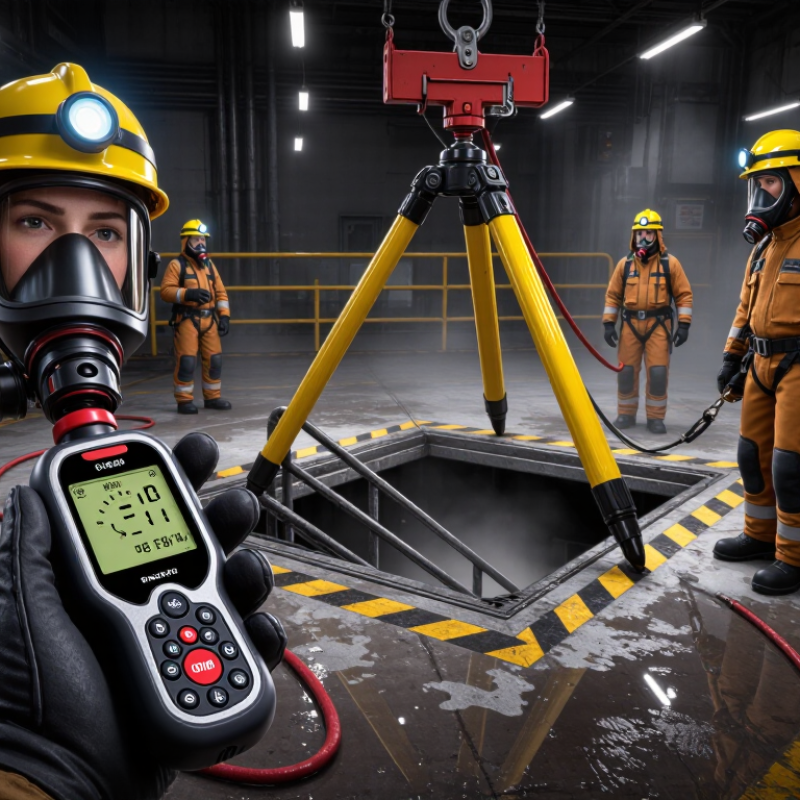
2026 Best Gas Monitors for Confined Space Safety?

Confined Space Gas Hazards and Monitoring Fundamentals

Confined spaces can hide dangerous atmospheres before workers notice any warning. Oxygen may fall below safe levels, while toxic gases collect near the floor or ceiling. Flammable vapors can also appear without visible smoke. These hazards change with ventilation, nearby processes, temperature, and disturbed residues. A reliable gas monitor measures oxygen, combustible gases, and relevant toxic gases before entry. It should also continue monitoring during the work.

Tips: Test the atmosphere from outside the space. Sample high, middle, and low areas because gases have different densities. Check the monitor’s condition, battery, sensor status, and alarm settings. A bump test before use helps confirm that alarms respond. Calibration must follow the manufacturer’s instructions and workplace procedures. Never treat a quiet monitor as proof of safety. The sampling tube may be blocked, misplaced, or too short.

Workers need more than a device. They need training, clear communication, an attendant, and a tested rescue plan. Alarm limits should be understood before entry, not during panic. Leave immediately when an alarm activates or symptoms appear. Do not enter for rescue without proper equipment and training. This point is often underestimated. Even a technically accurate reading represents only one moment, not the entire space. Airflow can shift quickly, so monitoring practices should be reviewed after every unusual reading, process change, or near miss.

2026 Best Gas Monitors for Confined Space Safety

Confined Space Gas Hazards and Monitoring Fundamentals

A suitable confined-space monitor should continuously measure oxygen, flammable gases as a percentage of the lower explosive limit, hydrogen sulfide, and carbon monoxide when these hazards may be present. The values shown are widely used reference points: oxygen deficiency at 19.5% by volume, oxygen enrichment at 23.5%, a 10% LEL action level, a 10 ppm hydrogen sulfide reference level, and a 50 ppm carbon monoxide occupational exposure limit. Actual alarm settings must follow the applicable regulations, risk assessment, permit system, and site-specific procedures.

Reference basis: OSHA 29 CFR 1910.146 and 1910.1000; NIOSH Pocket Guide to Chemical Hazards. Values are presented for safety education and do not replace atmospheric testing procedures.

Gas Sensor Types and Essential Monitor Specifications

In 2026, confined-space safety depends on choosing sensors for specific atmospheric risks. OSHA’s permit-required confined-space rule identifies oxygen deficiency, toxic gases, and flammable atmospheres as major hazards. It defines hazardous oxygen levels as below 19.5% or above 23.5%. The same rule treats flammable readings above 10% of the lower flammable limit as hazardous.

Electrochemical sensors measure oxygen, carbon monoxide, hydrogen sulfide, and other toxic gases. Catalytic-bead sensors detect combustible gases, but they may lose accuracy in oxygen-poor spaces. Infrared sensors can measure methane and carbon dioxide without consuming oxygen. Photoionization detectors help identify volatile organic compounds. Sensor selection should match the process, cleaning chemicals, and expected contaminants.

Specifications matter as much as sensor type. Look for direct-reading instruments, clear alarm levels, automatic datalogging, and a response time suitable for changing conditions. NIOSH guidance recommends testing from outside the space, using calibrated instruments, and checking different elevations because gases can layer. HSE guidance also emphasizes pre-entry checks and continuous monitoring when conditions may change. IP protection, battery endurance, bump-test reminders, and measurement range deserve attention. A 10% LEL alarm is not a magic shield. A monitor can still drift, become blocked, or be used incorrectly. That uncomfortable detail deserves more training, not less.

How to Compare the Best Gas Monitors for 2026

How to Compare the Best Gas Monitors for 2026

Choosing a gas monitor for confined-space work requires more than comparing prices. The device must detect oxygen deficiency, toxic gases, and combustible atmospheres quickly. Check sensor accuracy, alarm response, battery endurance, and calibration requirements before purchase. A clear display matters when workers wear gloves or face poor lighting. Physical alarms should include sound, vibration, and bright visual signals. One warning method may fail in noise or heavy protective equipment.

Practical testing should reflect the worksite. Compare warm-up time, sampling speed, pump performance, and operation in dust or moisture. Review data logging, bump-test records, and maintenance reminders. These features help supervisors verify equipment use and investigate unusual readings. Select monitors with documented testing standards and accessible technical support. Training remains essential, even with advanced automation.

Do not judge a monitor by sensor count alone. More sensors can increase weight, power use, and maintenance demands. A compact unit may suit short inspections, while pumped sampling supports deeper or remote areas. No model performs perfectly in every environment. Temperature changes, blocked filters, and missed calibrations can affect results. A useful comparison should include total ownership cost, worker comfort, repair access, and site-specific hazards. Recheck the choice after drills, near misses, or changes in ventilation.

Steps for Selecting a Monitor for Specific Confined Spaces

Selecting a confined-space gas monitor starts with the space, not the device. Draw a hazard map for the entry point, low areas, overhead pockets, and process lines. List oxygen deficiency, combustible gases, and toxic contaminants separately. OSHA 29 CFR 1910.146 requires testing for oxygen, flammable gases, and toxic hazards before entry. Test in that sequence. Conditions can change after ventilation starts. Continue monitoring when hazards may develop.

Match sensors to credible contaminants. The NIOSH Pocket Guide lists IDLH concentrations of 100 ppm for hydrogen sulfide and 1,200 ppm for carbon monoxide. Select alarm ranges that warn well before those values. Follow the site exposure assessment. Check cross-sensitivity, humidity tolerance, temperature range, and response time. A four-gas monitor may be insufficient near solvents, refrigerants, or treatment chemicals. Remote sampling can inspect a tank bottom without placing a worker at the opening. It adds tubing delay. Account for it.

Verify calibration, bump-test frequency, battery duration, ingress protection, data logging, and alarm audibility. OSHA guidance emphasizes testing according to written procedures and equipment instructions. Define who records results and removes failed units. Choose certification suitable for the atmosphere, not merely a familiar enclosure rating. A monitor cannot make a hazardous entry safe by itself. This point is easy to forget. Review the selection after every process change, near miss, or unexplained alarm. Some choices will still be wrong. Field feedback matters.

2026 Best Gas Monitors for Confined Space Safety? – Steps for Selecting a Monitor for Specific Confined Spaces

Selection Step Confined-Space Condition Recommended Monitoring Capability Key Gases or Hazards Important Specifications to Verify Operational Guidance Priority
1. Define the atmosphere General permit-required space A portable multi-gas monitor with a pump or remote sampling capability. Oxygen, flammable gases or vapors, carbon monoxide, and hydrogen sulfide.
  • Independent sensors for each required gas
  • Audible, visual, and vibrating alarms
  • High and low alarm settings that can be configured for the site
  • Data logging with time and alarm records
Test the atmosphere from outside the space before entry. Continue monitoring when atmospheric conditions may change. Essential
2. Check oxygen limits Tanks, vessels, pits, and enclosed process areas An oxygen sensor with clearly distinguishable deficiency and enrichment alarms. Oxygen deficiency and oxygen enrichment.
  • Measurement range that covers normal atmospheric oxygen
  • Fast response and stable readings
  • Alarm thresholds aligned with the entry permit and applicable regulations
  • Automatic sensor fault and low-battery warnings
OSHA defines an oxygen-deficient atmosphere as below 19.5% oxygen and an oxygen-enriched atmosphere as above 23.5% oxygen. Follow the stricter applicable requirement. Essential
3. Identify combustible hazards Sewers, utility vaults, fuel areas, and process vessels A combustible-gas sensor designed to display readings as a percentage of the lower explosive limit. Methane, propane, gasoline vapors, solvents, and other combustible vapors.
  • LEL measurement mode rather than oxygen-only monitoring
  • Sensor suitable for the expected gas or vapor
  • Appropriate response to catalytic or infrared sensing requirements
  • Alarm and shutdown integration where required
Methane has a lower explosive limit of approximately 5% by volume in air. Alarm levels must be selected according to the site risk assessment and applicable standards. Essential
4. Match toxic-gas sensors Wastewater, chemical, agricultural, and industrial spaces A monitor fitted with toxic-gas sensors based on the chemicals, materials, and processes present. Hydrogen sulfide, carbon monoxide, ammonia, chlorine, sulfur dioxide, or other site-specific gases.
  • Sensor range appropriate for expected exposure levels
  • Cross-sensitivity information for nearby chemicals
  • Short-term exposure and time-weighted alarm configuration
  • Replaceable sensors with documented service intervals
Do not rely on a standard four-gas configuration when the hazard assessment identifies additional toxic gases. Essential
5. Select sampling method Deep, narrow, vertical, or obstructed spaces A pumped monitor with a suitable sampling hose, probe, water trap, and filter. Layered atmospheres, remote gas pockets, condensate, dust, and liquid contamination.
  • Sampling distance and pump capacity
  • Clear sample-draw failure alarm
  • Compatible tubing and probe materials
  • Known response-time allowance before accepting a reading
Sample the top, middle, and bottom where gases may stratify. Account for hose length and transport time before making an entry decision. Essential
6. Consider environmental exposure Wet, dusty, corrosive, or outdoor confined spaces A rugged monitor with an ingress-protection rating and protective accessories suited to the environment. Water, dust, mud, corrosive vapors, impact, temperature changes, and electromagnetic interference.
  • Verified IP rating appropriate to the work area
  • Operating temperature and humidity range
  • Impact-resistant housing and readable display
  • Filters and water barriers that do not obstruct sampling
Inspect the inlet, filter, housing, and alarm openings before every use. Environmental protection does not eliminate the need for cleaning and calibration. High
7. Verify hazardous-area suitability Potentially explosive atmospheres A monitor carrying the certification required for the classified hazardous area. Flammable gases, vapors, combustible dusts, and possible ignition sources.
  • Correct hazardous-location approval for the jurisdiction
  • Suitable gas group, temperature class, and zone or division rating
  • No unauthorized accessories that could invalidate approval
  • Documented inspection and maintenance records
Confirm the certification matches the actual area classification. Intrinsically safe approval is not interchangeable across every location or accessory. Essential
8. Review alarm functions Spaces requiring evacuation or rescue coordination A monitor with unmistakable multi-modal alarms and optional wireless or remote notification. Any monitored gas that reaches the configured warning or evacuation level.
  • At least audible, visual, and vibration alerts
  • Alarm latching or event history where required
  • High alarm, low alarm, STEL, TWA, and over-range indications as applicable
  • Alarm volume suitable for respiratory protection and noisy work areas
Test all alarm modes before use. Define evacuation, ventilation, communication, and rescue actions in the entry procedure. Essential
9. Confirm calibration and testing Any space where reliable readings are safety-critical A monitor supported by documented bump testing, calibration, and maintenance procedures. All gases measured by the installed sensors.
  • Calibration gas compatible with each sensor
  • Automatic or documented calibration records
  • Sensor expiration and replacement tracking
  • Clear failure indication that prevents reliance on invalid readings
Perform a functional bump test before use when required by the manufacturer or safety program. Calibrate after failed tests, sensor replacement, exposure, or according to the documented schedule. Essential
10. Evaluate battery and usability Long entries, remote locations, and emergency response A lightweight monitor with sufficient operating time, clear controls, and a battery reserve for the complete task. All selected atmospheric hazards.
  • Operating time exceeding the planned entry duration
  • Low-battery alarm that provides adequate warning
  • Glove-compatible controls and readable display
  • Charging and spare-battery arrangements
Include warm-up, pre-entry testing, standby, rescue, and return-to-base time when calculating battery requirements. High
11. Check standards and records Regulated industrial, construction, and utility operations A monitor supported by recognized certification, technical documentation, and traceable service records. Gas hazards identified by the confined-space entry assessment.
  • Applicable hazardous-location certification
  • Relevant gas-detection performance standard, such as IEC 60079-29-1 where applicable
  • Calibration certificates and maintenance history
  • Training records for users and attendants
Select equipment as part of the complete permit-required confined-space program, not as a substitute for ventilation, isolation, training, or rescue planning. Essential

Selection note: Gas-monitor configuration, alarm levels, calibration intervals, and entry procedures must be based on the hazard assessment, applicable legislation, site standards, and the monitor manufacturer’s instructions. No monitor can replace atmospheric isolation, ventilation, a trained attendant, or an effective rescue plan.

Safe Operation, Calibration, Maintenance, and Emergency Use

Choosing a gas monitor for confined spaces requires more than counting sensors.

A practical unit should measure oxygen, combustible gases, and relevant toxic hazards.

Its alarm must remain clear in darkness, noise, and cold conditions.

Workers should check the casing, inlet, battery, display, and alarm indicators before entry.

A written permit and a trained attendant remain essential.

Calibration must follow the manufacturer’s procedure and the site risk assessment.

Use certified test gas with an unexpired date.

A bump test before each shift can reveal blocked inlets or weak alarms.

Record the result, gas concentration, time, and operator.

Never silence an alarm to continue work.

A rushed test is still a failed test.

Maintenance includes cleaning sensor openings, replacing damaged filters, charging batteries, and reviewing fault logs.

Sensors can drift after exposure, even when readings appear normal.

During entry, monitor continuously and keep the instrument near the breathing zone.

If an alarm activates, leave immediately and report the reading.

Do not attempt an improvised rescue.

The attendant should call the emergency team and follow the practiced plan.

One uncomfortable lesson remains: equipment cannot compensate for poor communication or an untrained entrant.

FAQS

Which hazards should a confined-space gas monitor detect?

It should detect oxygen deficiency, toxic gases, and combustible atmospheres. Oxygen below 19.5% or above 23.5% is hazardous. Combustible readings above 10% of the lower flammable limit require immediate attention.

Which sensor types suit different gases?

Electrochemical sensors measure oxygen and many toxic gases. Catalytic-bead sensors detect combustible gases but may weaken in oxygen-poor spaces. Infrared sensors measure gases without consuming oxygen. Photoionization detectors help identify volatile organic compounds.

What specifications matter most when comparing monitors?

Check accuracy, alarm response, battery endurance, measurement range, and calibration needs. Clear displays help workers wearing gloves or working in dim areas. Automatic data logging can support later review.

Why should a monitor use several alarm methods?

Sound, vibration, and bright visual signals provide backup. Noise can hide an audible alarm. Protective equipment can reduce vibration awareness. One warning method may fail.

How should workers test a confined space?

Test from outside before entry when possible. Check different elevations because gases can form layers. Continue monitoring when ventilation or conditions may change.

Is a monitor with more sensors always better?

Not always. Additional sensors can increase weight, battery use, and maintenance work. A smaller unit may suit brief inspections, while pumped sampling supports deeper areas.

What environmental conditions can affect gas-monitor performance?

Dust, moisture, temperature changes, and blocked filters may distort readings. Missed calibrations can create false confidence. The instrument may look ready but still perform poorly.

How often should a monitor choice be reviewed?

Review it after drills, near misses, ventilation changes, or new cleaning chemicals. Worksites change. The original choice may no longer fit.

What maintenance practices support reliable readings?

Follow calibration schedules and respond to bump-test reminders. Inspect filters, alarms, batteries, and sampling pumps. Keep records of tests and repairs. Small omissions matter.

Conclusion

Choosing the right Gas Monitors For Confined Space work begins with understanding the hazards that may be present, including oxygen deficiency or enrichment, toxic gases, and combustible vapors. Effective monitoring requires suitable sensor types, reliable alarms, sufficient battery life, durable construction, clear displays, and appropriate detection ranges. A strong comparison should consider response time, accuracy, data recording, ease of use, environmental resistance, and compatibility with required safety procedures.

The best monitor depends on the specific confined space, expected contaminants, entry duration, ventilation conditions, and rescue plan. Before use, workers should inspect the instrument, confirm calibration status, perform a functional check, and test the atmosphere at multiple levels and locations. Regular calibration, sensor replacement, cleaning, charging, and documented maintenance help preserve accuracy. During an emergency, alarms must be treated seriously, and personnel should follow the established evacuation and rescue procedures rather than relying on the monitor alone.

Charlotte

Charlotte

Charlotte is a seasoned marketing professional with a deep understanding of the company's portfolio and a passion for elevating its presence in the market. With a keen eye for detail and a commitment to excellence, she ensures that our professional blog is regularly updated with insightful articles......